
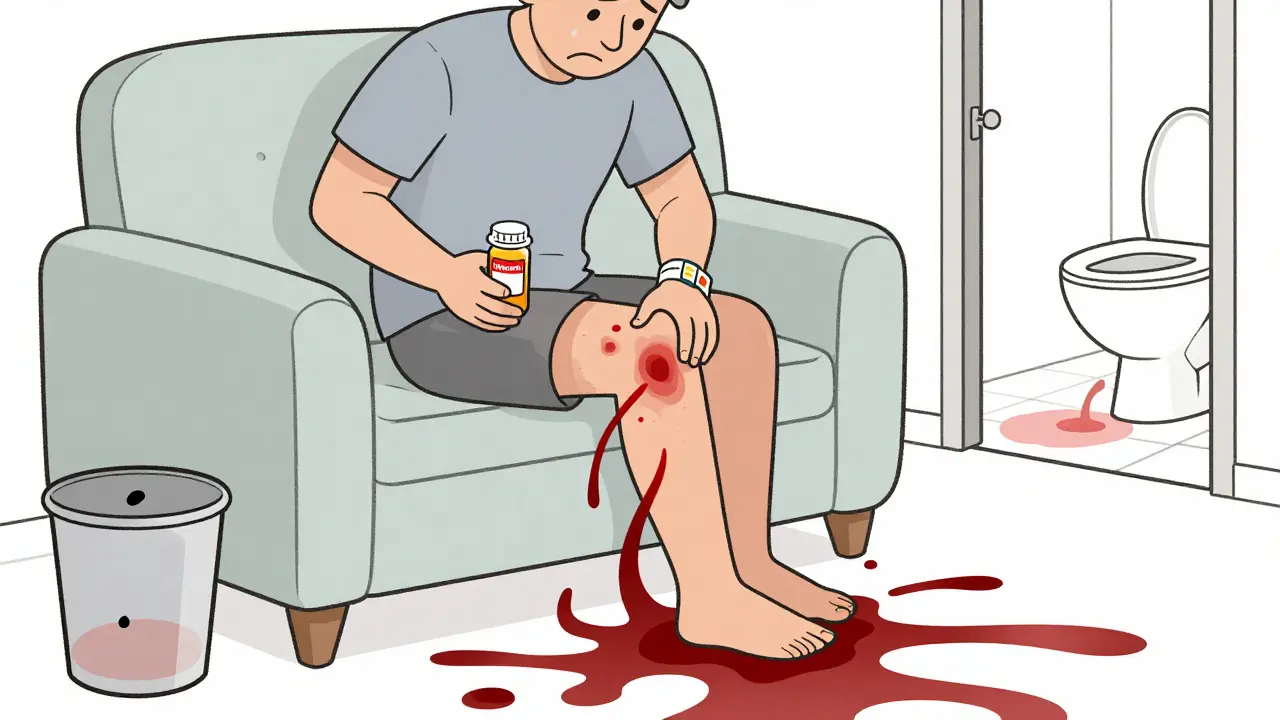
When you take a blood thinner, you’re managing a delicate balance. These medications save lives by stopping dangerous clots from forming-especially if you have atrial fibrillation, a replaced heart valve, or a history of deep vein thrombosis. But if you take too much, or if your body reacts unexpectedly, that same medication can turn deadly. Blood thinner overdose doesn’t always come with a warning. No siren, no loud crash. Just a slow leak inside your body that you might not even notice until it’s too late.
What Happens When a Blood Thinner Goes Wrong
Blood thinners like warfarin (Coumadin), apixaban (Eliquis), rivaroxaban (Xarelto), and dabigatran (Pradaxa) work by slowing down your blood’s ability to clot. That’s good when you need to prevent strokes or clots. But if you overdose-even by a little-their effect becomes too strong. Your blood stops clotting altogether. And that’s when internal bleeding starts. Internal bleeding doesn’t always mean you’re bleeding out of a wound. It can happen inside your brain, your stomach, your kidneys, or even behind your eyes. The first signs are subtle: a headache that won’t go away, dark stools that look like tar, urine that turns pink or red, or bruises that show up for no reason. You might feel unusually tired, dizzy, or short of breath. These aren’t just "off days." They’re red flags. Warfarin, the oldest blood thinner still widely used, is especially tricky. It takes hours to build up in your system, and its effects can last days. Even if you took the wrong dose yesterday, your INR (a blood test that measures clotting time) might not spike until today. And once it does, it can keep rising for up to 9 days. That’s why people often think they’re fine after missing a dose or accidentally taking two-they’re not. The danger is still coming.Signs of Internal Bleeding You Can’t Ignore
Here’s what real, life-threatening bleeding looks like when it’s caused by an overdose:- Black, tarry, or bloody stools (gastrointestinal bleeding)
- Vomiting blood or material that looks like coffee grounds
- Spitting or coughing up blood
- Pink, red, or dark brown urine (bladder or kidney bleeding)
- Unexplained bruising, especially large patches or bruises that grow
- Petechiae-tiny red or purple dots under the skin that don’t fade when you press on them
- Severe headaches, confusion, blurred vision, or loss of consciousness (possible brain bleed)
- Severe back or abdominal pain (could mean bleeding in the abdomen or around the kidneys)
- Heavy menstrual bleeding that’s far worse than normal
- Bleeding from gums or nose that lasts longer than 10 minutes, even with pressure
What to Do Right Now-Step by Step
If you suspect a blood thinner overdose, time is everything. The sooner you get help, the better your chances. Here’s exactly what to do:- Call emergency services immediately. Don’t wait to see if symptoms get worse. If you’re coughing blood, vomiting blood, or feeling faint, dial 911 (or your local emergency number) now.
- Do NOT take another dose. Even if you think you missed one, don’t double up. Overdose is often accidental, not intentional. Taking more will only make it worse.
- Write down what you took. Note the name of the medication, the dose, and the time you took it. If you’re not sure, bring the pill bottle with you. This saves critical minutes in the ER.
- Don’t take NSAIDs. No ibuprofen, no aspirin, no naproxen. These drugs make bleeding worse. Even a single extra pill can push you over the edge.
- Stay still and lie down. If you’re bleeding externally, apply firm pressure with a clean cloth for at least 10 minutes. Don’t keep checking. Keep pressure on. If you’re dizzy or weak, lie flat and elevate your legs slightly to help blood flow to your brain.
How Hospitals Treat Blood Thinner Overdose
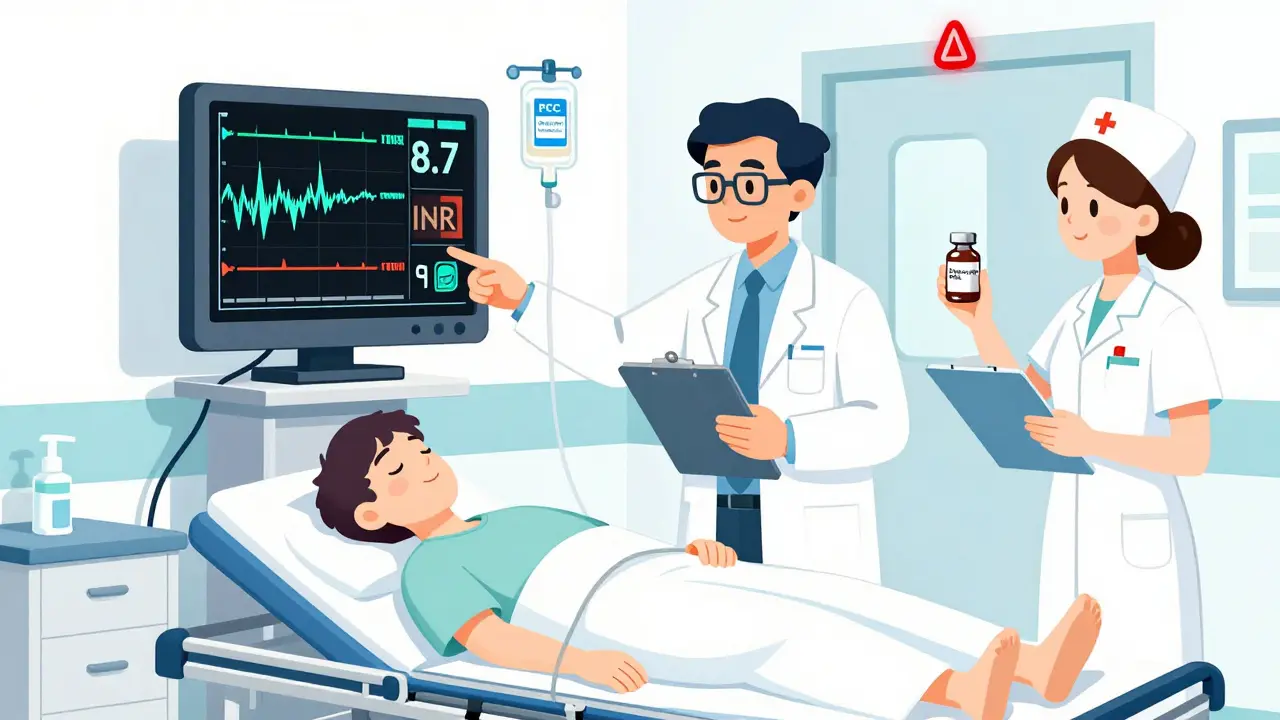
Emergency teams don’t guess. They act fast based on what drug you took and how bad your INR is. If you’re on warfarin and your INR is above 3.5, doctors will give you vitamin K-either by mouth or IV. For serious bleeding, they’ll use 4-factor Prothrombin Complex Concentrate (PCC), a concentrated mix of clotting factors that can reverse warfarin’s effects in minutes. This is far faster and safer than older treatments like fresh frozen plasma. If you’re on a DOAC like Eliquis or Xarelto, the treatment is different. There’s a specific antidote for each:- Idarucizumab (Praxbind) reverses dabigatran (Pradaxa)
- Andexanet alfa (Andexxa) reverses apixaban, rivaroxaban, and edoxaban
Why People Delay-And Why That’s Deadly
A 2022 survey by the National Blood Clot Alliance found that nearly 3 out of 10 people waited more than 12 hours before seeking help after noticing bleeding symptoms. Why? They thought it was a stomach bug. Or they blamed their diet. Or they didn’t want to bother their doctor. One Reddit user wrote: “I thought my dark stools were just from eating beets. By the time I got to the ER, my hemoglobin was 6.2. Normal is 12-16. I needed 4 units of blood.” That’s not rare. In fact, it’s common. People don’t realize that internal bleeding doesn’t always look like a cut. It’s quiet. It’s slow. And by the time you feel weak or dizzy, you’ve already lost a dangerous amount of blood. Survival rates tell the story: if you get help within 2 hours of symptoms starting, your chance of surviving is 97%. If you wait 6 hours or more, that drops to 76%. That’s not a small difference. That’s the difference between going home and not making it.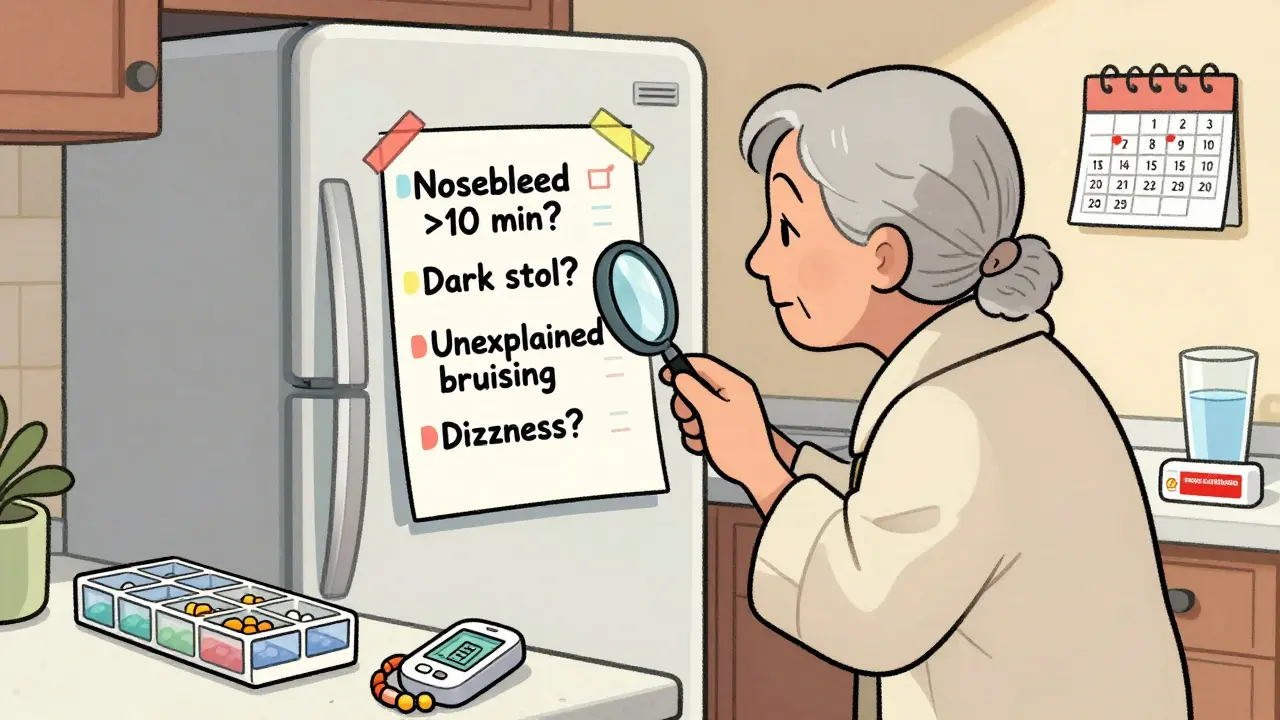
How to Prevent This From Happening
Prevention isn’t just about taking your pill correctly. It’s about knowing your body and having systems in place.- Get your INR checked regularly. If you’re on warfarin, you need testing every 1 to 4 weeks, depending on stability. Use a home monitor if your doctor recommends it-studies show they reduce major bleeding by 34%.
- Keep a bleeding risk checklist. Post it on your fridge. Include: nosebleeds >10 min, unexplained bruising, blood in urine/stool, severe headaches, dizziness. If any appear, call your doctor or go to the ER.
- Know your medications. Don’t mix blood thinners with NSAIDs, herbal supplements like ginkgo or garlic, or even large amounts of vitamin K-rich foods (kale, spinach) without talking to your doctor. These can interfere with warfarin.
- Use a pill organizer. Set phone alarms. Have a family member check in. Accidental double-dosing is the #1 cause of overdose in older adults.
- Wear a medical ID. A bracelet or necklace that says “ON BLOOD THINNERS” can save your life if you’re found unconscious.
The Bigger Picture
Anticoagulant-related bleeding is the second leading cause of serious medication errors in adults over 65, according to the CDC. In 2022, warfarin alone led to over 18,000 serious adverse events in the U.S., with nearly 1,200 deaths. The average hospital bill for a major bleed? Over $28,000. But here’s the good news: nearly all of these cases are preventable. With better education, regular monitoring, and faster action, most overdoses don’t have to end in the ER-or worse. New tools are coming. A universal reversal agent called ciraparantag is in late-stage trials and could reverse all types of blood thinners within minutes. But it’s not here yet. So for now, your best defense is knowledge, vigilance, and immediate action.What should I do if I think I took too much of my blood thinner?
Call emergency services immediately. Do not wait for symptoms to get worse. Do not take another dose. Bring your pill bottle with you to the hospital. Note the time and amount you took. Lie down and stay calm while you wait for help.
Can I reverse a blood thinner overdose at home?
No. There are no safe, effective home remedies. Vitamin K works-but only under medical supervision. Taking it yourself without knowing your INR level can be dangerous. Emergency treatment requires blood tests, IV medications, and monitoring. Only hospitals can provide this safely.
How long does it take for a blood thinner overdose to cause bleeding?
It varies. For warfarin, INR levels can keep rising for up to 9 days after an overdose, even if you only took one extra pill. For DOACs like Xarelto or Eliquis, effects peak within hours but can last 12-24 hours. Bleeding can start within hours or not show up until days later. Never assume you’re safe just because you feel fine.
Are newer blood thinners safer than warfarin?
They’re easier to manage because they don’t require regular INR checks and have fewer food interactions. But they’re not safer in overdose. They still cause serious bleeding. The good news is, there are specific reversal agents for most of them now-unlike warfarin, which relies on vitamin K and PCC. Still, all blood thinners carry risk, and all overdoses require emergency care.
What should I do if I accidentally take two doses?
Call your doctor or go to the nearest emergency room. Even if you feel fine, your INR could spike in the next 24-48 hours. Do not wait. Do not try to skip your next dose to "make up" for it-that can cause dangerous fluctuations. Get checked. It’s better to be safe.
Can I still use aspirin or ibuprofen if I’m on a blood thinner?
No-not unless your doctor specifically says it’s safe. Aspirin and ibuprofen interfere with platelet function and increase bleeding risk. Even low-dose aspirin can be dangerous when combined with anticoagulants. Use acetaminophen (Tylenol) for pain instead, and always check with your doctor before taking any new medication.
How often should I get my INR tested if I’m on warfarin?
When you first start, you may need testing every week. Once your dose is stable, you might go every 2 to 4 weeks. If you’re stable for months, your doctor might extend it to every 6-8 weeks. But if you change medications, start new supplements, get sick, or change your diet, you’ll need testing sooner. Always follow your doctor’s schedule.
Is there a blood thinner that doesn’t have bleeding risks?
No. All anticoagulants carry a risk of bleeding. That’s how they work. The goal isn’t to eliminate risk-it’s to manage it. Your doctor chooses the drug and dose based on your personal risk of clotting versus bleeding. No medication is risk-free, but with proper monitoring, most people use them safely for years.





January 18, 2026 AT 14:19
Just had my INR checked last week-3.8-and I didn’t even realize I was in danger. This post scared the hell out of me but in the best way. I’ve been taking Xarelto for AFib and thought if I didn’t feel weird, I was fine. Turns out, I was just lucky. Gonna get a medical ID bracelet tomorrow.