Diphenhydramine: What It Is, How It Works, and What You Need to Know
When you reach for that old bottle of diphenhydramine, a first-generation antihistamine used to treat allergies, colds, and insomnia. Also known as Benadryl, it’s one of the most recognizable names in medicine—but that doesn’t mean it’s always the safest or smartest choice.
Diphenhydramine works by blocking histamine, a chemical your body releases during allergic reactions. That’s why it helps with runny noses, itchy eyes, and hives. But here’s the catch: it also crosses into your brain, where it messes with another chemical called acetylcholine. That’s what makes you sleepy—and why it’s often used as a sleep aid. But that same effect can leave you groggy the next day, dizzy, or even confused, especially if you’re over 65. It’s not just drowsiness. Dry mouth, constipation, blurred vision, and trouble peeing are all common. And if you take it too often, your body starts to need more just to get the same effect.
It’s also not the only option. second-generation antihistamines, like loratadine and cetirizine. Also known as non-drowsy allergy meds, they do the same job without the brain fog. Why stick with diphenhydramine when you can get relief without crashing? And if you’re using it to sleep, there are better, more sustainable ways to improve your rest. Diphenhydramine doesn’t fix sleep problems—it just masks them with sedation.
People often turn to diphenhydramine because it’s cheap, easy to find, and feels like a quick fix. But if you’re using it regularly, you’re not solving the problem—you’re just delaying it. And for older adults, the risks aren’t worth it. Studies show it can increase the chance of falls, memory issues, and even dementia over time. It’s not just an old-school remedy—it’s a relic that’s outlived its usefulness for many.
What you’ll find below is a collection of real, practical guides that cut through the noise. You’ll see how diphenhydramine compares to other options, why it shows up in so many cold and sleep meds, and when it’s better to walk away. Some posts dig into the science. Others give you no-nonsense advice on what to try instead. Whether you’re managing allergies, fighting insomnia, or just wondering why your doctor won’t refill that bottle, you’ll find something that actually helps.
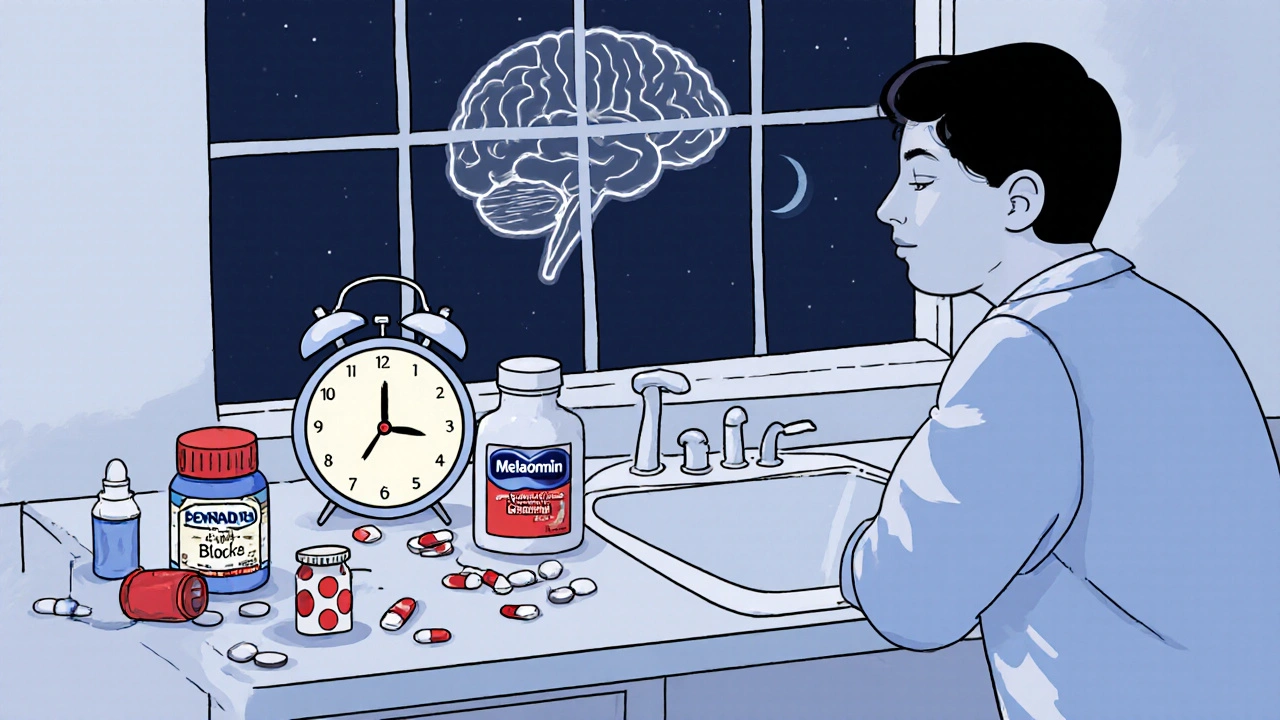
OTC sleep aids like diphenhydramine and melatonin offer short-term relief but carry serious risks with long-term use. Learn what they really do, their side effects, and safer alternatives backed by science.