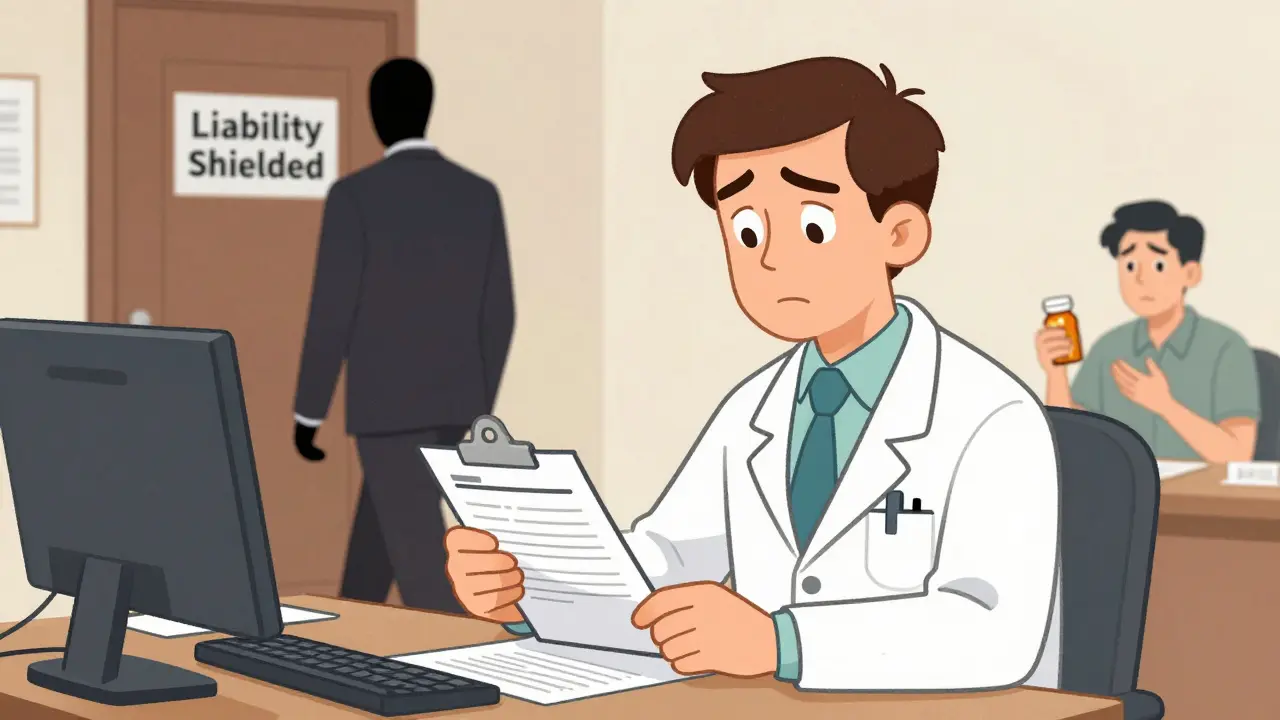
When a doctor prescribes a medication, they’re not just choosing a treatment-they’re taking on legal responsibility. And when that medication is a generic, the stakes have changed dramatically in the last decade. Thanks to two landmark Supreme Court rulings, generic drug manufacturers can no longer be sued for failing to warn patients about side effects. That means if something goes wrong, the patient’s legal path often leads straight back to the physician who wrote the prescription.
How Generic Drugs Changed the Liability Game
In 2011 and 2013, the Supreme Court ruled in PLIVA v. Mensing and Mutual Pharmaceutical v. Bartlett that generic drug makers can’t be held liable for inadequate warnings. Why? Because federal law forces them to use the same label as the brand-name drug. They can’t update it on their own, even if new safety data emerges. This is called the Mensing/Bartlett Preemption doctrine.
Before these rulings, if a patient was harmed by a generic drug, they could sue the manufacturer. Now, they can’t. The manufacturer is shielded. And with 90% of all prescriptions in the U.S. filled with generics (IMS Health, 2022), that leaves doctors as the only realistic target for lawsuits.
Take Karen Bartlett’s case. She took a generic version of Sulindac and developed toxic epidermal necrolysis-losing 65% of her skin, spending 50 days in a burn unit, and suffering permanent disfigurement. She sued the manufacturer. The Supreme Court said no. The manufacturer didn’t have the legal right to change the label. So who’s left? The doctor who prescribed it.
What Physicians Are Liable For
Physicians are still bound by the same medical malpractice standards whether they prescribe a brand-name or generic drug. To prove liability, a patient must show three things:
- Duty: A doctor-patient relationship existed.
- Dereliction: The doctor failed to meet the standard of care.
- Direct Cause: The medication directly caused the injury.
For example, if a doctor prescribes a drug known to cause drowsiness and doesn’t warn the patient not to drive, and the patient later causes a car crash, that’s a textbook case of liability. It doesn’t matter if the drug was brand or generic. The failure was in the counseling.
But here’s the twist: With brand-name drugs, the manufacturer can still be sued for failing to update the label. So if a new warning is added, and the doctor relies on the old label, the manufacturer shares blame. With generics? The manufacturer is out. The doctor is in.
State Laws Create a Legal Patchwork
Forty-nine states allow pharmacists to substitute generics unless the doctor writes “dispense as written.” But what happens after that substitution? That’s where things get messy.
In 32 states, pharmacists must notify the prescribing doctor within 72 hours of a substitution. In 17 states? No notification required at all. That means a doctor might prescribe a brand-name drug thinking it’s what the patient got-but the patient actually received a generic they never knew about.
And state courts aren’t all on the same page. In 2014, Alabama’s Supreme Court briefly allowed lawsuits against brand-name manufacturers for injuries caused by generics. But in 2015, the state legislature passed SB80, banning those claims. Meanwhile, Illinois courts have ruled differently. In Guvenoz v. Target Corp. (2016), the state appellate court said generic manufacturers do have a duty to change the label, update the formula, or stop selling the drug if it’s dangerously flawed. So in Illinois, manufacturers aren’t fully immune.
That creates a dangerous inconsistency. A doctor in Illinois might face lower liability risk than one in Texas, even if they made the same prescription decision.
Doctors Are Changing How They Prescribe
It’s not theoretical anymore. A 2022 AMA survey of 1,200 physicians found that 68% feel more anxious about prescribing generics. Nearly half said they sometimes choose more expensive brand-name drugs just to avoid potential lawsuits-even if it means higher costs for patients.
On physician forums like Sermo, doctors share stories of defensive prescribing. One doctor in Massachusetts said he now adds 15 to 20 minutes to each visit just to document warnings about side effects. Another wrote, “I now write ‘do not substitute’ on every prescription for anything with a narrow therapeutic index.”
And it’s not just about time. The American College of Physicians documented 47 malpractice claims tied to generic drugs between 2016 and 2021. Twelve of those ended in settlements averaging over $327,500. That’s not a small number. That’s life-changing for a doctor’s finances-and reputation.
Documentation Is Your Best Defense
The single most effective way to reduce liability? Documentation. Not just “medication discussed.” Not just “patient advised.” Specifics matter.
Medical risk experts recommend using exact language like:
“I have discussed potential side effects of [medication], including [specific side effect], and advised you to avoid [specific activity] while taking this medication.”
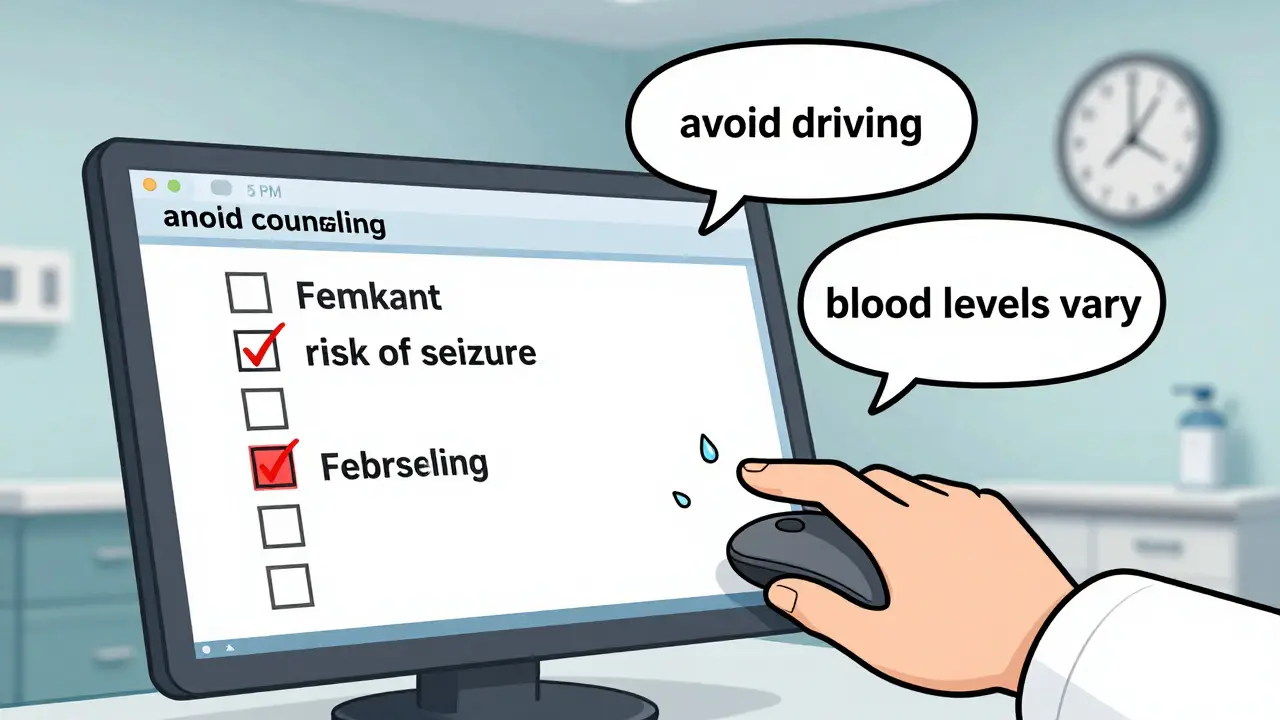
Electronic health record systems have caught on. Epic Systems updated its software in 2021 to require physicians to check boxes confirming they discussed generic substitution risks. If you skip it, the system won’t let you finish the prescription.
And insurers are watching. The American Professional Agency found that physicians who document detailed counseling on generic substitution reduce their liability exposure by 58%. Meanwhile, those who don’t pay an average 7.3% higher premium on their malpractice insurance.
High-Risk Drugs Demand Extra Care
Not all drugs are equal. Some have a narrow therapeutic index-meaning the difference between an effective dose and a toxic one is tiny. For these, substitution can be dangerous.
Examples include:
- Warfarin (blood thinner)
- Levothyroxine (thyroid hormone)
- Phenytoin and carbamazepine (anti-seizure drugs)
Studies show that even small differences in generic formulations can lead to dangerous fluctuations in blood levels. In one 2020 case, a patient had a seizure after switching from a brand-name anti-seizure drug to a generic. The manufacturer was immune. The doctor was sued.
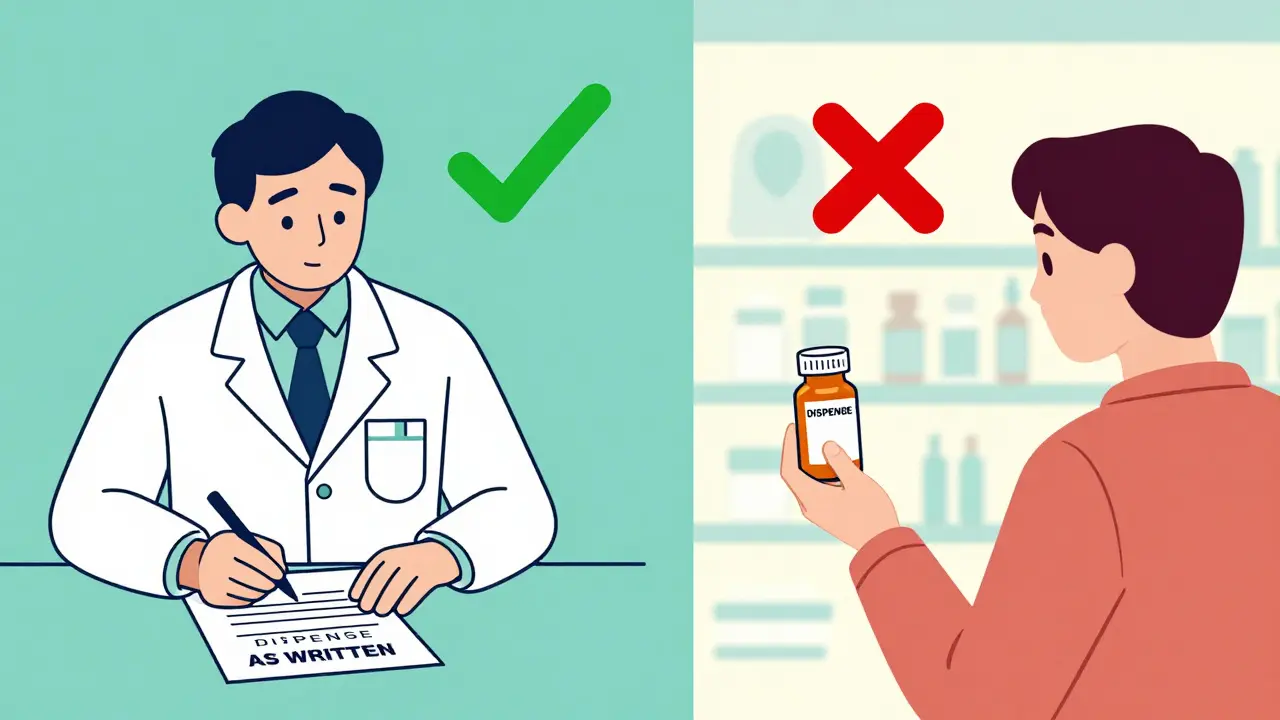
Best practice? Always write “dispense as written” for these drugs. In 32 states, that legally blocks substitution. In others, it still sends a strong signal that you’re aware of the risk.
The Bigger Picture: Insurance, Legislation, and the Future
Between 2013 and 2022, malpractice premiums for primary care physicians rose 22.7%-partly because of the surge in generic-related claims. The American Medical Association says 37% more lawsuits targeting doctors for generic drug injuries were filed between 2014 and 2019.
Legislators have taken notice. Congress held hearings in 2019 and 2021 on the proposed “Preserving Access to Prescription Medications Act,” which would have restored some liability to manufacturers. It didn’t pass. Meanwhile, 18 states introduced bills in 2023 requiring pharmacists to notify doctors within 24 hours of substituting generics for high-risk drugs.
Legal scholars predict physician liability will rise another 45% by 2027 if nothing changes. The Supreme Court declined to hear Colvin v. United States in 2022, leaving the Mensing/Bartlett doctrine intact. But in March 2023, the 9th Circuit Court created a narrow exception: if a brand-name manufacturer updates its label with new safety info, and the generic maker ignores it, the generic maker can be sued for failure to warn.
That’s a small crack in the wall-but it might be enough to start changing behavior.
What Doctors Need to Do Now
Here’s what works:
- Use “dispense as written” for drugs with narrow therapeutic indices.
- Document every conversation about side effects-specifically.
- Know your state’s substitution laws and notification rules.
- Don’t assume the patient knows the difference between brand and generic.
- Update your EHR templates to include mandatory substitution counseling fields.
It’s not about distrust. It’s about protection. You’re not just treating a patient-you’re managing legal risk. And in today’s system, the generic drug market doesn’t protect you. Your documentation does.
Can a physician be sued if a patient is harmed by a generic drug?
Yes. Because federal law shields generic drug manufacturers from liability for failure-to-warn claims (due to the Mensing/Bartlett preemption doctrine), patients who are injured often turn to the prescribing physician. If the doctor failed to adequately warn the patient about known risks or didn’t follow standard care practices, they can be held liable for medical malpractice.
Is prescribing a generic drug always riskier than a brand-name drug?
Legally, yes-for the physician. The medication itself may be equally safe, but the legal landscape is different. Brand-name manufacturers can still be sued for not updating warnings, so liability is shared. With generics, the manufacturer is protected, leaving the physician as the primary target in lawsuits. This has led many doctors to prescribe brand-name drugs defensively, even when generics are clinically equivalent.
What’s the difference between “may substitute” and “dispense as written”?
“May substitute” allows the pharmacist to replace the brand-name drug with a generic version without contacting the doctor. “Dispense as written” (or “do not substitute”) legally prevents substitution, ensuring the patient gets exactly what was prescribed. This is especially important for drugs with narrow therapeutic indices like warfarin or levothyroxine, where even small differences in formulation can cause harm.
Do I need to document every conversation about generic substitution?
Yes. Vague notes like “medication discussed” won’t protect you. Courts look for specific documentation: what side effects were explained, what activities were restricted (e.g., driving, operating machinery), and whether the patient acknowledged understanding. Studies show physicians who document detailed counseling reduce liability exposure by 58%.
Are there any states where generic manufacturers can still be sued?
Yes, but it’s rare. Most states follow federal preemption. However, Illinois courts have ruled that generic manufacturers have a duty to update labels or stop selling dangerous drugs. Also, in March 2023, the 9th Circuit Court ruled that if a brand-name manufacturer updates its warning label and the generic maker ignores it, the generic maker can be held liable. These are exceptions-not the rule-but they show the legal landscape is still evolving.
What Comes Next
The system is under strain. Patients get injured. Manufacturers walk away. Pharmacies follow the law. And doctors? They’re left holding the bag-literally and legally. The rise of generics was meant to cut costs. But it’s now shifting risk, not reducing it.
The solution isn’t to stop prescribing generics. It’s to adapt. Better documentation. Clearer communication. Knowing your state’s rules. And understanding that in today’s legal world, the paper trail matters more than the prescription pad.