
SGLT2 Infection Risk Calculator
Assess Your Infection Risk
This calculator estimates your risk of urinary and genital infections based on key factors mentioned in clinical studies. The FDA notes that patients with 3 or more risk factors have over 15% risk of serious infection.
Your Infection Risk Assessment
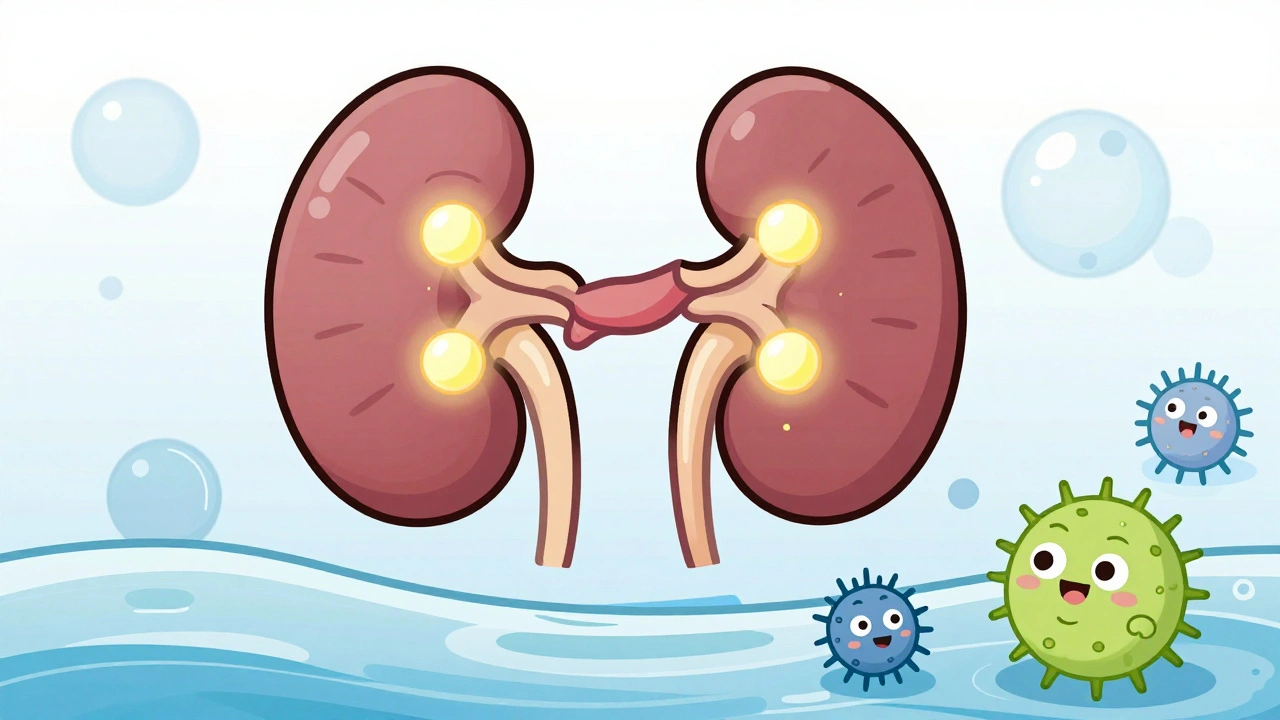
When you’re managing type 2 diabetes, finding a medication that lowers blood sugar without causing low blood sugar or weight gain feels like a win. That’s why SGLT2 inhibitors became so popular. Drugs like canagliflozin, dapagliflozin, and empagliflozin work in a clever way: they make your kidneys dump excess glucose into your urine. But here’s the catch-what your body sees as a solution, bacteria see as a buffet.
How SGLT2 Inhibitors Work (and Why They Cause Infections)
SGLT2 inhibitors block a protein in your kidneys that normally reabsorbs glucose back into your bloodstream. Instead, up to 110 grams of sugar a day ends up in your urine. That’s the equivalent of about 25 teaspoons of sugar being flushed out daily. For people with diabetes, this helps bring down HbA1c levels by 0.5% to 1.2%, often without causing hypoglycemia. It also leads to modest weight loss-around 2 to 3 kilograms on average-and has been shown in large trials to reduce heart failure hospitalizations and kidney disease progression.
But sugar in urine doesn’t just disappear. It stays there, creating a warm, moist, sugary environment perfect for yeast and bacteria to multiply. This isn’t a rare side effect-it’s built into how the drug works. Clinical trials and real-world data show that 3% to 5% of people taking SGLT2 inhibitors develop genital yeast infections, compared to just 1% to 2% on placebo. In women, it’s usually vulvovaginal candidiasis: itching, burning, thick white discharge. In men, it’s balanitis: redness, swelling, and discomfort around the head of the penis.
When Yeast Turns Serious: Urinary Tract Infections and Beyond
Genital infections are annoying, but they’re usually easy to treat with antifungal creams or oral medication. The real danger lies in what happens when those infections spread.
Studies show SGLT2 inhibitors increase the risk of urinary tract infections (UTIs) by nearly 80% compared to other diabetes drugs like DPP-4 inhibitors or sulfonylureas. What makes this different from a typical UTI is how fast it can escalate. The FDA reviewed data from 2013 to 2014 and found 19 cases of urosepsis-bloodstream infection from the urinary tract-linked to SGLT2 inhibitors. All 19 required hospitalization. Four needed intensive care. Two needed dialysis because their kidneys failed.
One documented case involved a 64-year-old woman who developed emphysematous pyelonephritis, a rare and life-threatening kidney infection where gas-forming bacteria destroy kidney tissue. She had no prior history of UTIs. After starting dapagliflozin, she developed fever, back pain, and nausea. A CT scan showed gas in her kidney. She needed surgery and 14 days of IV antibiotics. Eleven months later, after restarting the same drug, the infection came back-this time as a perinephric abscess.
Another rare but terrifying complication is Fournier’s gangrene, a necrotizing infection of the genitals and perineum. It’s extremely rare-less than 1 in 1,000 users-but it kills quickly if not treated. The European Medicines Agency added a warning for this in 2016. Symptoms include severe pain, swelling, redness, or darkening skin in the genital area, often with fever and a general feeling of being extremely unwell.
Who’s at Highest Risk?
Not everyone on SGLT2 inhibitors gets infections. But some people are far more vulnerable.
- Women are at higher risk for both genital and urinary infections due to anatomy-the urethra is shorter and closer to the anus.
- People with prior UTIs are 2 to 3 times more likely to have another one while on these drugs.
- Those over 65 have weaker immune responses and may not notice early symptoms.
- People with poor hygiene, catheters, or urinary retention create ideal conditions for infection to take hold.
- Immunocompromised patients (from chemotherapy, steroids, or HIV) can’t fight off these infections as easily.
- Those with HbA1c above 8.5% have more glucose in their urine, feeding bacteria even more.
- People with kidney impairment (eGFR below 60) may not excrete glucose as efficiently, but the risk remains elevated even at lower doses.
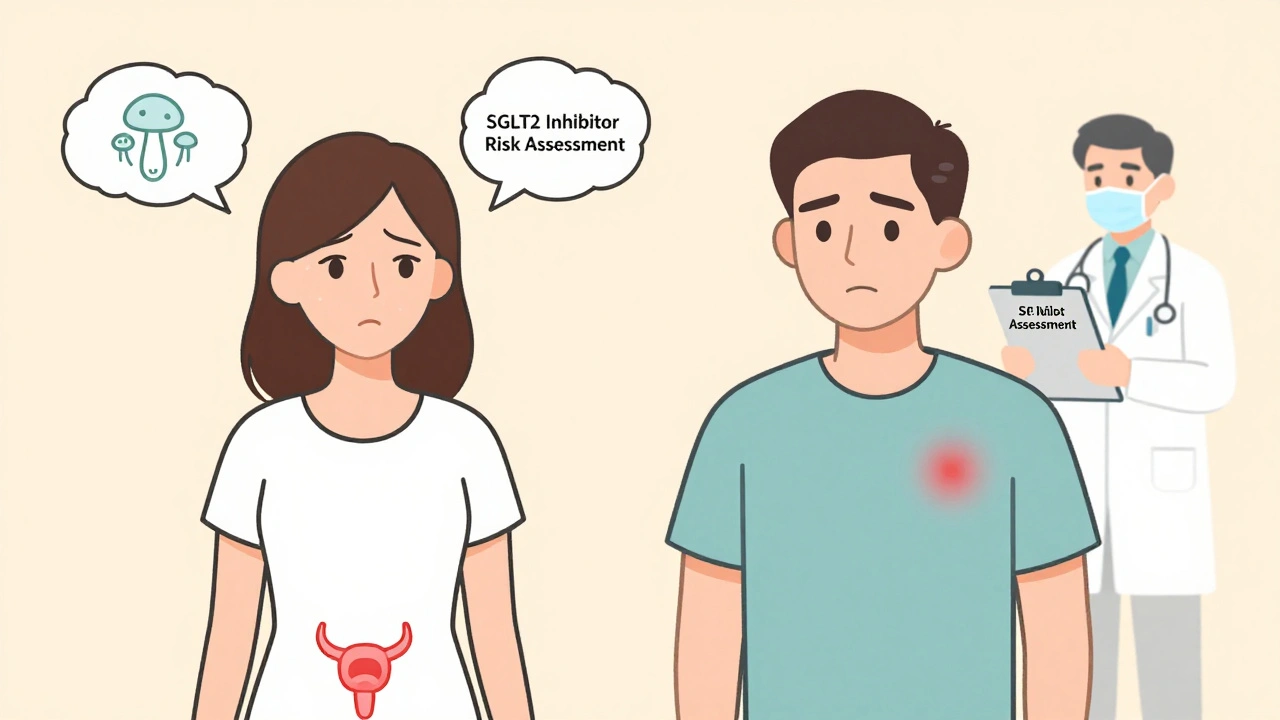
A 2024 study in Diabetes Care developed a simple 5-point risk score to predict who’s most likely to develop a serious UTI. If you have three or more of the factors above, your risk jumps to over 15%-high enough that many endocrinologists would avoid SGLT2 inhibitors entirely.
What Doctors Are Doing About It
Regulatory agencies didn’t ignore the problem. In 2015, the FDA required all SGLT2 inhibitor labels to include warnings about serious UTIs, urosepsis, and Fournier’s gangrene. The American Diabetes Association updated its guidelines in 2023 to say: “Assess history of recurrent UTIs before starting SGLT2 inhibitors.”
Many doctors now screen patients before prescribing. They ask:
- Have you had a UTI in the last 6 months?
- Do you have vaginal itching or discharge?
- Are you a woman over 65 with diabetes?
- Do you have any urinary symptoms like urgency, burning, or cloudy urine?
If the answer is yes to any of these, alternatives like GLP-1 receptor agonists (semaglutide, liraglutide) or DPP-4 inhibitors (sitagliptin, linagliptin) are often preferred. They don’t cause glycosuria, so they don’t carry the same infection risk.
What You Should Do If You’re on an SGLT2 Inhibitor
If you’re already taking one of these drugs, don’t panic. The absolute risk of a serious infection is still low-around 0.1% per year. But you need to be alert.
Here’s what to do:
- Keep your genital area clean and dry. Wash daily with mild soap. Avoid scented products. Dry thoroughly after bathing or swimming.
- Drink plenty of water. At least 2 liters a day helps flush out sugar and bacteria.
- Don’t delay reporting symptoms. If you notice itching, burning, unusual discharge, pain during urination, fever above 38°C (100.4°F), or swelling in the genital area-call your doctor today. Don’t wait.
- Consider cranberry products. A 2023 FDA safety update noted that cranberry supplements may reduce UTI risk by 29% in SGLT2 users. It’s not a guarantee, but it’s low-risk and supported by early evidence.
- Know the red flags. Sudden back pain, high fever, chills, nausea, or feeling extremely unwell could mean a kidney infection or sepsis. Go to the ER.
Some patients report stopping their medication because of recurring infections. In Sweden, nearly 24% of people on SGLT2 inhibitors stopped within two years due to genitourinary side effects. That’s more than double the discontinuation rate for other diabetes drugs.

Are These Drugs Still Worth It?
Yes-for the right person.
SGLT2 inhibitors have proven benefits that no other diabetes drug class matches: they reduce heart failure hospitalizations by up to 30%, slow kidney disease progression, and lower the risk of cardiovascular death. In the EMPA-REG OUTCOME trial, empagliflozin cut cardiovascular death by 38% in patients with existing heart disease.
For a 60-year-old man with type 2 diabetes, heart failure, and no history of UTIs, the benefits of empagliflozin likely far outweigh the risks. For a 70-year-old woman with three UTIs in the past year, recurrent yeast infections, and poor hygiene due to mobility issues? This isn’t the right drug.
It’s not about avoiding SGLT2 inhibitors entirely. It’s about matching the right drug to the right patient. That’s why doctors now use them more selectively-often as second-line therapy after metformin, especially for those with heart or kidney disease. For others, safer alternatives exist.
What’s Next?
Drugmakers are working on solutions. Newer dual SGLT1/2 inhibitors might reduce urinary glucose excretion while still lowering blood sugar. Researchers are also testing personalized risk prediction tools that use age, gender, HbA1c, and infection history to estimate individual risk before prescribing.
For now, the message is clear: SGLT2 inhibitors are powerful tools, but they come with a hidden cost. The sugar they flush out doesn’t just vanish-it lingers, and it feeds infections. Awareness, early detection, and smart prescribing are the only defenses.
If you’re on one of these drugs, stay informed. If you’re considering one, ask your doctor: “What’s my risk for infection, and do I have a history that makes this dangerous?” The answer could save you from a hospital bed-or worse.






December 5, 2025 AT 23:46
Stop giving diabetics sugar flushers and start telling them to eat less cake.