Melatonin: What It Is, How It Works, and What You Need to Know
When your body starts winding down for the night, it releases melatonin, a hormone produced by the pineal gland that signals it’s time to sleep. Also known as the sleep hormone, it’s not a sedative—it doesn’t force you to fall asleep. Instead, it tells your brain it’s dark, helping align your internal clock with the outside world. This natural rhythm is called your circadian rhythm, your body’s 24-hour internal schedule that controls sleep, hormone release, and body temperature. When this rhythm gets thrown off—by jet lag, night shifts, or too much screen time before bed—melatonin levels can drop at the wrong times, leaving you wide awake when you should be tired.
That’s why people turn to melatonin supplements. They’re not magic pills, but they can help reset your clock. If you’re struggling with sleep disorders, like delayed sleep phase syndrome or trouble falling asleep without lying in bed for hours, a small dose taken 30 to 60 minutes before bed might help. It’s especially useful for travelers crossing time zones or shift workers trying to sleep during daylight. But here’s the catch: melatonin doesn’t fix poor sleep hygiene, the habits that either support or wreck your sleep, like caffeine after noon, irregular bedtimes, or bright screens in bed. If you’re scrolling through your phone until midnight, no amount of melatonin will fully fix that.
Most people take melatonin safely for short periods, but it’s not for everyone. If you’re on blood thinners, have an autoimmune condition, or are pregnant, talk to your doctor first. And don’t assume more is better—doses as low as 0.3 mg can be effective. Many store-bought versions contain way more than you need, which can leave you groggy the next day. The goal isn’t to knock you out—it’s to gently nudge your body into its natural rhythm.
What you’ll find below is a curated collection of real, practical guides that connect melatonin to other health topics you might not expect. From how it interacts with antidepressants to whether it affects your heart, from its role in managing jet lag to what happens when you take it with alcohol—these posts cut through the noise. No fluff. No hype. Just clear, evidence-backed info you can use tonight.
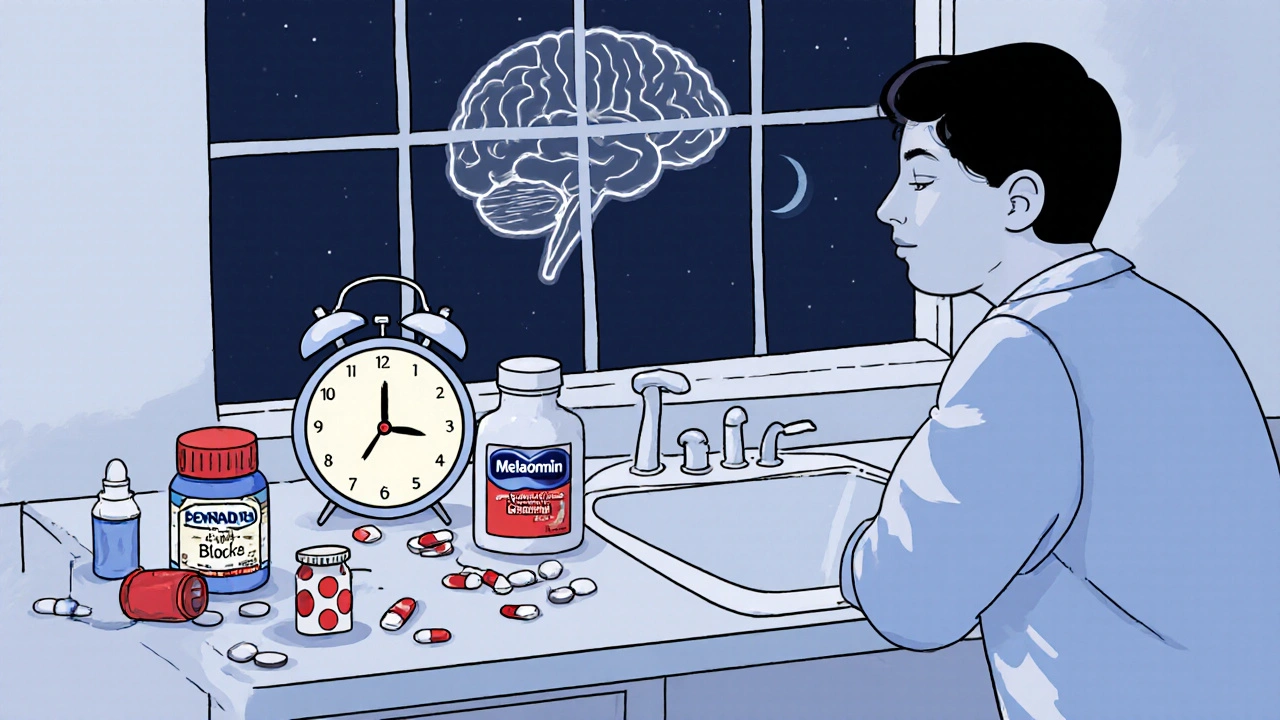
OTC sleep aids like diphenhydramine and melatonin offer short-term relief but carry serious risks with long-term use. Learn what they really do, their side effects, and safer alternatives backed by science.