Safe Sleep Aid Use: What Works, What Doesn’t, and How to Stay Safe
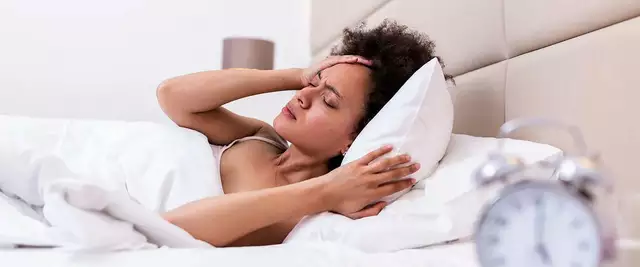
When you can’t sleep, it’s tempting to reach for anything that promises rest—but not all sleep aids, over-the-counter or prescription products used to help people fall or stay asleep. Also known as sleep medications, they vary wildly in safety, effectiveness, and long-term impact. Many people start with something simple like diphenhydramine or melatonin, thinking it’s harmless. But even these can mess with your natural sleep rhythm, cause next-day grogginess, or hide deeper problems like sleep apnea or anxiety. The real goal isn’t just falling asleep—it’s sleeping well, safely, and without needing a pill every night.
Not all sleep aids, over-the-counter or prescription products used to help people fall or stay asleep. Also known as sleep medications, they vary wildly in safety, effectiveness, and long-term impact. are created equal. Some, like second-generation antihistamines, are designed for allergies but are often misused as sleep helpers. They can cause dry mouth, confusion, and even increase dementia risk in older adults. Others, like melatonin, are hormones your body makes naturally—and using them in low doses for short periods can help reset your clock after jet lag or shift work. But taking high doses regularly? That can confuse your system more than help it. Then there’s the class of drugs prescribed for insomnia, like zolpidem or eszopiclone. They work fast, but they’re not meant for nightly use. Dependence builds quietly, and withdrawal can make insomnia worse than before.
What most people don’t realize is that the safest sleep aids, over-the-counter or prescription products used to help people fall or stay asleep. Also known as sleep medications, they vary wildly in safety, effectiveness, and long-term impact. aren’t pills at all. They’re habits: consistent bedtimes, cutting screen time before bed, keeping the room cool and dark, and avoiding caffeine after noon. For many, improving sleep hygiene does more than any supplement or prescription. And if you’re still struggling, it’s not about finding a stronger drug—it’s about figuring out why you’re not sleeping. Is it stress? Pain? Breathing issues? Untreated sleep apnea is linked to heart disease, and it’s often mistaken for plain old insomnia.
The posts below cover exactly this: what’s actually safe, what’s risky, and what’s just marketing. You’ll find clear comparisons of sleep-friendly antihistamines, how melatonin really works (and when it doesn’t), and why some meds that help with anxiety or pain can accidentally improve sleep too. There’s also info on how to spot fake supplements, what the FDA actually says about sleep aids, and how to talk to your doctor without sounding like you’re just looking for a quick fix. No fluff. No hype. Just what you need to know to sleep better—and stay healthy doing it.
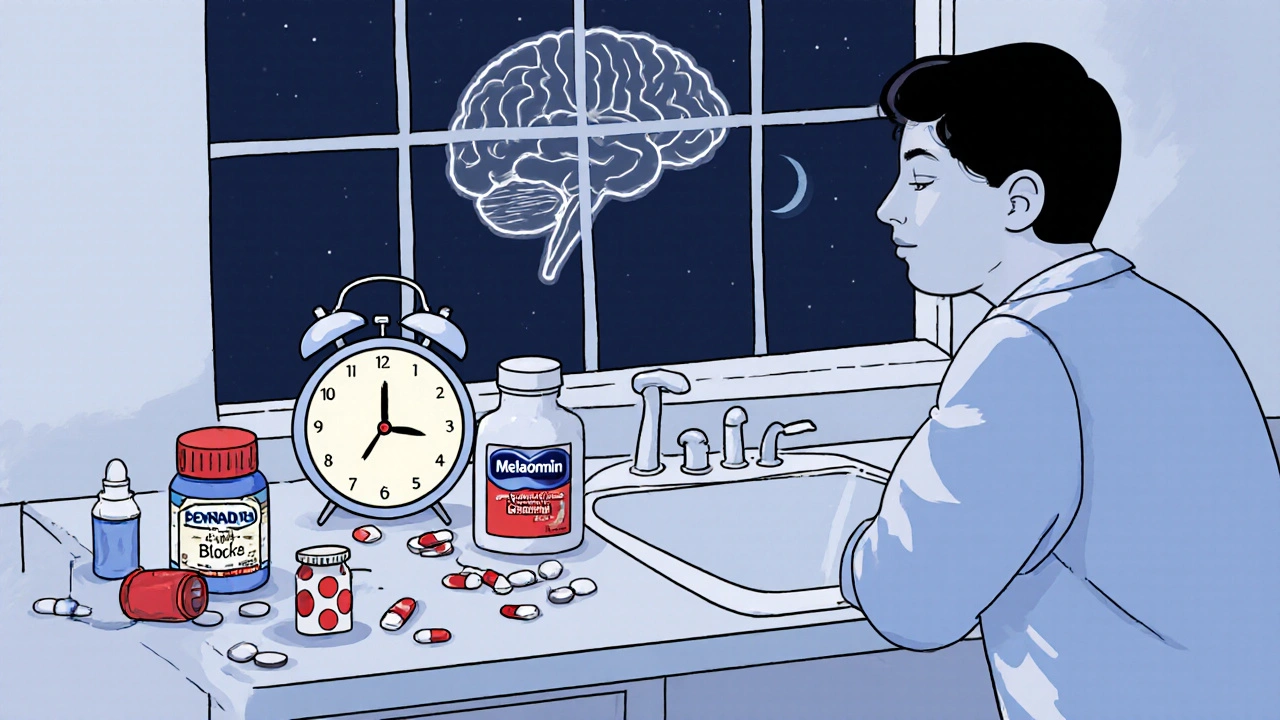
OTC sleep aids like diphenhydramine and melatonin offer short-term relief but carry serious risks with long-term use. Learn what they really do, their side effects, and safer alternatives backed by science.