Acarbose & Miglitol Dose Calculator
Calculate Your Starting Dose
Why Dose Titration Matters
Starting with a lower dose and slowly increasing it reduces the chance of quitting by more than half. Studies show patients who titrated slowly had only a 12% dropout rate compared to 30% for those who jumped to full dose.
Important: The first week is critical. If you experience severe symptoms, you can pause and return to the previous dose for another week before proceeding.
Your Personalized Plan
Select your medication and click 'Calculate My Dose' to see your personalized plan.
Tips for Reducing Gas
These tips work best when combined with proper dosing:
- Activated charcoal (500-1,000 mg) 30% reduction
- Simethicone 40% reduction
- Probiotics (Lactobacillus GG) 37% reduction
When you're managing type 2 diabetes, the last thing you want is to feel bloated, gassy, or embarrassed after every meal. Yet for many people taking acarbose or miglitol, that’s exactly what happens. These drugs help control blood sugar by slowing down how fast your body breaks down carbs-but they also send undigested sugar straight to your colon, where bacteria ferment it into gas. The result? Flatulence, bloating, cramps, and sometimes diarrhea. It’s not just uncomfortable-it’s enough to make people quit the medication altogether.
Here’s the truth: you don’t have to suffer through these side effects forever. Many people find relief by adjusting how they take the drug, changing what they eat, and using simple, proven tricks to calm their gut. The key isn’t stopping the medication-it’s learning how to work with it.
Why Do Acarbose and Miglitol Cause Gas?
Both acarbose and miglitol belong to a class of drugs called alpha-glucosidase inhibitors. They block enzymes in your small intestine that normally break down complex carbs like starch and sucrose. That sounds good-until you realize that undigested carbs don’t just disappear. They travel all the way to your large intestine, where trillions of gut bacteria feast on them. The byproduct? Hydrogen, methane, and carbon dioxide-aka gas.
Here’s the difference between the two: acarbose stays mostly in your gut, acting right where carbs are being digested. Because it doesn’t get absorbed into your bloodstream, it lingers longer and affects more carbs. That’s why it’s more likely to cause gas. Miglitol, on the other hand, gets absorbed about half-way into your system. It works faster and clears out quicker, so less undigested sugar reaches your colon. That’s why, in studies, people on miglitol report less flatulence than those on acarbose.
One 2010 study found that people on acarbose had nearly 50% more gas than those on miglitol. And while both drugs lower HbA1c by about 0.5-1.0%, acarbose tends to be slightly more effective at long-term glucose control. But if you’re too uncomfortable to take it, that benefit doesn’t matter.
How Bad Are the Side Effects?
Let’s be real: the numbers aren’t pretty. About 20-30% of people stop taking these drugs within the first 12 weeks because of GI problems. On Drugs.com, 58% of acarbose users gave it a negative rating, with 73% blaming excessive gas. Miglitol fared better, but still, 61% of negative reviews pointed to flatulence.
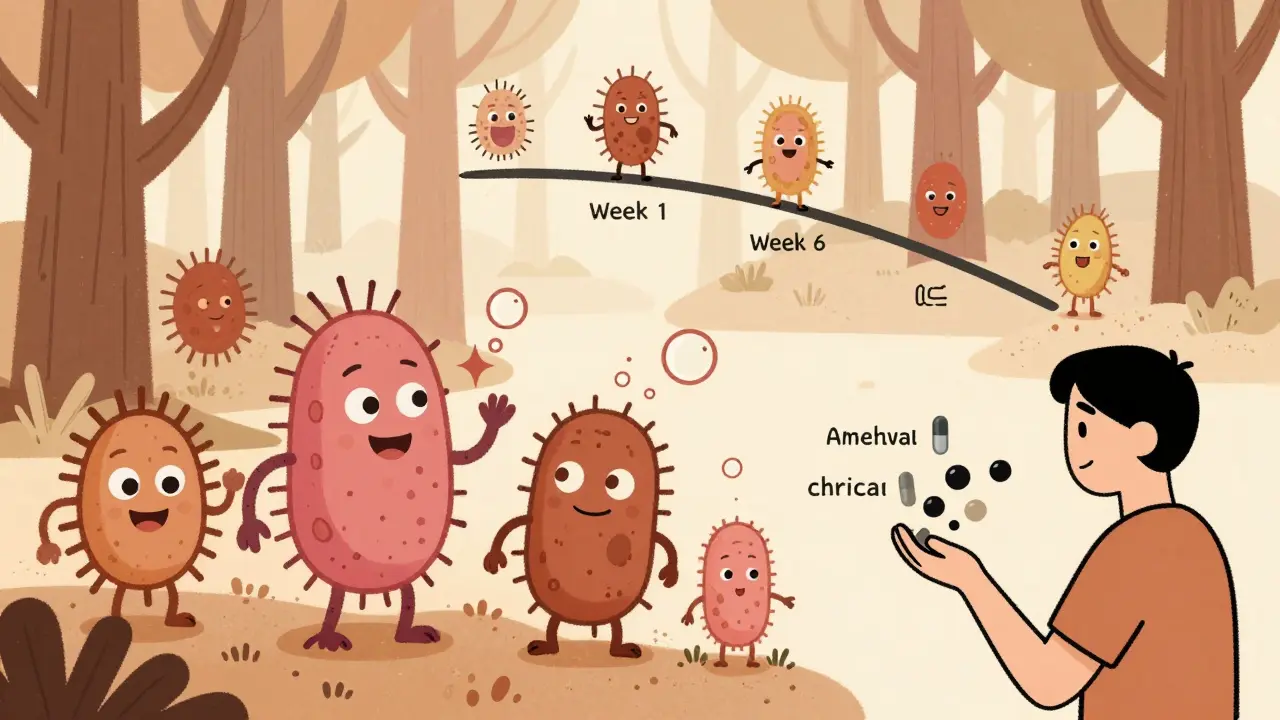
It’s not just gas. Many people report bloating, stomach cramps, and even diarrhea. These symptoms usually hit hardest during the first week-peaking around days 3 to 7. But here’s the good news: they almost always get better. In fact, most people notice major improvement by week 2 to 4. Why? Your gut bacteria adapt. They learn to handle the extra carbs without going into overdrive. Think of it like training your microbiome.
Dosage Matters: Start Low, Go Slow
One of the biggest mistakes people make is starting at the full dose. Doctors often prescribe 50-100 mg of acarbose or 25-100 mg of miglitol three times a day. But you don’t need to hit that target right away.
Experts recommend starting with just 25 mg once a day-with your largest meal. Stay there for a full week. If you feel okay, bump it up to 25 mg twice a day. After another week, go to 25 mg three times a day. Then, if needed, increase by 25 mg every two to four weeks until you reach your target dose.
This slow ramp-up cuts the chance of quitting by more than half. One meta-analysis showed that patients who titrated slowly had only a 12% dropout rate, compared to 30% for those who jumped straight to full dose. The goal isn’t speed-it’s sustainability.

What to Eat (and What to Avoid)
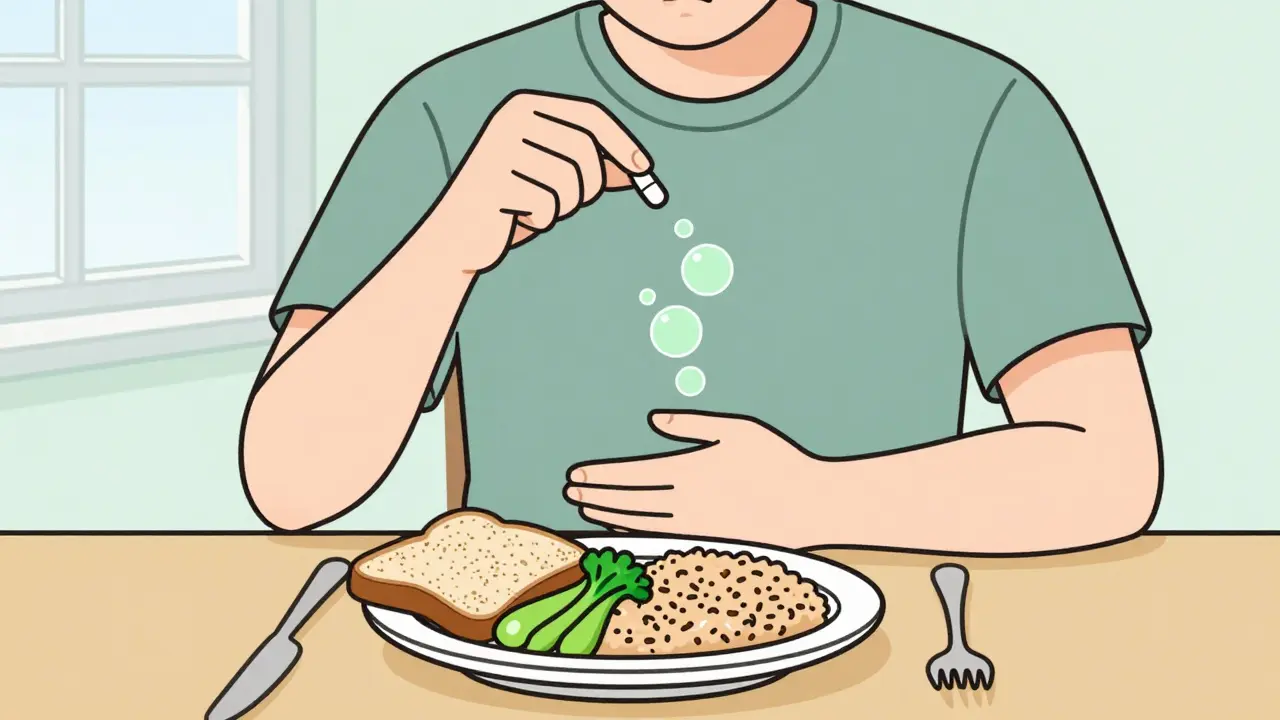
It’s not just about the drug-it’s about the food you eat with it. Carbs are the fuel for this whole process. If you eat a big plate of pasta, rice, or bread with your medication, you’re asking for trouble.
Instead, aim for consistent, moderate carb intake: 45-60 grams per meal. That’s about one cup of cooked rice or two slices of whole grain bread. Avoid sugary snacks, sodas, and fruit juices-they’re pure glucose and sucrose, and your body can’t break them down with these drugs. That means they’ll zip right to your colon and cause a gas explosion.
Also, avoid high-fiber foods during the first few weeks. Beans, lentils, broccoli, and bran cereals are healthy-but they add even more undigested material to your gut. Wait until your system adjusts before adding them back in.
And don’t skip meals. Taking the drug without carbs means it has nothing to act on-and you’re just exposing your gut to unnecessary irritation.
Simple Fixes for Gas and Bloating
Even with perfect dosing and diet, you might still have some gas. That’s okay. Here are three proven, over-the-counter tools that help:
- Activated charcoal: Take 500-1,000 mg (1-2 capsules) 30 minutes before meals. Studies show it can reduce flatus volume by up to 32%. It works by absorbing gases in your gut.
- Simethicone: Found in Gas-X or Mylanta Gas, this breaks up gas bubbles. Take 120 mg three times a day with meals. One study showed a 40% drop in bloating severity.
- Probiotics: Look for strains like Lactobacillus GG or Bifidobacterium longum BB536. A 12-week trial showed a 37% reduction in flatulence with daily probiotic use. Some newer research even shows combining miglitol with BB536 cuts gas by 42%.
These aren’t magic pills, but they’re low-risk, affordable, and backed by science. Try one at a time to see what works for you.
Why Miglitol Might Be the Better Choice
If you’re starting fresh or switching meds, miglitol often has the edge. It’s absorbed more completely, so less sugar reaches the colon. That means less gas. It also doesn’t cause the same level of abdominal bloating as acarbose.
And here’s something most people don’t know: miglitol can actually help you lose a little weight. In one study, people on miglitol lost an average of 1.2 kg (about 2.6 lbs) in 12 weeks-while still improving their blood sugar. Acarbose doesn’t do that. If you’re overweight or obese, that’s a big plus.
Price-wise, miglitol is a bit more expensive than generic acarbose-$20-35 a month versus $15-25. But if you’re more likely to stick with it, that extra cost pays off in fewer doctor visits, less discomfort, and better long-term control.
When to Talk to Your Doctor
Most GI side effects fade with time. But if you’re having severe pain, persistent diarrhea, vomiting, or yellowing of your skin or eyes, stop the medication and call your doctor. There’s a rare risk of liver issues with acarbose (about 1 in 5,000 users), and it’s important to catch it early.
Also, if you’ve tried everything-slow titration, diet tweaks, charcoal, probiotics-and you’re still miserable after 8 weeks, it’s time to consider alternatives. Metformin is still the first-line drug for most people. But if you can’t tolerate it, or if you need a weight-neutral option, acarbose and miglitol are still valuable tools.
And here’s a new development: in 2023, the FDA approved a new combination pill called Acbeta-M-acarbose and metformin in one tablet with a slow-release formula. Early trials show it cuts gas by 28% compared to regular acarbose. It’s not widely available yet, but it’s a sign that drugmakers are finally listening to patients.
You’re Not Alone
Thousands of people on Reddit, diabetes forums, and support groups have been where you are. One user, u/DiabeticDave1982, started with 25 mg of acarbose once a day and slowly increased over six weeks. After two months, his gas was barely noticeable. Another, u/SugarFreeSue, avoided fiber for the first month and said it made all the difference.
The message? This isn’t a life sentence. You don’t have to choose between good blood sugar and a peaceful gut. With the right approach, you can have both.
These drugs aren’t perfect. But for many people-especially those who can’t take metformin, need to avoid weight gain, or live in regions where they’re standard care-they’re essential. The key is patience, smart dosing, and a little help from your gut.
How long does gas last when taking acarbose or miglitol?
Gas and bloating usually peak between days 3 and 7 after starting the medication. Most people see noticeable improvement by week 2 to 4, and symptoms often become minimal after 6 to 8 weeks as gut bacteria adapt to the undigested carbs. Consistent use is key-skipping doses can reset the adaptation process.
Is miglitol better than acarbose for reducing gas?
Yes, miglitol tends to cause less flatulence than acarbose. Because miglitol is more fully absorbed in the small intestine, less undigested carbohydrate reaches the colon, where gas is produced. Studies show users report 30-50% less gas with miglitol compared to acarbose at similar doses.
Can I take probiotics with acarbose or miglitol?
Yes, probiotics are safe and often helpful. Strains like Lactobacillus GG and Bifidobacterium longum BB536 have been shown to reduce flatulence by 37-42% in clinical trials when taken daily with these medications. Take them at least 2 hours apart from your dose to avoid interference.
Should I avoid all carbs while taking these drugs?
No-you need carbs for the drug to work. But avoid large amounts of simple sugars and refined starches. Stick to moderate portions (45-60g per meal) of complex carbs like whole grains, legumes, and vegetables. Avoid sugary drinks, candy, and white bread, which cause sudden spikes in undigested carbs and worsen gas.
What if the side effects never go away?
If you’ve followed a slow titration plan, adjusted your diet, used charcoal or probiotics, and still have severe symptoms after 8 weeks, talk to your doctor. You may need to switch to another medication like SGLT2 inhibitors or GLP-1 agonists, which have fewer GI side effects. Don’t stop the drug abruptly-work with your provider to transition safely.
Do these drugs cause weight gain?
No-both acarbose and miglitol are weight-neutral. In fact, miglitol has been shown to cause a small but measurable weight loss (about 1.2 kg over 12 weeks) in some patients. Unlike insulin or sulfonylureas, they don’t increase hunger or fat storage.
Can I take these drugs with metformin?
Yes, they’re often combined. In fact, a new FDA-approved combination pill (Acbeta-M) combines acarbose and metformin in a slow-release form to reduce GI side effects. Taking them together can improve blood sugar control more than either drug alone, but start with low doses of both to minimize discomfort.
If you’re struggling with gas from acarbose or miglitol, remember: this isn’t a sign the drug isn’t working-it’s a sign your body is adjusting. With the right strategy, most people find relief. You don’t have to choose between control and comfort. You can have both.