
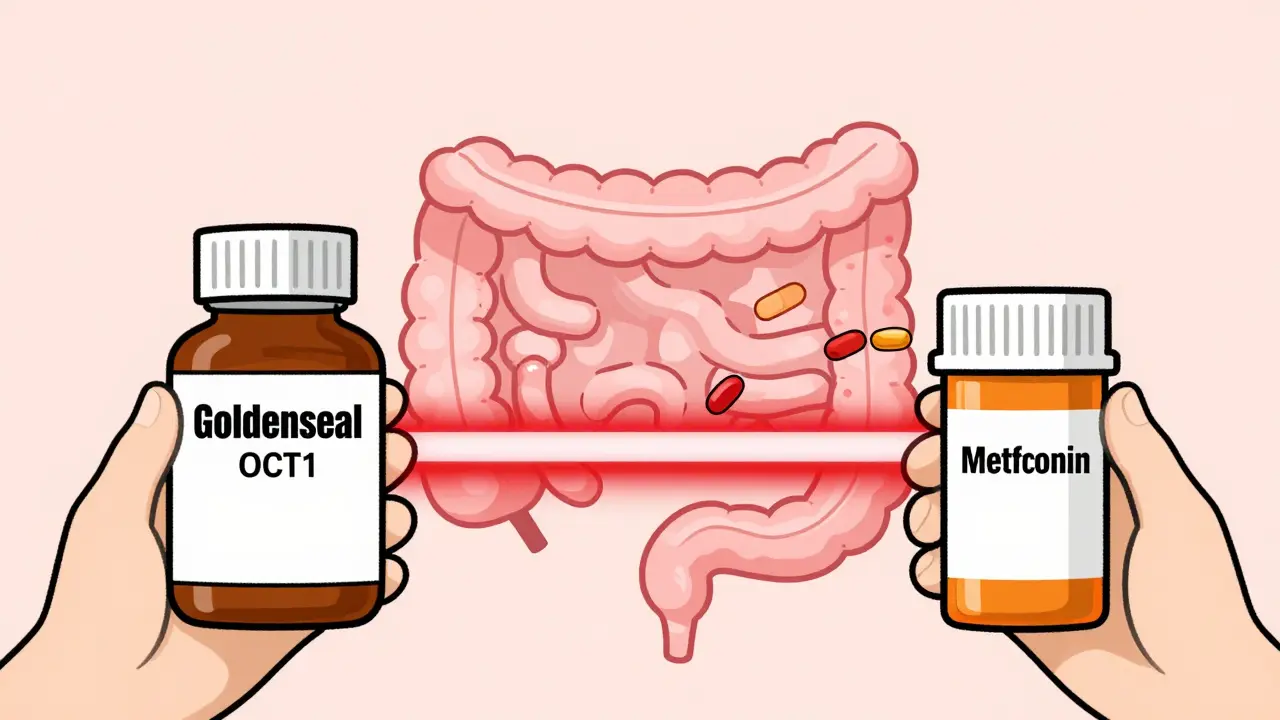
Many people with type 2 diabetes turn to herbal supplements to help manage their blood sugar. One of the most popular is goldenseal. But what happens when you take it with metformin, the most common prescription for diabetes? The answer isn’t simple - and the risks are real.
What’s Really Going On Between Goldenseal and Metformin?
Goldenseal isn’t just another herbal tea. Its main active ingredient is berberine, a compound that’s been studied for its ability to lower blood sugar. In fact, clinical trials show berberine can reduce fasting glucose and HbA1c levels almost as effectively as some diabetes medications. That’s why people with diabetes often add it to their routine - hoping for better control.
But here’s the catch: metformin doesn’t work the way most drugs do. It doesn’t get broken down by the liver. Instead, it’s absorbed directly through the gut lining using special transporters called organic cation transporter 1 (OCT1). This is where goldenseal steps in - and causes trouble.
A 2025 clinical study published in Clinical and Translational Science found that goldenseal blocks these transporters. When taken together, it reduces how much metformin gets into your bloodstream. At low doses of metformin (500-750 mg daily), metformin levels dropped by 20-25%. That’s not a small change. It’s enough to make blood sugar harder to control.
Why Dose Matters - And Why It’s Confusing
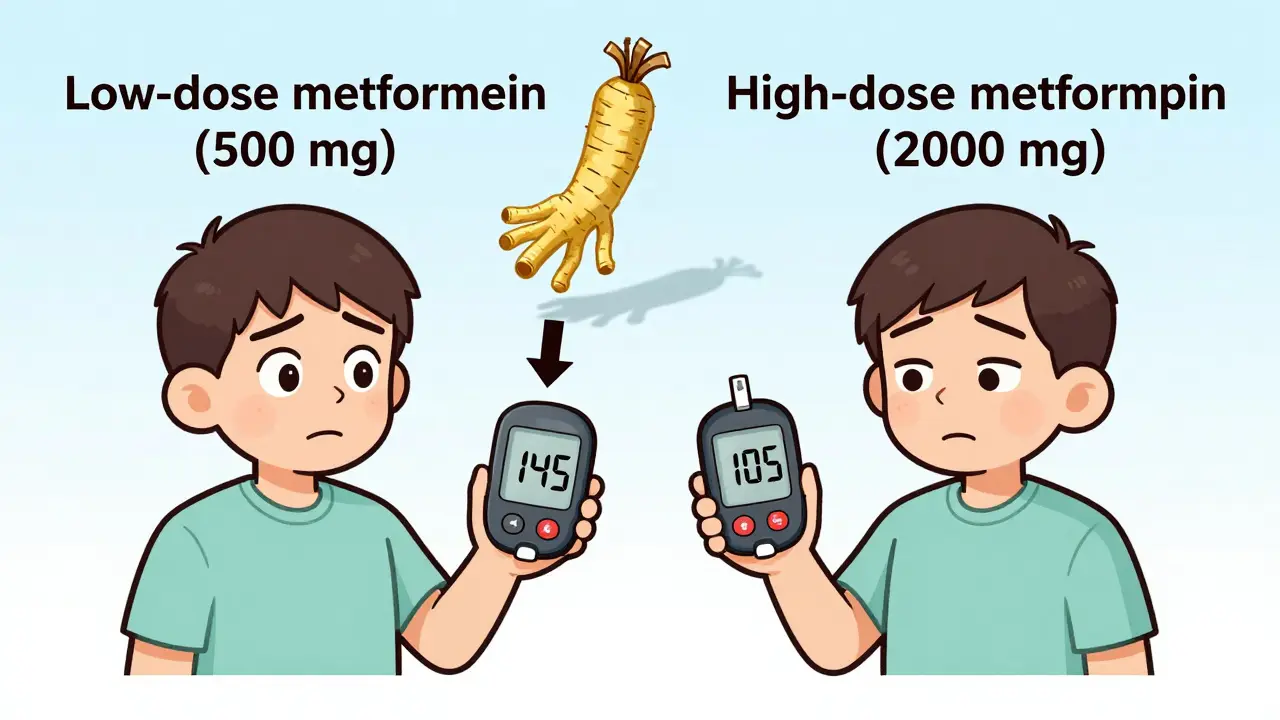
Here’s where it gets even trickier. The same study showed that at higher metformin doses (2000-2550 mg), the interaction disappeared. No drop in metformin levels. Why? Because the transporters get saturated. When you take a lot of metformin, your gut can’t absorb any more - goldenseal or not.
So if you’re on a low dose, you’re at risk. If you’re on a high dose, maybe not. But that doesn’t mean you’re safe.
Why? Because goldenseal doesn’t just interfere with metformin - it also lowers blood sugar on its own. Berberine has its own glucose-lowering effect. In the same study, participants’ HbA1c dropped from 6.8% to 6.5% - regardless of whether they took goldenseal or not. That might sound good. But here’s the problem: you can’t predict how much it will lower your sugar. One person might get a nice boost. Another might crash into hypoglycemia. And if you stop taking goldenseal suddenly? Your metformin levels might suddenly rise again, throwing your blood sugar out of whack.
The Double-Edged Sword of Berberine
Berberine, the star of goldenseal, has been tested in 27 clinical trials involving over 2,300 people. The results? It lowers fasting blood sugar, post-meal spikes, and HbA1c. But here’s what most supplement sellers don’t tell you: those effects weaken over time. After 90 days, the glucose-lowering power drops - especially in people over 60.
And yet, the MSD Manual and the Merck Manual both warn: “Goldenseal may decrease the blood levels of metformin, potentially hindering glucose control.” At the same time, they note berberine “may also increase the hypoglycemic effects” of diabetes meds. So you’re caught between two dangers: too little metformin, or too much sugar-lowering.
Imagine this: You’ve been taking 500 mg of metformin twice a day. Your blood sugar is stable. You start a goldenseal supplement because a friend said it “helped her diabetes.” Two weeks later, your fasting glucose jumps from 110 to 145. You think your diabetes is getting worse. But the real culprit? Your metformin isn’t being absorbed. You didn’t stop your meds. You just added something that blocked them.
What the Experts Say
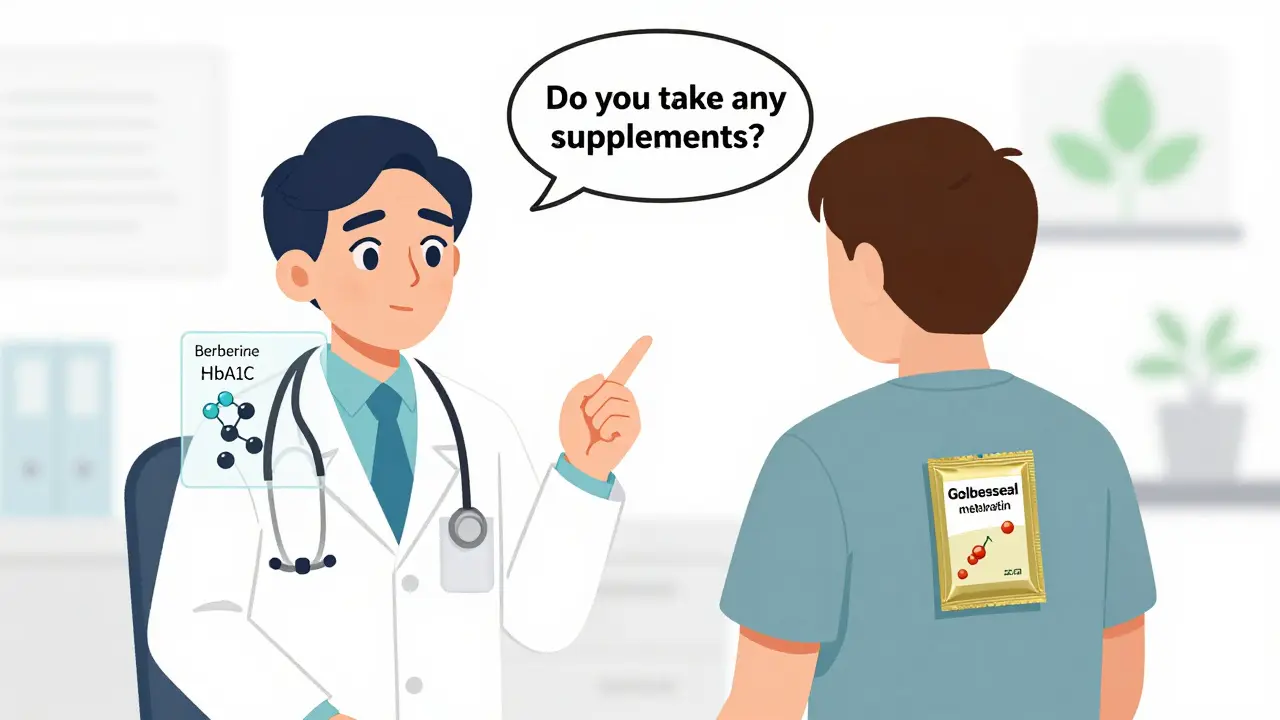
The American Diabetes Association doesn’t have a specific rule about goldenseal. But they do say this: “Routine assessment of all medications and supplements” is part of good diabetes care. That means your doctor should ask you - not the other way around.
The Endocrine Society issued a warning in 2022: “Potential clinically significant interactions between commonly used herbal products and antidiabetic medications warranting increased vigilance.” That’s code for: “This is happening. We’re seeing it. Pay attention.”
And here’s the kicker: 23% of U.S. adults use herbal supplements. Among people with diabetes, that number jumps to 35-40%. Most of them don’t tell their doctor. Why? Because they think “natural” means “safe.” It doesn’t.
What Should You Do?
If you’re on metformin and thinking about taking goldenseal - stop. Don’t start. Talk to your doctor first.
Here’s what to do right now:
- Check your metformin dose. If you’re on less than 1000 mg per day, the interaction is strongest. Avoid goldenseal completely.
- Don’t assume “natural” is safe. Goldenseal is a potent plant. It’s not a vitamin. It’s a drug - and it interferes with another drug.
- Track your blood sugar. If you’ve been taking goldenseal and notice your glucose levels are rising, especially in the morning, stop it immediately and check in with your provider.
- Ask about berberine supplements. If you want the glucose-lowering benefits of berberine without the goldenseal risk, ask your doctor about standardized berberine supplements. They’re more predictable, and you can control the dose. But even then - don’t mix them with metformin without medical supervision.
What About Other Herbs?
Goldenseal isn’t alone. Other herbs like bitter melon, fenugreek, and cinnamon also affect blood sugar. But none have been studied as closely with metformin. And none have the same level of evidence showing they directly block absorption.
Goldenseal is unique because of how it interacts - not just with metformin, but with the way your body absorbs it. That’s why it’s not just a “possible interaction.” It’s a documented, measurable, and clinically relevant one.
The Bigger Picture
There are over 537 million adults living with diabetes worldwide. Many of them are using supplements. Most don’t know the risks. And the supplement industry doesn’t tell them.
Goldenseal is also an endangered plant. Harvesting it for supplements is harming wild populations. So even if you ignore the medical risks, there’s an environmental cost.
Managing diabetes is hard enough. You shouldn’t have to guess whether your herbal tea is helping - or sabotaging - your treatment.
Can I take goldenseal with metformin if I’m on a high dose?
Even if you’re on a high dose of metformin (2000 mg or more), the interaction may still be unpredictable. While studies show no significant drop in metformin levels at high doses, berberine in goldenseal still lowers blood sugar on its own. This creates a risk of sudden hypoglycemia, especially if you change your dose or stop taking the supplement. It’s safer to avoid the combination entirely.
Does goldenseal lower blood sugar on its own?
Yes. The active compound in goldenseal, berberine, has been shown in multiple clinical trials to reduce fasting blood glucose, post-meal spikes, and HbA1c levels. In one meta-analysis of 27 studies, berberine performed similarly to metformin in lowering HbA1c. However, its effects weaken over time, especially after 90 days of use and in people over 60.
Why doesn’t goldenseal affect everyone the same way?
The interaction depends on your metformin dose, your gut’s transporter activity, and your body’s ability to absorb nutrients. People with lower metformin doses (under 1000 mg/day) are most affected. Genetics, gut health, and even diet can influence how much goldenseal blocks metformin absorption. That’s why one person might see no change, while another has dangerously high blood sugar.
Should I stop taking goldenseal if I’m on metformin?
Yes - unless your doctor has reviewed your case and given you specific instructions. The combination can cause unpredictable changes in blood sugar. Stopping suddenly may cause your metformin levels to rise, leading to side effects like nausea or low blood sugar. Always talk to your provider before starting or stopping any supplement.
Are there safer herbal alternatives to goldenseal for blood sugar?
Some herbs like cinnamon and fenugreek have milder effects and less evidence of drug interactions. But none are proven to be safe when combined with metformin. The safest approach is to stick with medications your doctor has prescribed and avoid unregulated supplements. If you want herbal support, ask about clinically tested berberine supplements - but only under medical supervision.


February 26, 2026 AT 14:38
I took goldenseal for a month because my buddy swore by it. My sugar went from stable to wild. I didn’t even realize it was the supplement until I stopped and my numbers dropped back down. Don’t listen to anyone who says 'natural' means safe. It’s a drug. Period.