Imagine launching a drug that passed every clinical trial with flying colors, only to find out two years later that it causes a rare but severe reaction in one out of every 10,000 people. It sounds like a nightmare, but it's exactly why we have drug safety signals is information from one or multiple sources suggesting a new or known association between a medicine and an adverse event that requires further investigation. This process isn't about finding a "smoking gun" immediately; it's about spotting a flicker of a problem before it becomes a wildfire.
What exactly is a safety signal?
In the world of Pharmacovigilance is the science and activities relating to the detection, assessment, understanding and prevention of adverse effects , a signal is essentially a red flag. According to the CIOMS is the Council for International Organizations of Medical Sciences, which provides global standards for drug safety and ethics , a signal occurs when there is enough evidence to justify taking a closer look. It doesn't mean the drug definitely caused the problem-it just means we can't ignore the possibility.
Think of it as a detective's lead. One person reporting a strange side effect might be a coincidence. Ten people reporting the same specific symptom? That's a signal. These risks emerge through two main paths: clinical signals (individual case reports) and statistical signals (patterns found in big data sets).
The gap between clinical trials and the real world
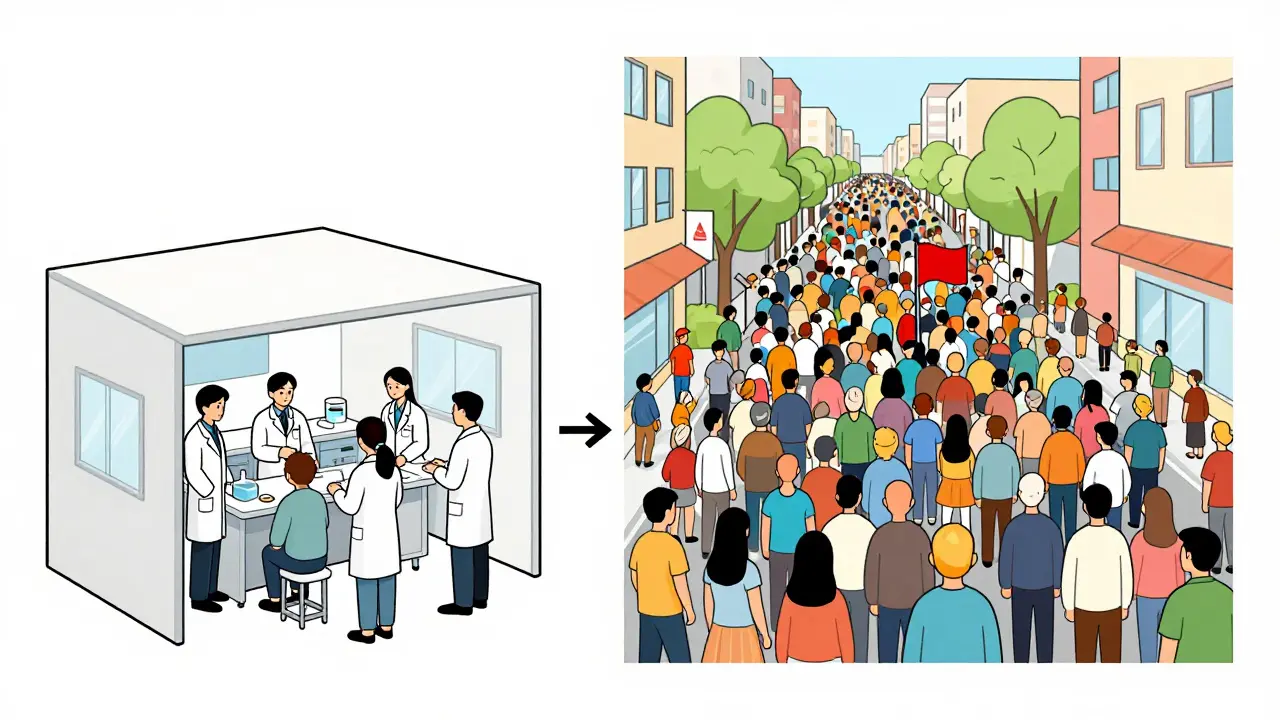
You might wonder: didn't the clinical trials catch this? Here is the hard truth: most pre-approval trials only enroll between 1,000 and 5,000 patients. While that sounds like a lot, it's a drop in the bucket compared to the millions who will eventually use the drug. Clinical trials are controlled environments-patients are often screened for comorbidities, and they aren't usually taking five other medications at once.
Real-world use introduces "noise" that trials can't simulate. This is where risks emerge. When a drug hits the general population, it meets people with varying ages, genetic backgrounds, and complex medical histories. This is why the FDA is the U.S. Food and Drug Administration, the federal agency responsible for protecting public health by ensuring the safety of medicines and the EMA is the European Medicines Agency, the agency responsible for the scientific evaluation, supervision, and safety monitoring of medicines in the EU keep such a close eye on post-marketing data.
How signals are actually detected
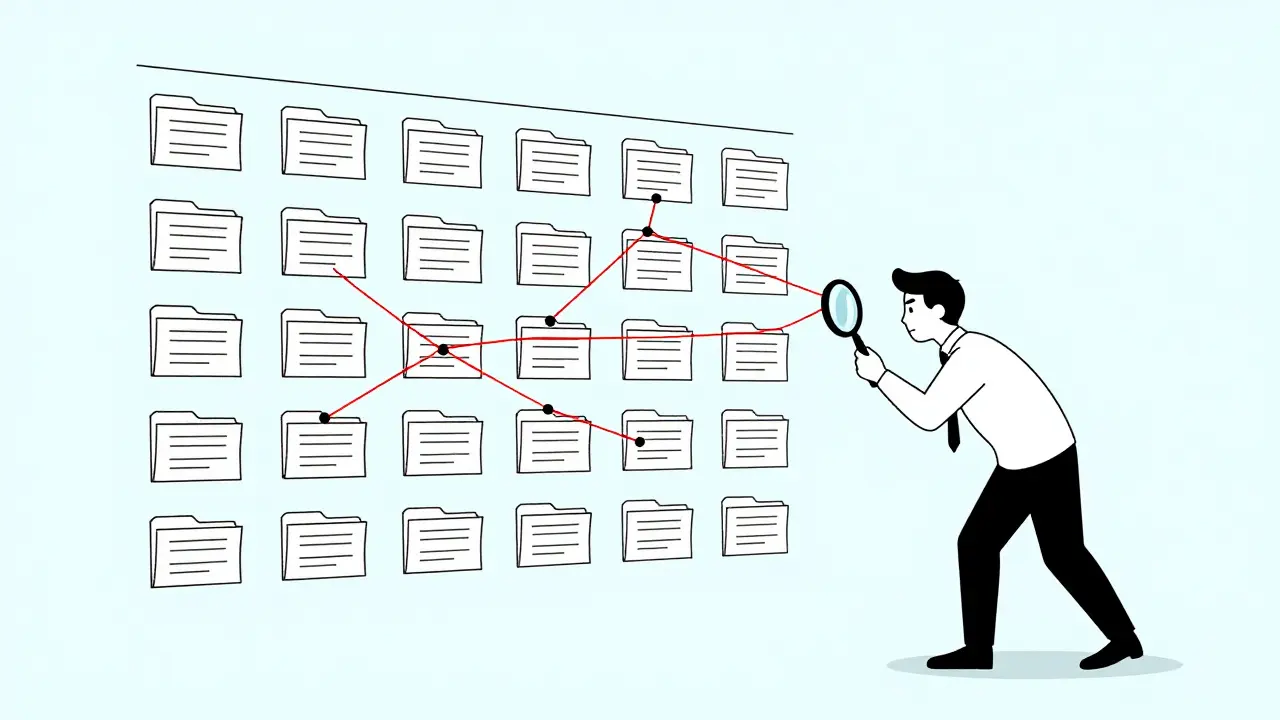
Regulators don't just wait for phone calls; they use high-powered data mining. One of the most common tools is Disproportionality Analysis is a statistical method used to detect if a specific adverse event is reported more frequently for a drug than for other drugs in a database . If the reporting odds ratio (ROR) hits a certain threshold-usually 2.0 or higher-it triggers an alert.
| Feature | FDA Approach | EMA Approach |
|---|---|---|
| Primary Database | FAERS | EudraVigilance |
| Screening Frequency | Bi-weekly screening | Continuous monitoring |
| Reporting Style | Quarterly public reports | Periodic validation meetings |
| Core Strength | Quantitative methods (Data mining) | Case series analysis (Clinical review) |
While the FDA is often faster at spotting numbers-based trends, the EMA tends to be more effective at identifying signals through detailed case series analysis. Together, they form a safety net that catches what a single trial would miss.
From a "red flag" to a label change
Not every signal leads to a warning on a pill bottle. In fact, 60% to 80% of quantitative signals turn out to be false positives. So, how do experts decide what's real? They look for a few key predictors. Based on a 2018 study of 117 signals, four things make a signal much more likely to result in a Prescribing Information (PI) update:
- Replication: Does the same risk appear in FAERS, scientific literature, and patient registries?
- Plausibility: Does the biology make sense? (e.g., Does the drug's mechanism actually target a pathway that could cause this event?)
- Severity: Serious events (like heart failure) get updated much faster than non-serious ones (like mild nausea).
- Drug Age: New drugs (≤5 years) are under much heavier scrutiny and see updates more frequently.
A great example of this in action was the signal linking rosiglitazone to myocardial infarction. By triangulating data across multiple sources, regulators were able to confirm the risk and take action to protect patients.
The struggle with data quality
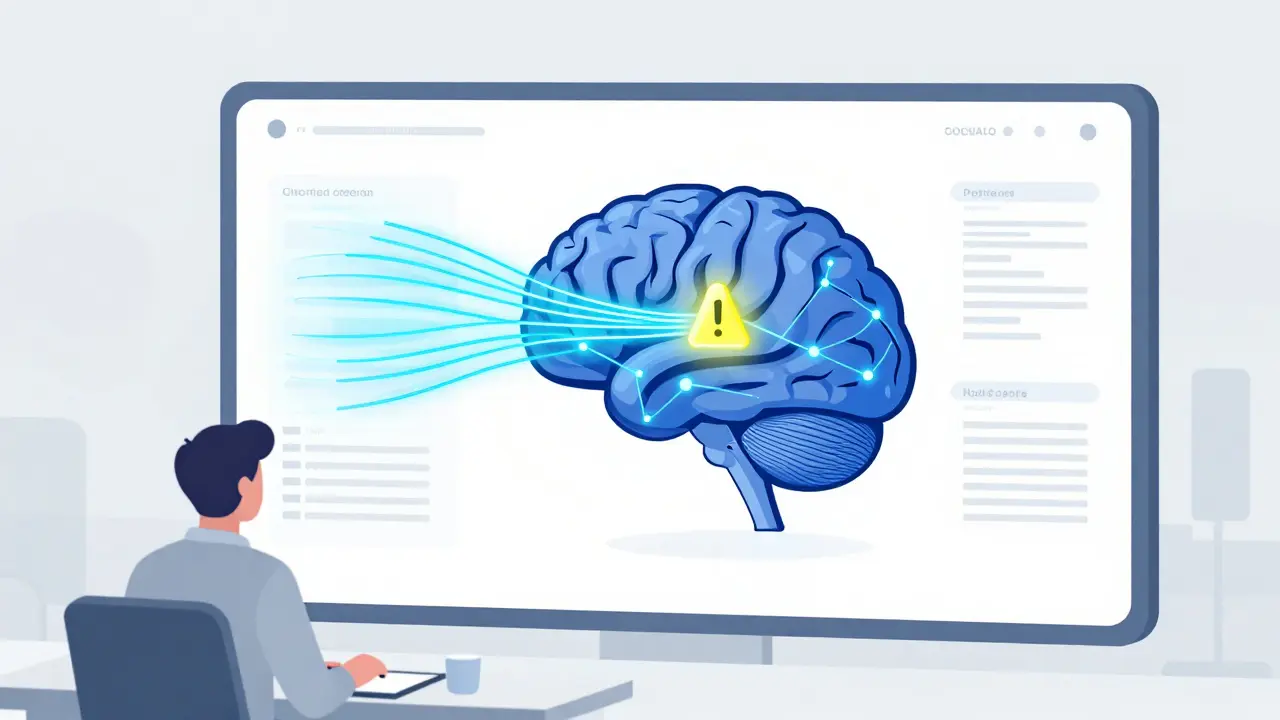
The biggest headache for safety officers isn't the math-it's the data. Spontaneous reports are often messy. A patient might report "feeling weird" without specifying what that means, or they might forget to mention they were taking a herbal supplement that interacted with the drug. About 68% of safety officers cite poor data quality as their top challenge.
There is also the problem of reporting bias. People are 3.2 times more likely to report a serious event than a minor one. This creates a skewed picture of the drug's safety profile, making it harder to spot low-grade but chronic risks.
The future: AI and Real-Time Monitoring
We are moving away from "waiting for a report" toward active monitoring. The Sentinel Initiative is an FDA program that uses electronic health records and insurance claims to monitor the safety of approved medical products in real-time is a game changer. Instead of relying on someone to voluntarily report a side effect, the system can scan the health records of millions of people to see if a pattern is emerging.
Artificial Intelligence is also slashing the time it takes to generate a signal. In 2022, the EMA began using AI algorithms that reduced the signal generation window from 14 days down to just 48 hours. This means risks are identified and validated in a fraction of the time, potentially saving countless lives.
Why don't clinical trials find all the risks?
Clinical trials have limited sample sizes (usually 1,000-5,000 people) and strict inclusion criteria. They don't include enough elderly patients, people with multiple chronic diseases, or those taking various other medications, which is where many rare or interactive risks emerge.
What is the difference between a signal and a confirmed risk?
A signal is a hypothesis-a suggestion that a link *might* exist based on data. A confirmed risk (or identified risk) is a validated association where evidence (statistical or clinical) proves the drug is likely causing the event.
What is a "reporting odds ratio"?
It's a statistical tool used in disproportionality analysis. It compares how often a specific side effect is reported for a target drug versus all other drugs in a database. A ratio of 2.0 or more often triggers a safety investigation.
How does AI help in drug safety monitoring?
AI can process massive volumes of unstructured data (like doctor's notes or patient forums) much faster than humans. It helps identify patterns and generate signals in hours rather than weeks, allowing regulators to react more quickly.
What happens once a signal is validated?
Depending on the severity, regulators may require the manufacturer to update the Prescribing Information (PI) label, issue a "Dear Healthcare Professional" letter, or in extreme cases, withdraw the drug from the market.