When your body turns on itself, everyday tasks become battles. Getting out of bed, buttoning a shirt, walking to the kitchen - these aren’t just chores. For people with autoimmune diseases like lupus, rheumatoid arthritis, or Sjögren’s syndrome, they’re daily tests of endurance. And when fatigue hits hard, or joints swell, or muscles weaken, it’s not just pain you’re fighting - it’s functional impairment. That’s where rehab and occupational therapy step in. Not as a last resort, but as a critical, science-backed part of managing life with chronic autoimmunity.
What Functional Impairment Really Looks Like
Functional impairment isn’t just "feeling tired." It’s the measurable loss of ability to do things you used to take for granted. A 2022 study in the Journal of Autoimmunity found that 68% of people with autoimmune conditions report difficulty with basic self-care tasks within five years of diagnosis. That’s not normal aging. That’s disease. Think about it: if you have hand joint damage from rheumatoid arthritis, opening a jar becomes impossible. If lupus flares cause muscle weakness, climbing stairs feels like scaling a wall. If Sjögren’s syndrome leaves you with severe dry eyes and brain fog, reading a screen for more than 10 minutes triggers a crash. These aren’t "just symptoms." They’re functional breakdowns - and they’re treatable. The key? Timing. Research shows the biggest gains happen when therapy starts within the first 12 months of symptoms. Waiting until you’re fully disabled means you’re playing catch-up. Early intervention can improve function by 35-42%, according to the Health Assessment Questionnaire Disability Index (HAQ-DI). That’s not a minor tweak. That’s going from needing help to dress yourself to doing it alone.Physical Therapy: Rebuilding Strength Without Triggering Flares
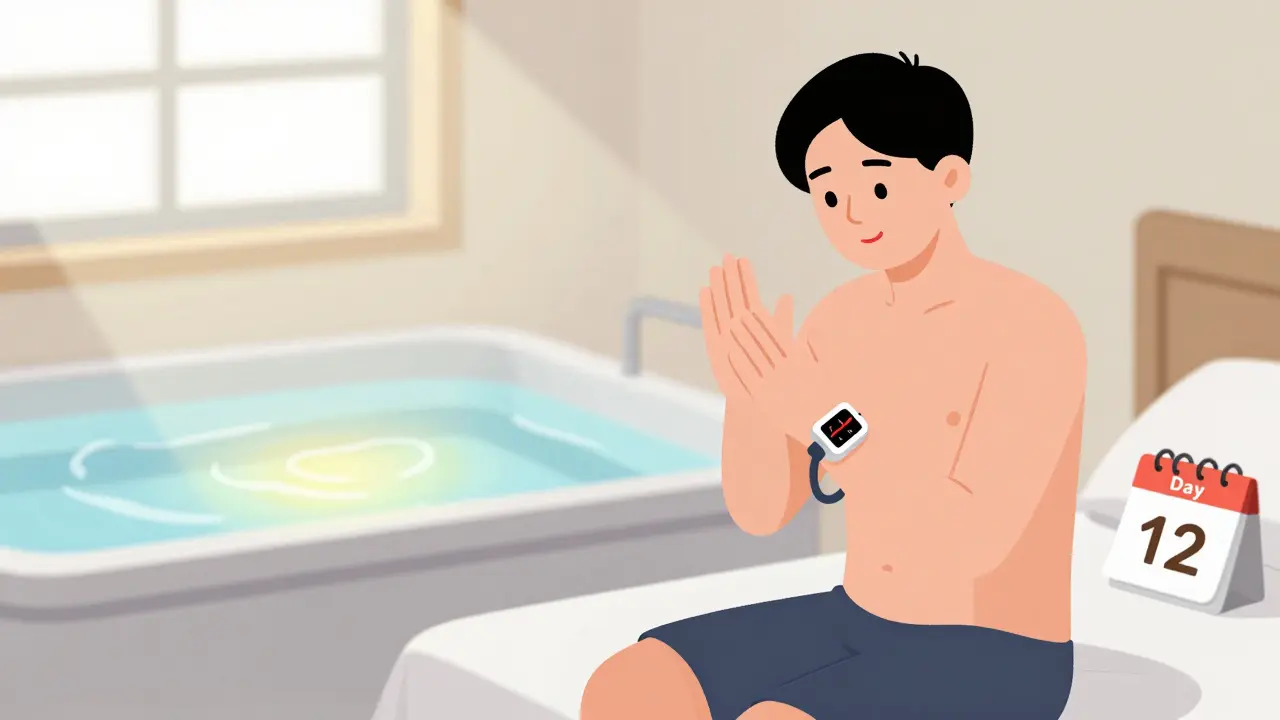
Physical therapy (PT) isn’t about lifting heavy weights or running marathons. In autoimmune rehab, it’s about precision. Too much, and you trigger a flare. Too little, and you lose more strength. During a flare, PT shifts to gentle isometric exercises - muscle contractions without joint movement. These are done at just 20-30% of your max effort. Why? Because even light movement helps maintain circulation and prevent muscle wasting, without adding inflammation. Once the flare fades, therapists gradually introduce aerobic work at 40-60% of your heart rate reserve. That’s not a treadmill sprint. That’s a slow walk on a treadmill, monitored with a heart rate monitor. Hydrotherapy is one of the most effective tools. Water at 92-96°F reduces joint stress and eases pain. Studies show it cuts pain scores by 22% more than land-based exercise. Visual Analog Scale scores drop from 7.2 to 4.1 in just four weeks. But here’s the catch: 68% of rural clinics don’t have hydrotherapy pools. That’s why home-based programs are becoming essential. PT also uses tools like TENS units (delivering 50-100Hz pulses to block pain signals) and goniometers to track joint range of motion. Progress isn’t measured in reps - it’s measured in whether you can now get dressed without help, or stand long enough to cook a meal.Occupational Therapy: Doing More With Less Energy
While PT rebuilds movement, occupational therapy (OT) rebuilds independence. OT doesn’t care how strong your legs are - it cares if you can hold a toothbrush, use a computer, or carry groceries. The core of OT is the 4 Ps: Prioritize, Plan, Pace, Position. You don’t do everything. You do what matters - and you do it smart. - Prioritize: What tasks are non-negotiable? Showering? Taking medication? Answering the phone? Focus there. - Plan: Break tasks into chunks. Don’t clean the whole kitchen. Clean one counter, then rest. - Pace: Work for 15-20 minutes. Then rest for 5-10. This isn’t laziness - it’s biology. Your body needs recovery time to avoid crashes. - Position: Use ergonomic tools. A long-handled reacher for picking things up. A rocker knife for cutting food. A shower chair so you don’t have to stand. The Canadian Occupational Performance Measure (COPM) is the gold standard tool here. A 2-point improvement on its 10-point scale means real, measurable change - like going from needing help to bathe to doing it yourself. In upper limb cases, OT can increase independence by 31% with simple tech: voice-activated lights, smart thermostats, or automated door openers. One patient, after six months of OT, stopped using a cane and started cooking again. Her secret? A jar opener with a lever. Simple. Effective.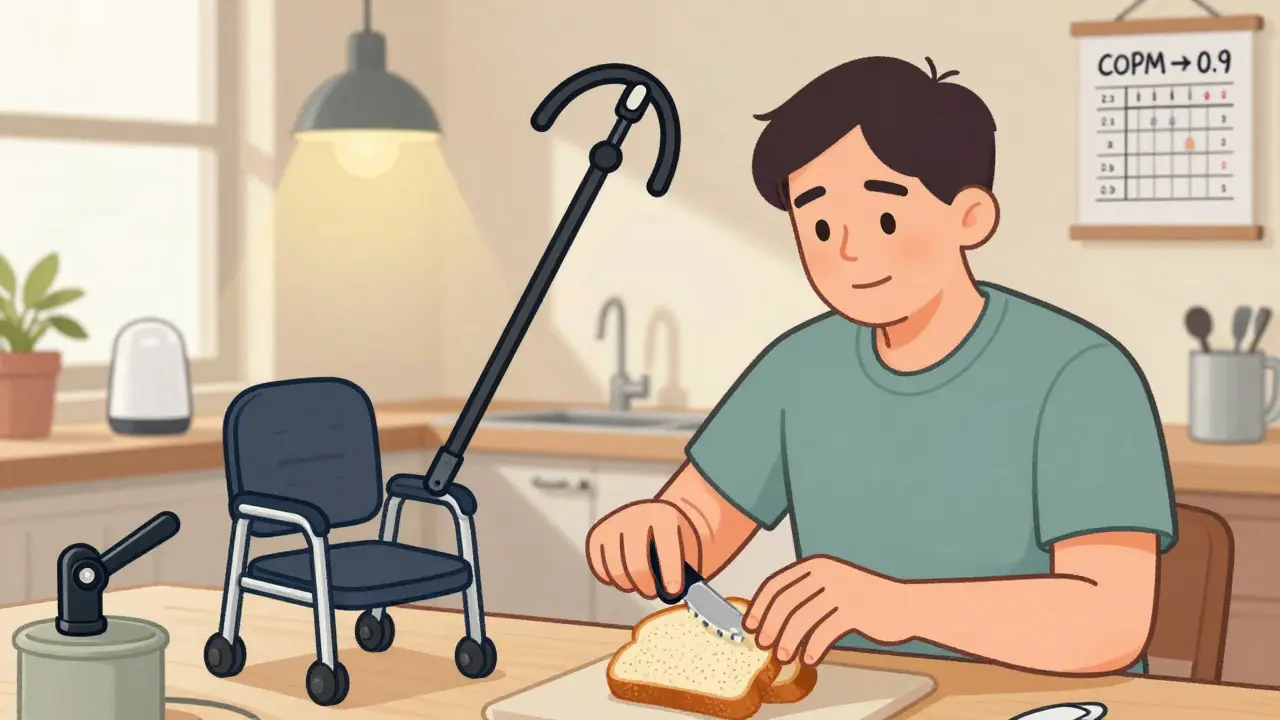
PT vs. OT: What Each Does Best
They’re not interchangeable. They’re teammates. - Physical Therapy wins for lower body function. The Timed Up and Go test - which measures how fast someone stands, walks 3 meters, turns, and sits - shows PT improves scores 28% more than OT alone. If you’re struggling to walk, PT is your first stop. - Occupational Therapy dominates upper body and daily living tasks. The Arthritis Hand Function Test shows OT improves hand dexterity 33% better than PT. If you can’t button your shirt or hold a coffee cup, OT is the answer. A 2023 study in the ACR Journal found that patients who got both PT and OT improved twice as fast as those who got one alone. The combo isn’t optional - it’s essential.When Therapy Doesn’t Work - And Why
Not every rehab program helps. Some make things worse. The biggest mistake? Pushing through pain. Too many therapists treat autoimmune disease like it’s a general fitness issue. They say, "Just keep going." But for someone with lupus, pushing through pain doesn’t build strength - it triggers a 3-day crash. That’s why 47% of negative reviews on Healthgrades mention therapists ignoring flares. Another problem? Ignoring central fatigue. This isn’t muscle tiredness. It’s brain-driven exhaustion. A 2021 JAMA Internal Medicine commentary found 19% of rehab programs don’t account for it - and end up worsening symptoms in conditions like fibromyalgia and Sjögren’s. And then there’s the "boom-bust cycle." You feel okay for a day, so you do everything - laundry, shopping, cleaning. Then you crash for three days. That’s normal. But it’s preventable. The 70% effort rule works: never push past 70% of your perceived maximum. If you feel like you’re at 80%, you’re already over. Insurance is another barrier. Most plans cover only 12-15 sessions a year. But studies show you need 24-30 to see lasting change. That’s why home-based telehealth programs are surging. Since 2020, 68% of patients now use virtual therapy - up from just 22%.What Real Success Looks Like
Success isn’t curing the disease. It’s reclaiming your life. One Reddit user, u/RheumaWarrior, posted in March 2023: "After six months of graded exercise therapy, I dropped my HAQ-DI from 2.1 to 0.8. I went from being housebound to working part-time." That’s not luck. That’s structured rehab. Another patient, with hand deformities from RA, started using adaptive utensils and voice-controlled home systems. Within three months, she was making her own meals again. Her OT didn’t fix her joints. They fixed her environment. These aren’t outliers. They’re the result of evidence-based, personalized care.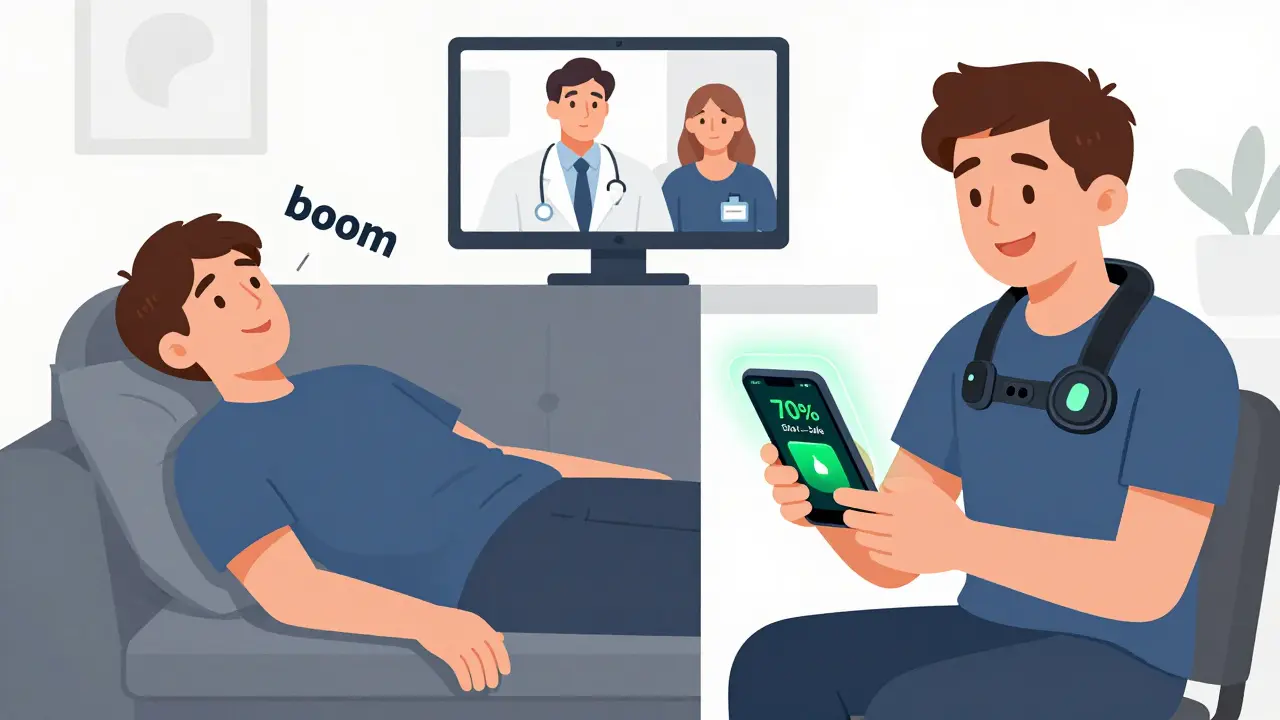
How to Find the Right Therapist
Not all therapists know autoimmune disease. You need someone certified. Look for therapists with the Autoimmune Specialty Certification from the Academy of Pelvic Health Physical Therapy. It’s a 120-hour program with a 78% pass rate. They know the 87 different autoimmune conditions, the right exercise intensities, and how to adjust for flares. Ask: "Do you use the HAQ-DI or COPM to track progress?" If they don’t know what you’re talking about, keep looking. Also, check if they use heart rate variability monitoring. Dr. Lisa Rodriguez of Mayo Clinic showed at the 2022 ACR meeting that this helps personalize exercise intensity. It’s not guesswork - it’s data-driven.What’s Next: AI, Biomarkers, and Personalized Rehab
The future of autoimmune rehab is here. The NIH launched the Autoimmune Rehabilitation Registry in January 2023, tracking over 5,000 patients. Early results show that adjusting exercise based on weekly IL-6 blood levels - a marker of inflammation - improves outcomes by 39%. And apps like "PacePartner," developed by the Lupus Foundation, are in Phase 3 trials. Using wearable sensors, it predicts flares with 82% accuracy. Imagine getting a notification: "Your heart rate and sleep patterns suggest a flare in 24 hours. Reduce activity today." That’s not science fiction. It’s coming in 2025. Medicare’s 2024 reimbursement increase of 5.7% for chronic condition rehab is a sign this field is growing. But there’s a problem: by 2026, the U.S. will face an 18,000-therapist shortage. Access will become harder - unless you know how to advocate for yourself.Key Takeaways
- Functional impairment in autoimmune disease is real - and treatable.
- Start rehab early. The first 12 months are the most critical.
- Physical therapy rebuilds movement; occupational therapy rebuilds independence.
- Use the 4 Ps (Prioritize, Plan, Pace, Position) to manage energy.
- Never push through pain. Use the 70% effort rule.
- Hydrotherapy cuts pain 22% more than land exercise - but isn’t always available.
- Insist on therapists with autoimmune specialty training.
- Telehealth is now the standard for maintenance care.
- AI and biomarker-guided rehab will soon make treatment smarter than ever.
Can occupational therapy help with fatigue in autoimmune disease?
Yes - and it’s one of its strongest areas. Occupational therapists teach energy conservation techniques using the 4 Ps: Prioritize, Plan, Pace, Position. Patients learn to break tasks into short chunks, rest between activities, and use adaptive tools to reduce physical strain. Studies show these methods reduce perceived fatigue by up to 40% and improve daily function more than medication alone in conditions like lupus and Sjögren’s syndrome.
Is exercise safe during an autoimmune flare?
Yes - but only if it’s the right kind. During flares, high-intensity or joint-heavy exercise can worsen inflammation. Safe options include gentle isometric exercises (muscle contractions without movement) at 20-30% of maximum effort, light stretching, and breathing techniques. Hydrotherapy in warm water (92-96°F) is also effective. Always avoid pushing through pain. If your joints are swollen or you have a fever above 100.4°F, rest is the best therapy.
Why do some therapists tell me to "just keep moving" even when I’m in pain?
Many therapists were trained on general arthritis or orthopedic models, not autoimmune disease. They don’t understand the difference between mechanical pain and inflammatory flare pain. In autoimmune conditions, pain during movement often signals active inflammation - not weakness. Pushing through can trigger a "crash" that lasts days. Look for therapists certified in autoimmune rehab who use tools like the HAQ-DI or COPM to guide treatment, not just generic fitness advice.
How long does it take to see results from rehab?
Most patients notice small improvements in energy and mobility within 4-6 weeks of consistent therapy. Meaningful changes - like being able to dress yourself or cook without crashing - usually take 3-6 months. The key is consistency. The 70% effort rule and pacing techniques take 8-12 weeks to master. Results aren’t fast, but they’re lasting - especially when you avoid the boom-bust cycle.
Can I do rehab at home?
Absolutely - and many patients now do. Home-based telehealth programs have grown by 210% since 2020. You can use video calls with certified therapists, wearable heart rate monitors, and apps like PacePartner to track your exertion. Simple tools like a shower chair, reacher, or voice-activated lights can be ordered online. The goal isn’t to go to a clinic - it’s to stay independent. Home rehab works if you follow your personalized plan and avoid overdoing it.