
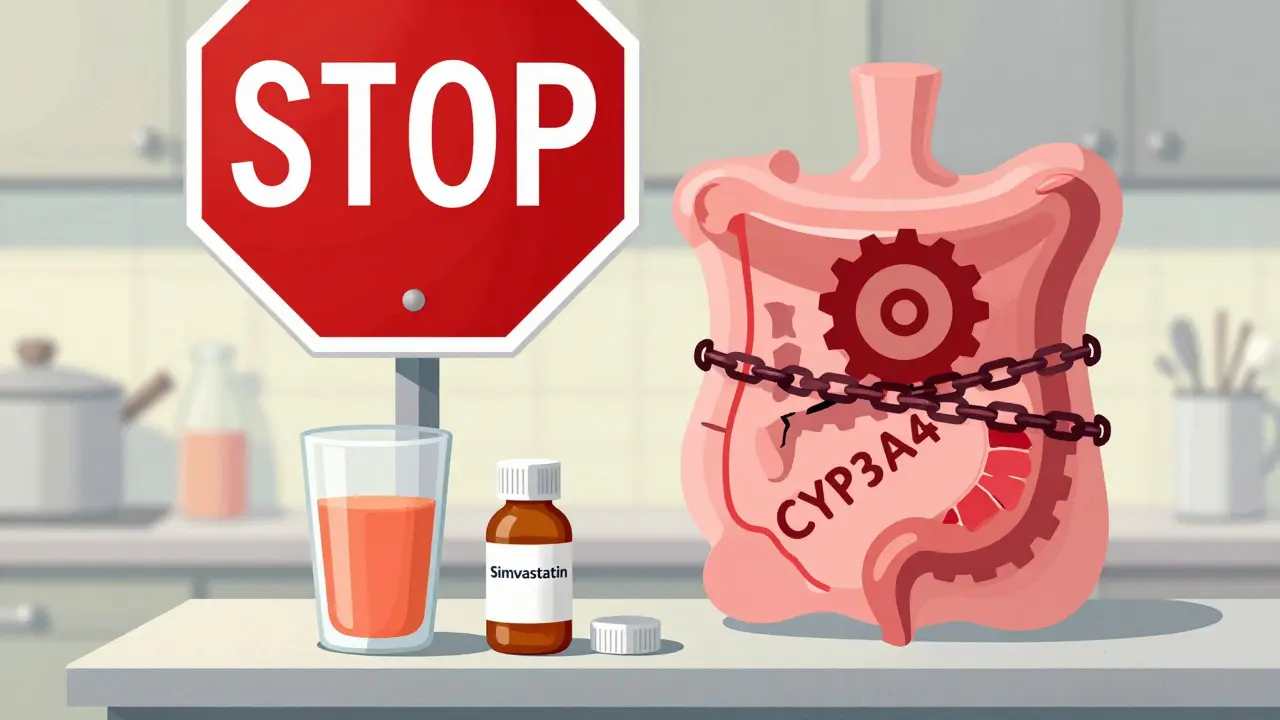
One glass of grapefruit juice in the morning might seem harmless-maybe even healthy. But if you're taking certain medications, that glass could be putting your life at risk. This isn’t a myth or a warning from an overcautious doctor. It’s a well-documented, scientifically proven interaction that has caused hospitalizations, organ damage, and even deaths. And it’s happening right now, to people who have no idea they’re in danger.
How Grapefruit Juice Changes Your Medication
When you take a pill, your body doesn’t just absorb it directly. Most oral drugs pass through your intestines first, where enzymes break them down before they enter your bloodstream. One of those enzymes is called CYP3A4. It’s responsible for metabolizing about half of all prescription drugs. Grapefruit juice doesn’t just slow this process-it shuts it down.
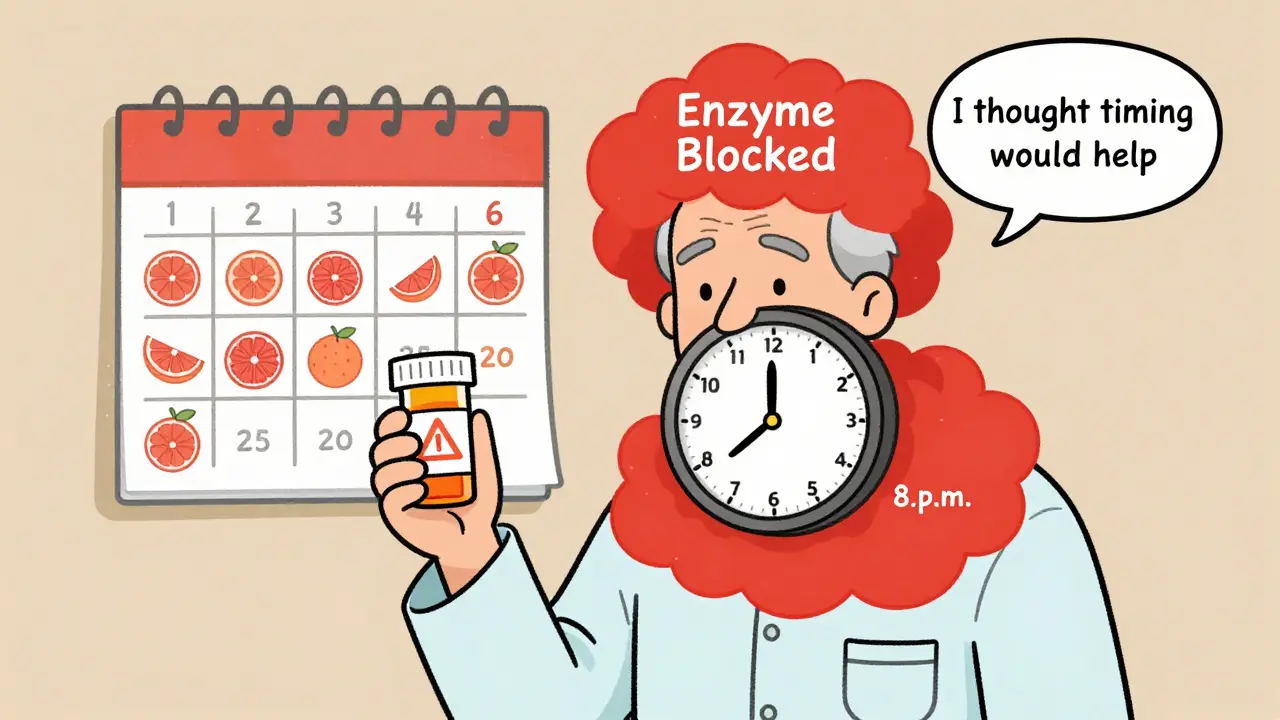
The culprits are chemicals in grapefruit called furanocoumarins, mainly bergamottin and 6',7'-dihydroxybergamottin. These compounds bind to CYP3A4 enzymes in your gut and permanently disable them. Your body can’t replace them quickly. It takes 24 to 72 hours for new enzymes to grow back. That means even if you drink grapefruit juice at 8 a.m. and take your medication at 8 p.m., the interaction still happens.
What does this mean for you? More of the drug gets into your blood. And it stays there longer than it should. Instead of the intended dose, you might be getting two, three, or even five times more. That’s not a stronger effect-it’s a toxic one.
Which Medications Are Dangerous With Grapefruit?
More than 85 prescription drugs have confirmed interactions with grapefruit juice. Of those, 43 can cause life-threatening side effects. Not all drugs react the same way. Some are barely affected. Others are extremely dangerous. Here are the big ones:
- Statins (cholesterol drugs): Simvastatin (Zocor) is the most dangerous. One glass of grapefruit juice can triple its levels in your blood. That raises your risk of rhabdomyolysis-a condition where muscle tissue breaks down and can cause kidney failure. Atorvastatin (Lipitor) has a milder interaction, but it still increases drug levels by 30%. Pravastatin and rosuvastatin? No significant interaction. If you’re on simvastatin, switching to one of these is a safer option.
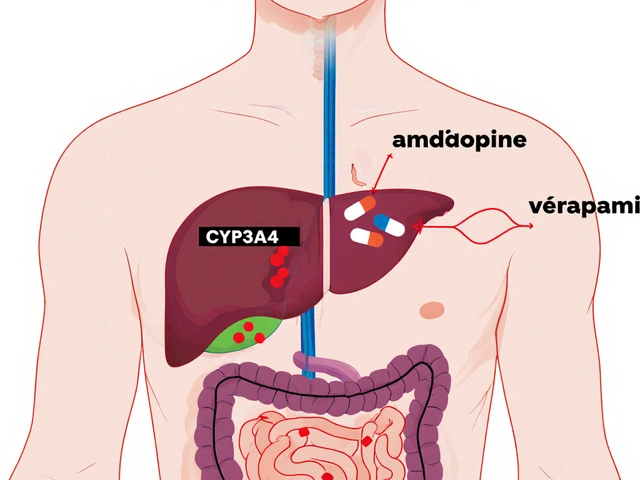
- Calcium channel blockers (blood pressure drugs): Felodipine (Plendil) sees a fivefold increase in blood concentration. Nifedipine (Procardia) jumps by 3.3 times. Amlodipine (Norvasc)? Almost no change. If you’re on felodipine or nifedipine, grapefruit is a hard no.
- Immunosuppressants: Cyclosporine (Neoral), used after organ transplants, can spike 50-60% in your blood with grapefruit. That raises your risk of kidney damage and infection. Tacrolimus is a safer alternative for transplant patients.
- Antiarrhythmics: Amiodarone (Cordarone) increases by 30-40%. That can trigger dangerous heart rhythms, including torsades de pointes, which can be fatal.
- Other high-risk drugs: Certain sedatives like triazolam, some anti-anxiety drugs, and even some cancer drugs like erlotinib are affected. Always check your label.
On the flip side, some medications show little to no interaction. Trazodone (for depression), zolpidem (Ambien), and most antidepressants like sertraline are generally safe. But don’t assume-always ask.
Why You Can’t Just Avoid It at Dosing Time
You might think, “I’ll just drink grapefruit juice in the morning and take my pill at night.” That won’t work. The enzyme inhibition lasts for days. One study showed that a single 200-milliliter glass (about 6.7 ounces) of grapefruit juice could block 47% of CYP3A4 activity for 24 hours. After three days of daily consumption, the effect is still strong.
The FDA says it clearly: “Avoid consuming grapefruit the whole period that you are on the medication.” It’s not about timing. It’s about total avoidance. Even occasional use can be risky, especially if you’re older or taking multiple drugs.
Not All Citrus Is the Same
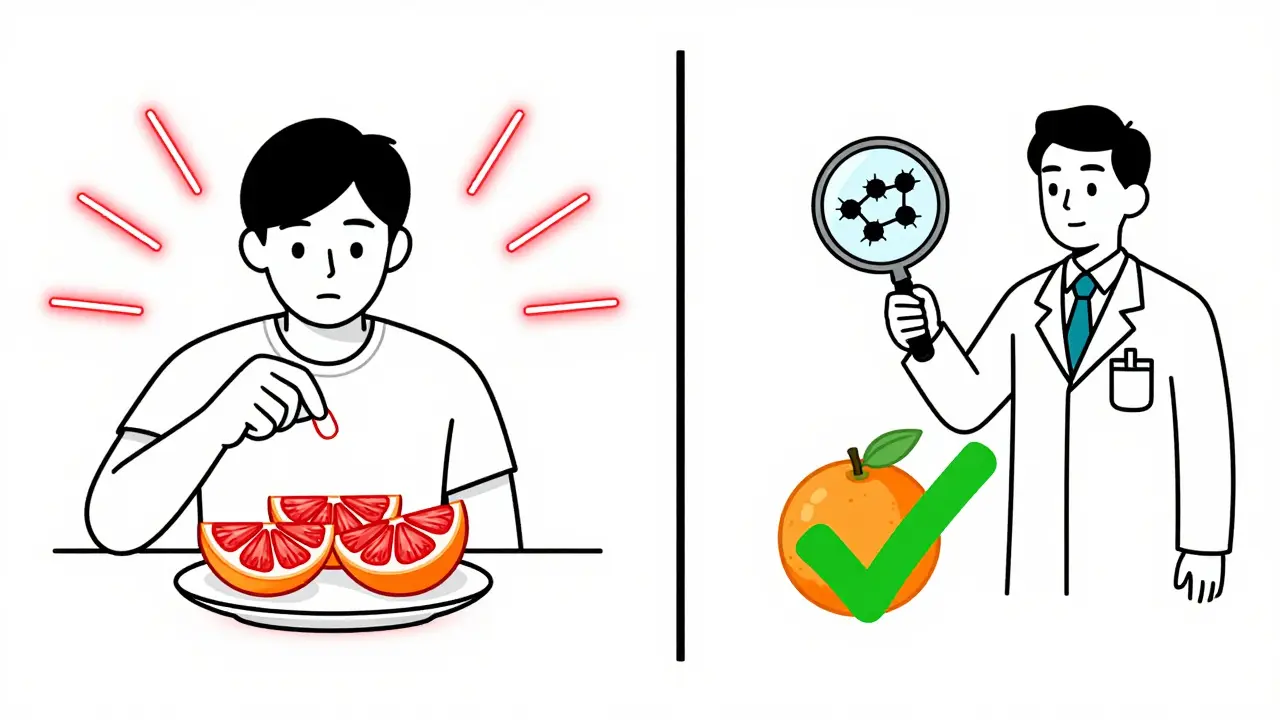
Just because grapefruit is dangerous doesn’t mean all citrus is. Seville oranges (used in marmalade) and pomelos contain the same furanocoumarins and should be avoided. But sweet oranges-like navel or Valencia-and lemons? They’re fine. They don’t have the chemicals that cause the interaction.
And it’s not just juice. Fresh grapefruit, grapefruit segments, and even some grapefruit-flavored candies or supplements can trigger the reaction. If it’s made from grapefruit, assume it’s risky.
Who’s Most at Risk?
Older adults are especially vulnerable. People over 65 make up 40% of grapefruit consumers in the U.S., according to USDA data. And they’re also more likely to be on three to five medications at once-many of which interact with grapefruit.
Women may be more affected than men, though research is still catching up. And genetics play a role too. Some people naturally have higher levels of CYP3A4 in their gut. For them, grapefruit juice can cause an 8-fold spike in drug levels. Others? Almost no change. But there’s no easy way to test for this. So everyone on affected drugs must assume they’re in the high-risk group.
What Should You Do?
If you take any prescription medication, here’s what to do:
- Check your label. Since 2014, the FDA requires drug manufacturers to include grapefruit warnings on prescribing information. Look for phrases like “Avoid grapefruit juice” or “Do not consume grapefruit products.”
- Ask your pharmacist. Pharmacists are trained to catch these interactions. A 2021 study found that 89% of community pharmacists routinely screen for grapefruit interactions when filling prescriptions.
- Review all your meds. Don’t forget over-the-counter drugs and supplements. Some antihistamines like fexofenadine (Allegra) interact, and even herbal products like St. John’s Wort can worsen the effect.
- Ask about alternatives. If you’re on simvastatin, ask if pravastatin or rosuvastatin is an option. If you’re on felodipine, could amlodipine work instead? Many safer alternatives exist.
- Be consistent. If you stop grapefruit juice for a week and then have a glass again, the interaction returns. It’s not a one-time risk-it’s a constant one.
What’s Being Done About It?
Regulators are taking this seriously. Since 2017, the FDA requires all new oral drugs metabolized by CYP3A4 to be tested with grapefruit juice during development. The European Medicines Agency followed in 2021. Drugmakers now have to prove their products are safe-even with grapefruit juice in the system.
And there’s hope on the horizon. In October 2023, the USDA announced that CRISPR-edited grapefruit with 90% less furanocoumarin had completed Phase 1 safety trials. These non-interacting varieties could be available within five years. But until then, stick to the rules.
Why Awareness Is Still So Low
Despite all this, only 38% of patients remember being warned about grapefruit interactions when prescribed a risky drug. That’s shocking. Many doctors assume patients know. Many patients assume it’s just a rumor. But the data doesn’t lie: grapefruit interactions cause real harm. In 2019, IQVIA estimated that statin manufacturers lost $1.2 billion in annual sales because people stopped taking simvastatin-not because it didn’t work, but because they couldn’t have their morning juice.
The message is simple: If your medication warns you about grapefruit, don’t take the risk. No amount of juice is worth a trip to the ER. And if you’re unsure? Ask. Always.
Can I have grapefruit juice if I take my medication at night?
No. The enzymes in your gut that break down your medication are inhibited for 24 to 72 hours after drinking grapefruit juice. Even if you take your pill 12 hours later, the interaction still occurs. The timing doesn’t matter-only the presence of grapefruit.
Is it safe to eat grapefruit instead of drinking juice?
No. The harmful chemicals (furanocoumarins) are in the pulp and peel, not just the juice. Eating the fruit has the same effect as drinking the juice. Even small amounts can trigger the interaction.
What about other citrus fruits like oranges or lemons?
Sweet oranges (navel, Valencia) and lemons are safe. They don’t contain furanocoumarins. But Seville oranges (used in marmalade) and pomelos do, and should be avoided. Always check the type.
Can I drink grapefruit juice if I’m not on medication right now?
Yes-if you’re not taking any medications that interact with it. But if you’re planning to start a new drug, especially for cholesterol, blood pressure, or immune suppression, stop drinking it first. The interaction can start as soon as you begin the medication, even if you’ve been drinking grapefruit juice for years without issue.
Why don’t all doctors warn patients about this?
Many do-but not all. A 2022 survey found that only 38% of patients recalled being warned. Some doctors assume patients know. Others think the risk is low. But the data shows otherwise: grapefruit interactions cause real harm, and they’re preventable. If your doctor doesn’t mention it, ask. Your safety is worth it.



February 3, 2026 AT 19:43
i just found out my dad’s on simvastatin and drinks grapefruit juice every morning 😳 like, how is this not common knowledge? i’m gonna send him this post right now. thanks for laying it out so clearly.