
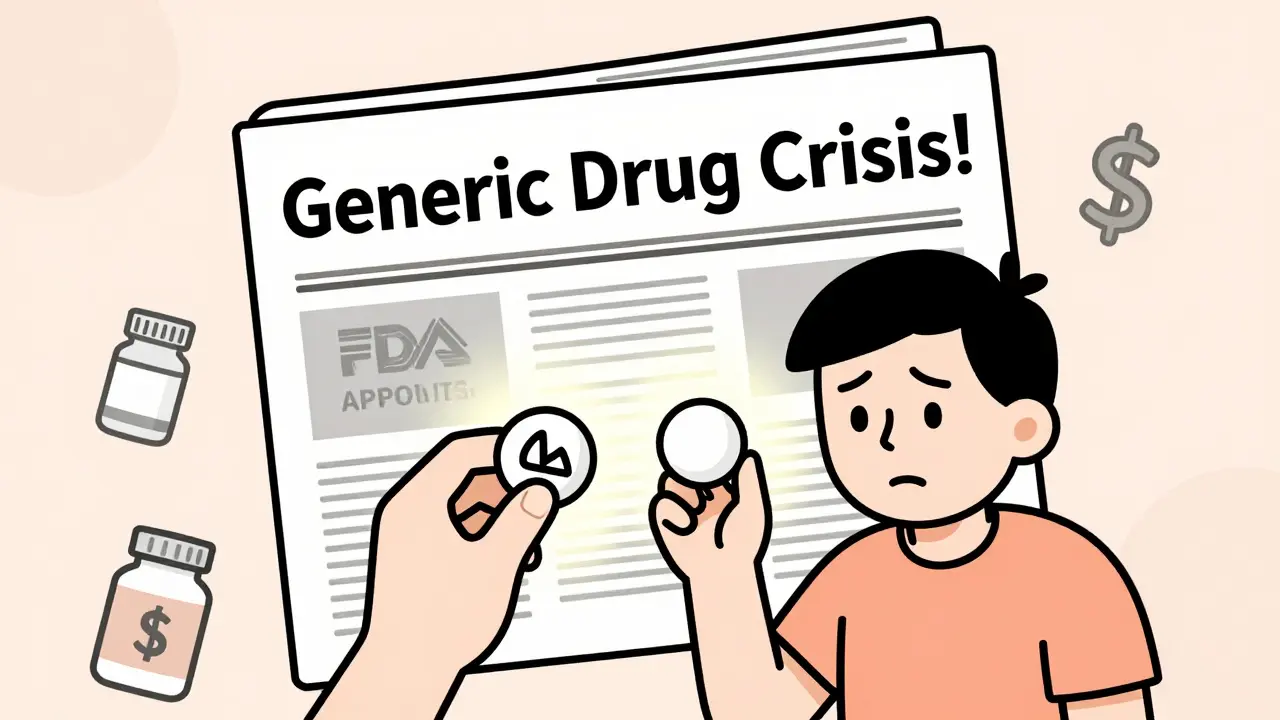
Every year, generic drugs make up 84% of all prescriptions filled in the U.S. Yet, despite being just as safe and effective as their brand-name counterparts, millions of people still hesitate to take them. Why? The answer isn’t in the pill bottle-it’s in the news headlines.
Media Stories That Shape Your Trust
You’ve probably seen them: "Contaminated Generic Drugs Reveal an Urgent Public Health Crisis," or "How Some Generic Drugs Could Do More Harm Than Good." These aren’t isolated reports. They’re part of a pattern. News outlets rarely mention that the FDA requires generic drugs to have the same active ingredients, strength, and dosage as brand-name versions. Instead, they focus on rare incidents-like a single batch of pills with impurities-and frame them as proof that generics are unreliable. A 2014 study in JAMA Network found that 98% of newspapers had no written policy requiring reporters to use generic drug names. Instead, they defaulted to brand names like "Lipitor" or "Zoloft," even when writing about the generic versions. This isn’t just sloppy journalism. It trains readers to associate safety and quality with brand names. If you only hear about "Lipitor" in the news, you start to believe it’s the only real version. Even worse, most articles don’t disclose who funded the research. A study of medical reporting found that only 2% of newspapers required disclosure of pharmaceutical industry funding. That means readers are left guessing: Is this story about a generic drug failing because of poor quality-or because a brand-name company paid for research to scare people away from cheaper alternatives?The Cost of Mistrust
When people avoid generics, it doesn’t just hurt their wallets-it hurts their health. Research from US Pharmacist in 2023 showed that patients who take generics are less likely to skip doses. Why? Because they’re cheaper. But when media stories make people fear generics, they often switch to more expensive brand-name drugs-even if their insurance won’t cover them fully. A 2023 University of Texas study found something startling: after patients received bad news about their health-like a diabetes diagnosis or high cholesterol-they were far more likely to insist on brand-name drugs for the next 90 days. They weren’t acting on medical advice. They were reacting to fear. And media coverage made that fear feel justified. Only 17% of people could correctly identify a generic medication by its packaging. About 40% couldn’t tell the difference between a generic and a brand-name pill. That’s not ignorance-it’s confusion engineered by years of misleading reporting. When a pill looks different, or the label says something unfamiliar, people assume it’s inferior. They don’t realize the color change or shape difference is intentional to avoid trademark infringement-not a sign of lower quality.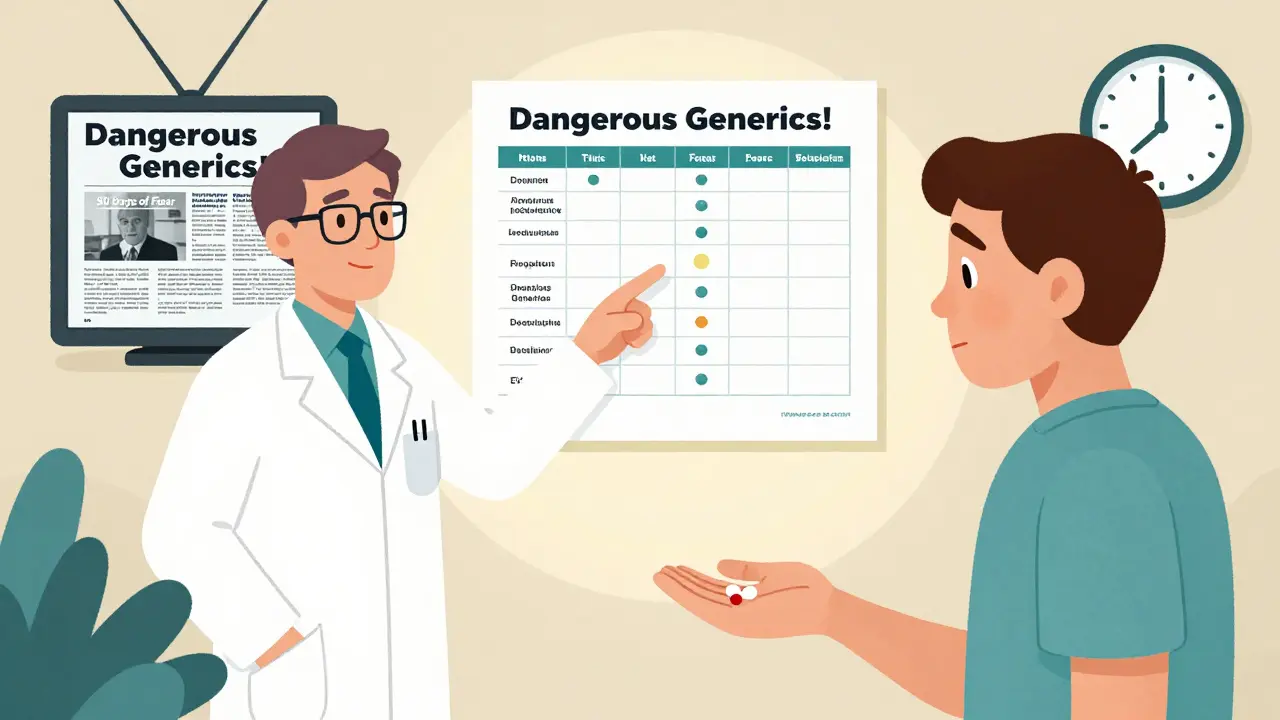
Who’s Really in Control?
The FDA requires every generic drug to prove it works the same way as the brand-name version. They don’t just check the active ingredient-they test absorption rates, stability, and bioequivalence. A 2023 FDA report from Dr. Sarah Ibrahim confirmed that while patients know generics have the same active ingredients, they still worry about "differences in formulation." That’s the phrase media stories love to use without explaining what it means. Minor differences-like a different filler or coating-don’t affect how the drug works. But when a headline says "generic versions vary," people hear "some work, some don’t." The truth? The FDA approves over 10,000 generic drugs each year. Less than 0.01% are recalled for safety issues. That’s lower than the recall rate for brand-name drugs. Meanwhile, the market rewards competition. When three or more generic manufacturers enter the market, prices drop by about 20%. That’s not a conspiracy-it’s basic economics. But you won’t hear that in the news. You’ll hear about a $500 insulin pill going up to $550. You won’t hear that the same insulin now has five generic options selling for $25.Doctors and Pharmacists Are the Missing Link
Here’s the surprising part: when your doctor or pharmacist explains the difference, you’re far more likely to take a generic. A systematic review in PMC found that patient trust in their provider overrides their own doubts about generics. That’s why a simple conversation can change everything. Pharmacists, in particular, are trained to know the science behind generics. They see the data. They know the FDA’s standards. And yet, many don’t proactively explain it. Why? Because they’re busy. Because they assume you already know. Because they’ve been conditioned by the same media that makes you suspicious. Dr. Ibrahim’s team at the FDA recommends that healthcare providers start every conversation about generics with this: "All FDA-approved drugs-brand or generic-must meet the same high standards for safety, strength, and quality." That’s not marketing. That’s fact. One doctor told patients, "This generic is made in the same factory as the brand, under the same rules." Their adherence rate jumped 22% in six months. No new prescriptions. Just better communication.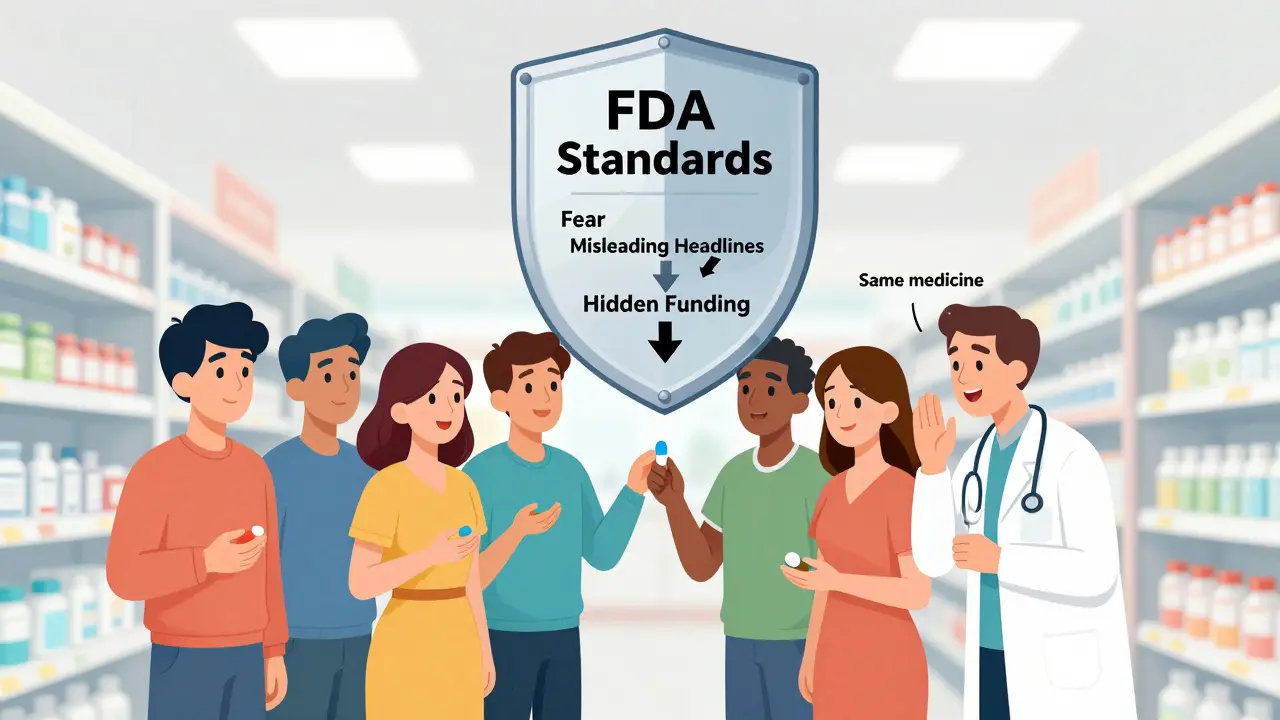
What You Can Do
You don’t need to trust the news. You need to trust the science-and the people who understand it.- Ask your pharmacist: "Is this generic the same as the brand?" They’ll show you the FDA’s bioequivalence data.
- Check the label. Generic drugs are required to list the active ingredient first. If it matches the brand, it’s the same medicine.
- When you see a scary headline, ask: "Was this about one batch? Was funding disclosed? Was the generic name used?" If not, it’s likely misleading.
- Insist on generics unless your doctor says otherwise. The evidence is clear: they work, and they save lives by making treatment affordable.
The Bigger Picture
This isn’t just about pills. It’s about how information shapes behavior. Media coverage doesn’t just report on health-it influences who gets treated, who skips doses, and who ends up in the hospital because they couldn’t afford their medicine. The FDA, pharmacists, and patient advocates are pushing for better education. But real change starts with you. The next time you’re handed a generic prescription, don’t assume it’s second-rate. Ask questions. Demand transparency. And remember: the science doesn’t care what the headlines say.The truth? If your brand-name drug works, the generic will too. And if you can’t afford the brand? The generic is your best shot at staying healthy.


January 17, 2026 AT 09:55
I used to refuse generics until my insulin bill hit $600. Then I tried the generic-same pill, same results, $25. My bank account thanked me. My doctor didn’t even blink.
Turns out, I was the one who was scared, not the medicine.