
Medication Storage Safety Checker
This interactive tool helps you identify potential medication storage risks in your home. Answer a few questions to receive personalized recommendations for safer storage practices.
Medication Storage Assessment
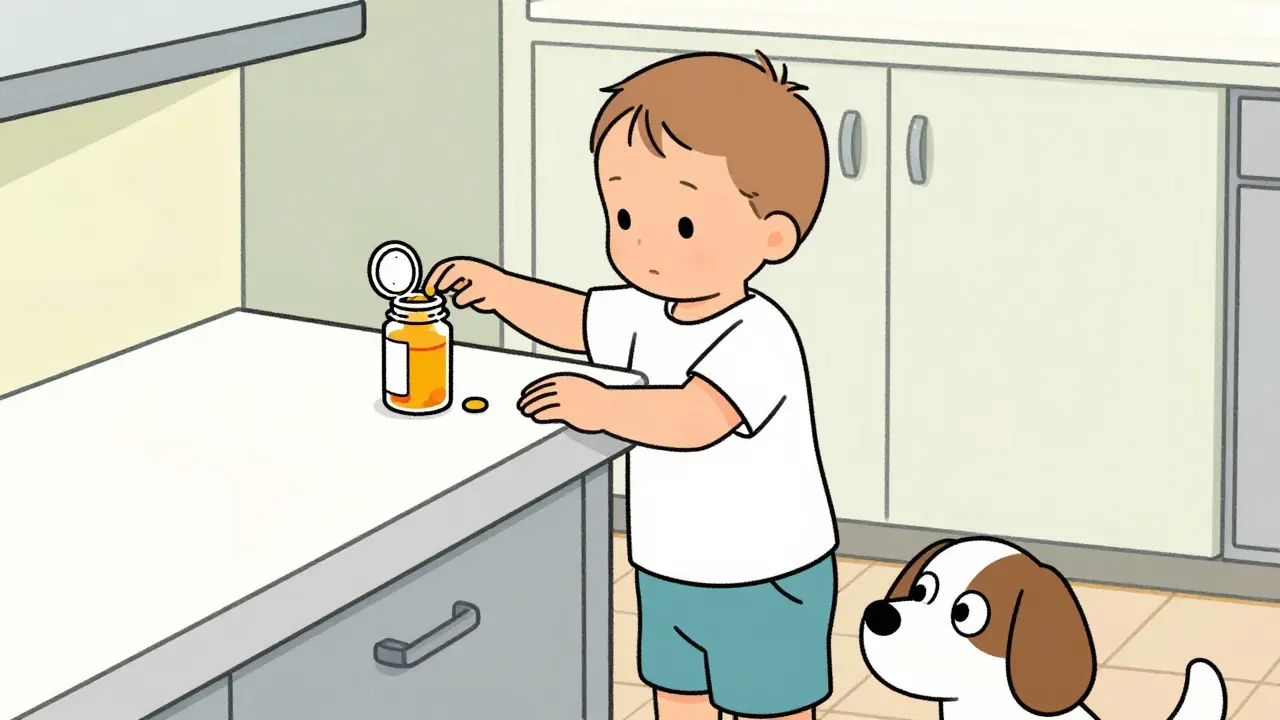
Every year, 60,000 children under five end up in emergency rooms because they got into medications they weren’t supposed to. And it’s not just kids. Pets - especially dogs - are just as curious, and just as dangerous when they chew through a pill bottle. The worst part? Most of these accidents happen right in your own home, often because someone left a pill on the nightstand, or kept the medicine cabinet unlocked. This isn’t about being careless. It’s about not knowing how easy it is for a toddler to climb onto a counter, or how a dog can open a child-resistant cap in under two minutes.
Why Locked Storage Isn’t Optional
Child-resistant packaging sounds like it should be enough. But here’s the truth: it’s not. The Consumer Product Safety Commission found these caps stop only 50 to 80% of kids. That means one in five children will still get into the bottle if it’s within reach. And pets? They don’t care about caps at all. VCA Animal Hospitals tested this - 65% of dogs opened standard pill vials within two minutes. Some even chewed through plastic containers like they were snacks.What actually works? Locked storage. A study from Nationwide Children’s Hospital showed that when families used locked cabinets, accidental poisonings dropped by 92%. That’s not a suggestion. That’s a lifesaving barrier. It doesn’t have to be expensive. A simple wall-mounted lockbox costs under $25. Some families use old gun safes, toolboxes, or even small safes from a hardware store. The goal isn’t to build a vault - it’s to make access impossible without a key or code.
Where Not to Store Medications
You’d be surprised how many people keep meds in the worst possible spots. The most common mistake? Leaving them on nightstands, countertops, or in purses. A 2022 study found 68% of parents admitted to leaving medications out on surfaces. That’s like leaving candy in plain sight and wondering why a child reaches for it.Bathrooms are another big problem. Humidity from showers and sinks degrades 40% of medications within 30 days. The FDA says most pills need to be kept between 68-77°F (20-25°C). Bathrooms are too hot, too damp, and too accessible. Even if the cabinet is locked, the location itself is risky.
And don’t put pet meds next to food bowls. A 2022 PetMD report showed 45% of households do this. That’s a recipe for disaster. Dogs associate the smell of food with anything nearby. If you leave a flavored heartworm pill next to their kibble, they’ll eat it - no hesitation. And if your child sees a brightly colored pill on the floor near the dog’s bowl? They might think it’s candy.
Human and Pet Medications: Keep Them Separate
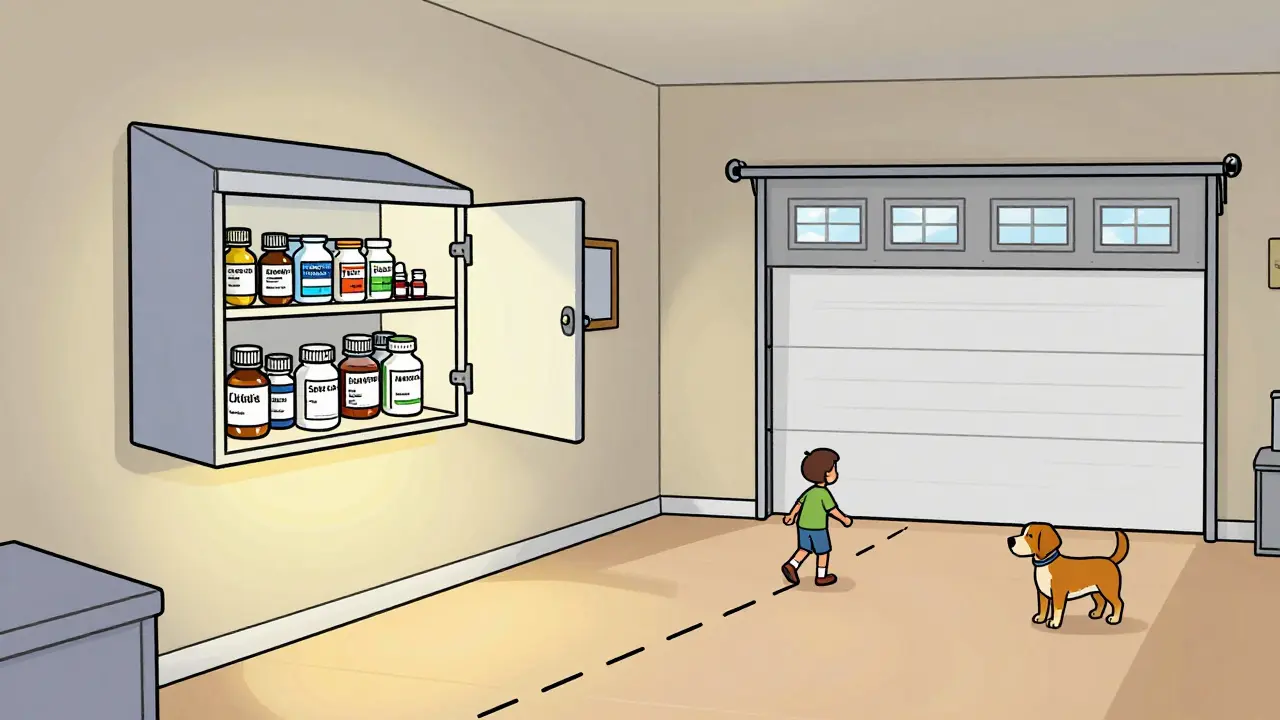
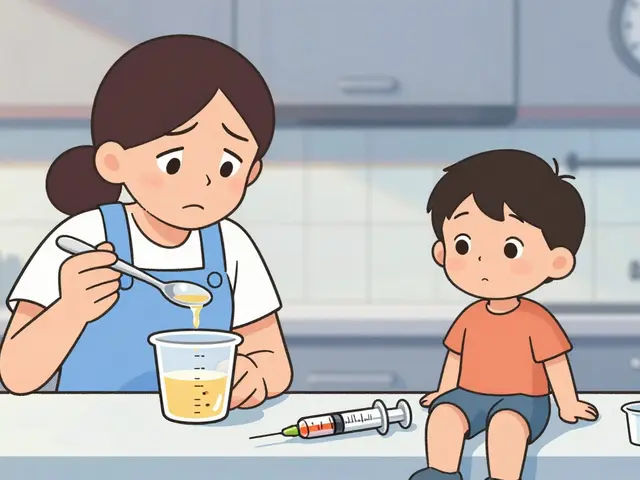
Here’s something most people don’t realize: pet medications are often designed to taste good. Banana, strawberry, chicken - these flavors make them irresistible to both kids and animals. A 2023 FDA report found that flavored veterinary drugs increase the chance of accidental ingestion by 300% compared to plain human pills.And the mix-ups are deadly. One of the most common errors? Giving a dog’s heartworm medication - which contains ivermectin - to a child. A 5mL dose of that liquid can be 10 times the toxic amount for a toddler. In 2021, a two-year-old in Ohio ingested veterinary ivermectin paste. He spent 14 days in intensive care. His family had stored it in the same kitchen drawer as baking soda.
The CDC says keeping human and pet meds in separate locations reduces mix-up errors by 89%. That’s not a suggestion. That’s a rule. Don’t just put them in different drawers. Put them in different rooms. One study from Seattle Children’s Hospital found that keeping them at least 15 feet apart cuts down on accidental ingestion by 94%. That means one cabinet in the bedroom for your pills, and another in the garage or laundry room for your dog’s flea treatment.
Temperature, Humidity, and Original Packaging
Medications aren’t like canned food. They’re sensitive. If you store them where it’s too hot, too cold, or too damp, they lose strength. The FDA says 70% of human medications need to stay between 68-77°F. About 25% need refrigeration - like insulin or some liquid antibiotics. Keep those in a locked fridge, not the one in the garage.Humidity is just as dangerous. A pill left in a steamy bathroom can break down in weeks. That means your painkiller might not work when you need it. Or worse - it could become toxic.
And never transfer pills to unmarked containers. The CDC found that 35% of medication errors happen because someone poured pills into a spice jar, a vitamin bottle, or a snack container. That’s how you end up with a child eating “vitamins” that are actually blood pressure pills. Always keep medications in their original bottles with the label intact. The label tells you the name, dose, expiration date, and storage instructions. Without it, you’re flying blind.
What About Controlled Substances?
If you have opioids, benzodiazepines, or other controlled substances, the stakes are even higher. The DEA requires these to be stored in containers with UL TRTL-30x6 certification - meaning they can resist power tools for at least 30 minutes. That’s not overkill. It’s necessary. These drugs are targeted by teens and even strangers looking to steal them. A locked box isn’t enough. You need a certified safe.And here’s a hard truth: if you’re not using a safe for these, you’re putting your family at risk. A 2023 study showed that 60% of teens who misused opioids got them from home medicine cabinets - not dealers.
What About Older Adults or People with Disabilities?
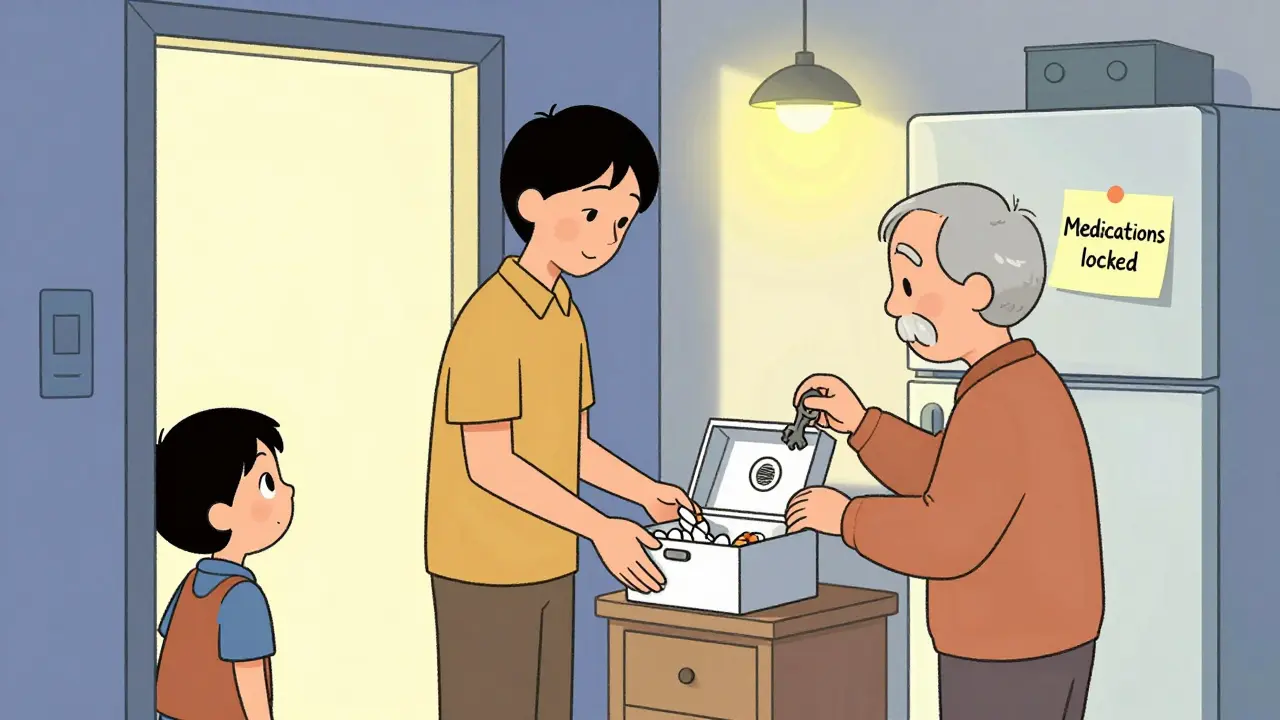
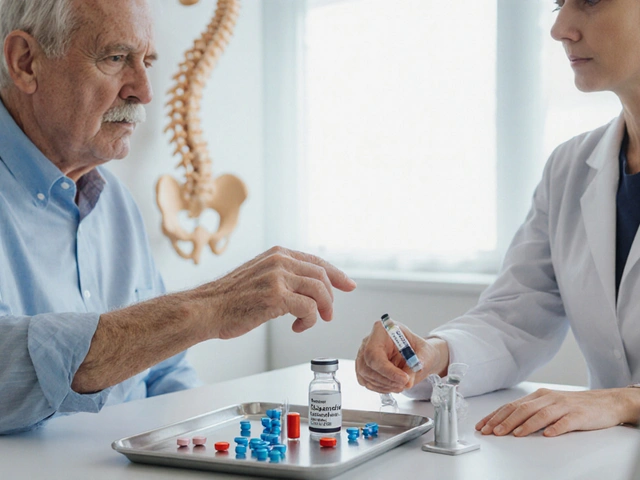
Some people worry that locked storage makes it harder to take their own meds. That’s valid. If you’re elderly or have arthritis, child-resistant caps can be impossible to open. The solution isn’t to skip locking - it’s to adapt. Install a lockbox at waist height with an emergency release. Some models let you open them with a key, code, or even a fingerprint. Others have a small lever that unlocks the box after pressing a button for 3 seconds. These are designed for exactly this problem - safety without sacrifice.NIH data shows 40% of adults over 65 struggle with child-resistant caps. That doesn’t mean you should leave meds out. It means you need the right kind of lockbox - one that balances security and accessibility.
How to Make This Stick
Knowing what to do isn’t enough. You have to make it a habit. The CDC says it takes 21 to 30 days of consistent action for a new behavior to stick. That means:- Every night, put your meds back in the locked box - no exceptions.
- Do a weekly check: Are all bottles labeled? Are any expired?
- Use visual reminders: Stick a note on the fridge that says, “Medications locked.”
- Teach visitors: If your grandkids come over, show them where the meds are stored - and that they’re off-limits.
One family in Melbourne started using a timed lockbox that only opens at 7 a.m. and 7 p.m. - their dosing times. Within a month, their compliance rate jumped from 45% to 92%. They didn’t change their meds. They changed their routine.
What to Do With Old or Unused Medications
Don’t flush them. Don’t throw them in the trash. The FDA warns that flushing meds pollutes water supplies, and throwing them out invites pets or scavengers to dig through the bin. The best option? Take them to a drug disposal site.The DEA’s National Take Back Day happens twice a year, and there are now over 11,000 drop-off locations across the country - pharmacies, police stations, hospitals. If you can’t wait, mix pills with coffee grounds or cat litter, seal them in a container, and throw them in the trash. That makes them unappealing and unusable.
And don’t keep old meds “just in case.” The CDC says 55% of households hold onto expired medications. That’s a hidden risk. A bottle from five years ago might not work - or worse, it might be dangerous.
It’s Not Just About Safety - It’s About Peace of Mind
This isn’t about being paranoid. It’s about being prepared. You lock your doors. You use car seats. You install smoke alarms. Medication storage is just another part of that same safety mindset.Think about it: if you had a box of poison in your house, you wouldn’t leave it on the counter. Medications aren’t poison - but they can act like it if they’re not stored right. The difference between a child staying healthy and ending up in the ER isn’t luck. It’s a locked box. A labeled bottle. A separate drawer. A habit.
And if you’ve already had a close call? You’re not alone. A Reddit thread from August 2023 had over 1,200 parents sharing stories of kids getting into meds. Most said the same thing: “I didn’t think it could happen to us.”
It can. And it will - unless you act.
Can child-resistant caps alone keep my child safe?
No. Child-resistant caps stop only 50-80% of children from opening them, according to the Consumer Product Safety Commission. Many toddlers can figure out how to twist or pop them open. Locked storage is the only reliable way to prevent access.
Is it safe to store human and pet medications together?
No. Pet medications are often flavored to attract animals, which makes them more tempting to children. Storing them together increases the risk of mix-ups by 4.7 times. The CDC recommends keeping them in separate rooms - at least 15 feet apart - to reduce accidental ingestion by 94%.
What’s the best place to store medications at home?
A locked cabinet or box at least 4 feet off the ground, in a cool, dry place like a bedroom closet or kitchen pantry. Avoid bathrooms - humidity ruins most medications. Kitchens are 3.2 times safer than bathrooms for storage due to lower moisture levels.
Should I keep all medications in the fridge?
Only if the label says so. About 25% of medications - like insulin and some liquid antibiotics - need refrigeration. Most others should be kept at room temperature (68-77°F). Storing non-refrigerated meds in the fridge can damage them. Always check the original label.
What should I do with expired or unused medications?
Take them to a drug disposal site - there are over 11,000 nationwide through the DEA’s National Take Back Day. If that’s not possible, mix pills with coffee grounds or cat litter, seal them in a container, and throw them in the trash. Never flush them - it pollutes water supplies.
Are there affordable options for locked storage?
Yes. A basic wall-mounted lockbox costs as little as $24.99. Many families use old gun safes, toolboxes, or small safes from hardware stores. The key isn’t cost - it’s reliability. Even a locked toolbox works if it keeps meds out of reach.
How long does it take to form a safe storage habit?
It takes 21 to 30 days of consistent practice. The CDC found that families who used visual reminders and daily routines improved compliance from 45% to 92% within a month. Make it part of your nightly routine - like brushing your teeth.
What pet medications are most dangerous to children?
Heartworm preventatives containing ivermectin, topical creams with 5-fluorouracil (used for skin cancer), and dewormer paste (often flavored like peanut butter) are the most dangerous. A tiny amount of ivermectin can be fatal to a child. Even 0.5mg of 5-fluorouracil cream can kill a cat - and children can accidentally touch it.



February 3, 2026 AT 07:41
Yeah right, like anyone actually does this. Locked box? Please. I leave my pills on the nightstand because I’m lazy and my kid’s too dumb to climb on the furniture. And my dog? He’s got better aim than half the people in this thread. If they want to eat a pill, let ‘em. Natural selection, baby.