
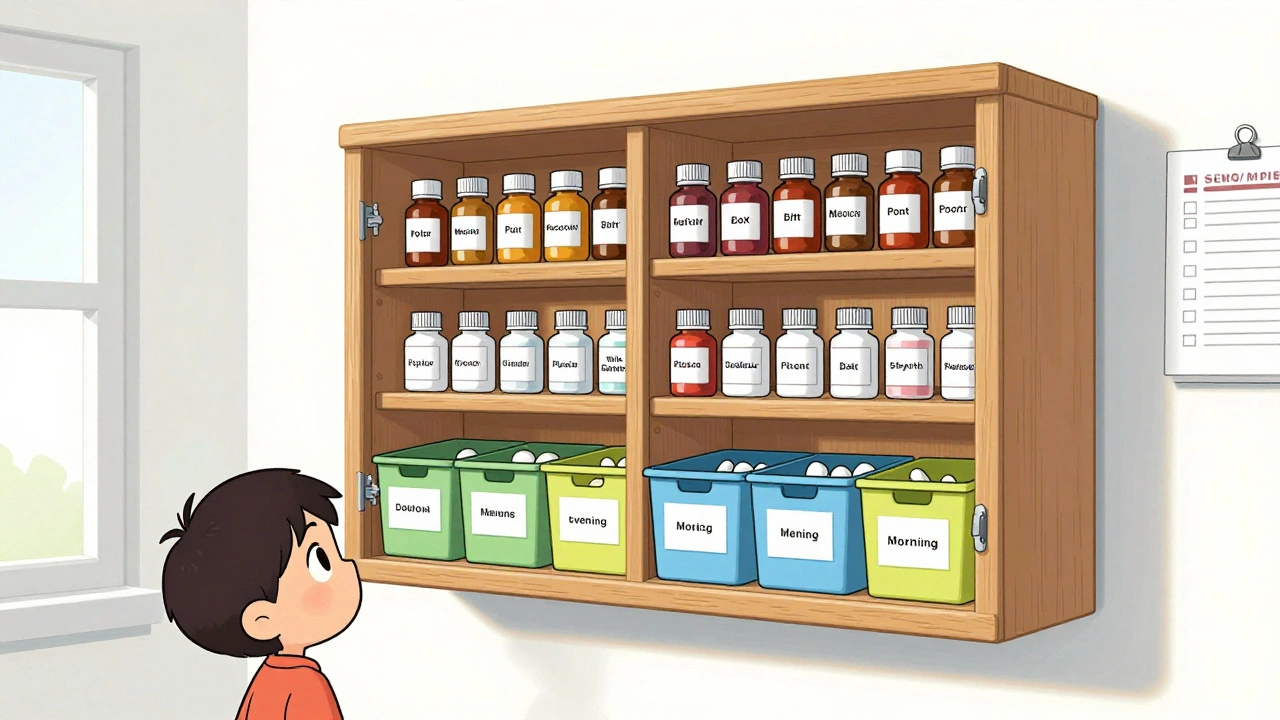
Every family has a medicine cabinet. But how many of them are actually safe? If your cabinet is in the bathroom, stuffed with old bottles, and unlocked, you’re not storing medicine-you’re storing risk. Every year, over 60,000 children under five end up in emergency rooms after accidentally swallowing medications. Another 458,000 visits involve kids and teens from 0 to 19. Most of these aren’t accidents caused by bad parenting. They’re preventable failures of storage. A safe OTC medicine cabinet isn’t about having everything on hand-it’s about having the right things, in the right place, locked away from harm.
Stop Storing Medicines in the Bathroom
The bathroom is the most common place families keep their medicines. It’s convenient. But it’s also the worst place for them. Humidity from showers and baths doesn’t just make your toothpaste soggy-it ruins pills and liquids. According to Cone Health’s Pharmacy Supervisor Melonie Crews-Foye, moisture can make medications crumble, lose potency, or even become toxic. The U.S. Pharmacopeia (USP) says most drugs start breaking down above 86°F (30°C), and bathrooms often hit that temperature. Plus, 73% of common medications are sensitive to light. A glass cabinet by the mirror? That’s a recipe for ineffective drugs.Move your cabinet. Find a high, dry spot away from sinks and showers. A linen closet, bedroom shelf, or kitchen cabinet up high works better. ADT recommends keeping medicines at least 4 feet off the ground. That’s not just for kids-it’s about keeping them out of reach of curious toddlers, teens, and even visitors.
Lock It Down-Not Just the Cap
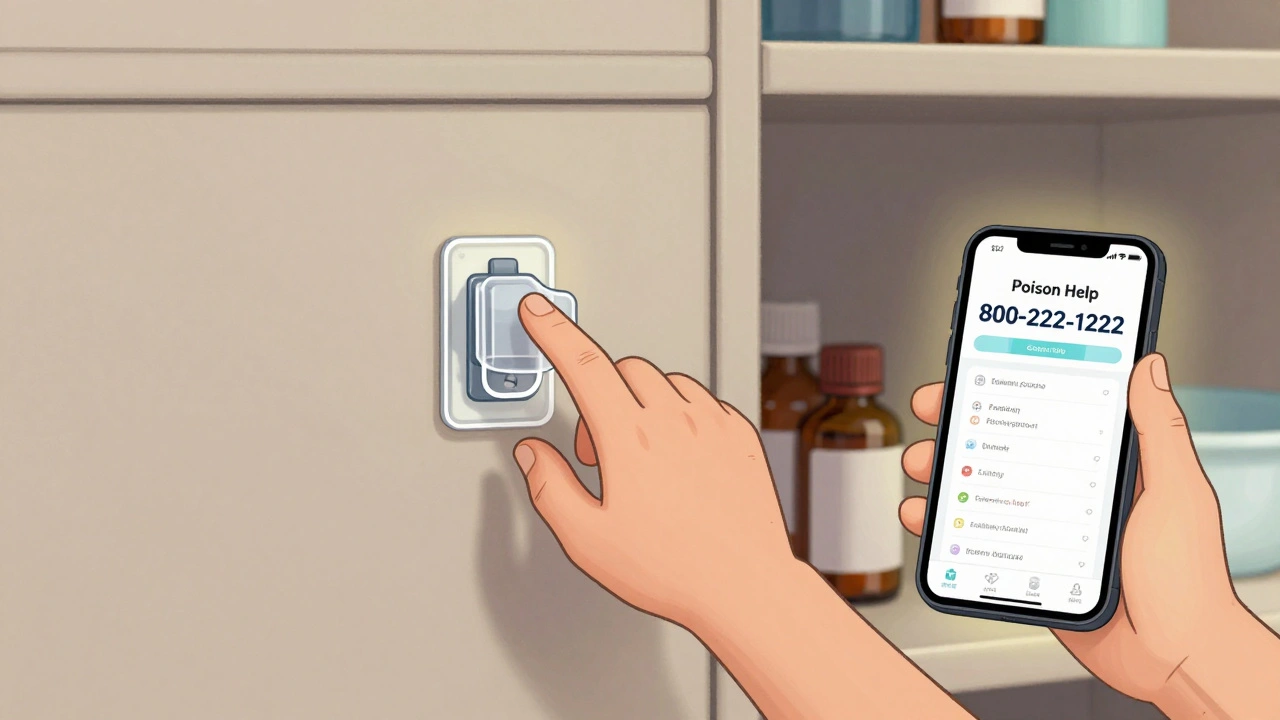
Child-safety caps aren’t child-proof. A 2021 Johns Hopkins study found that 42% of kids aged 4 to 5 can open standard bottles in under 10 minutes. That’s not a flaw in the cap-it’s a flaw in the assumption. Kids are smart, persistent, and they watch what adults do. If they see you open a bottle easily, they’ll try to copy it.Lock the cabinet. If it doesn’t have a lock, install a childproof latch. ADT and Northwestern Medicine both recommend these simple, inexpensive devices. For extra security, use a locked drawer inside the cabinet. If you keep painkillers, cough syrups, or any pills that could be misused, double-lock them: put them in a small locked box inside the locked cabinet. This isn’t paranoia-it’s science. The Hanley Foundation reports that 54% of teens who misuse prescription drugs get them from home medicine cabinets. That’s not just about opioids. It’s also about ibuprofen, antihistamines, and sleep aids.
Know What’s Inside-and What’s Not
Your cabinet shouldn’t be a time capsule. If you’ve been keeping that bottle of expired cough syrup from 2021 because "it might come in handy," you’re risking more than useless medicine. Expired antibiotics can cause toxic reactions. Liquid medications can grow bacteria. Vitamins lose potency. Eye drops can become contaminated.Every six months, empty your cabinet. Sort everything into three piles: Keep, Discard, and Questionable. If it’s more than 12 months past its expiration date, toss it. The FDA says expired drugs aren’t just ineffective-they can be dangerous. Even if it looks fine, don’t keep it. Melonie Crews-Foye says it plainly: "If they are expired, get rid of them. They can do more harm than good."
Don’t forget supplements, herbal remedies, and topical creams. They’re not "natural" enough to be safe if they’re old. Same rules apply.
Organize for Clarity, Not Convenience
A messy cabinet leads to mistakes. Taking the wrong pill. Double-dosing. Giving a child an adult dose. Organizing by time of day helps. Group morning meds together, evening meds together. Use small bins or trays to separate them. Cone Health offers free adherence packaging that sorts pills by day and time-perfect for families with multiple people on different schedules.Keep everything in original containers. That’s non-negotiable. No more dumping pills into random jars. The label has the name, dose, expiration date, and warnings. Without it, you’re guessing. And guessing with medicine is how accidents happen.
Make a list. Write down every OTC and prescription item you keep, including vitamins and supplements. Include dosage and why you use it. Keep this list in your phone and your wallet. If your child gets sick or you’re rushed to the ER, this list saves minutes-and possibly lives.
Dispose of What You Don’t Need-Safely
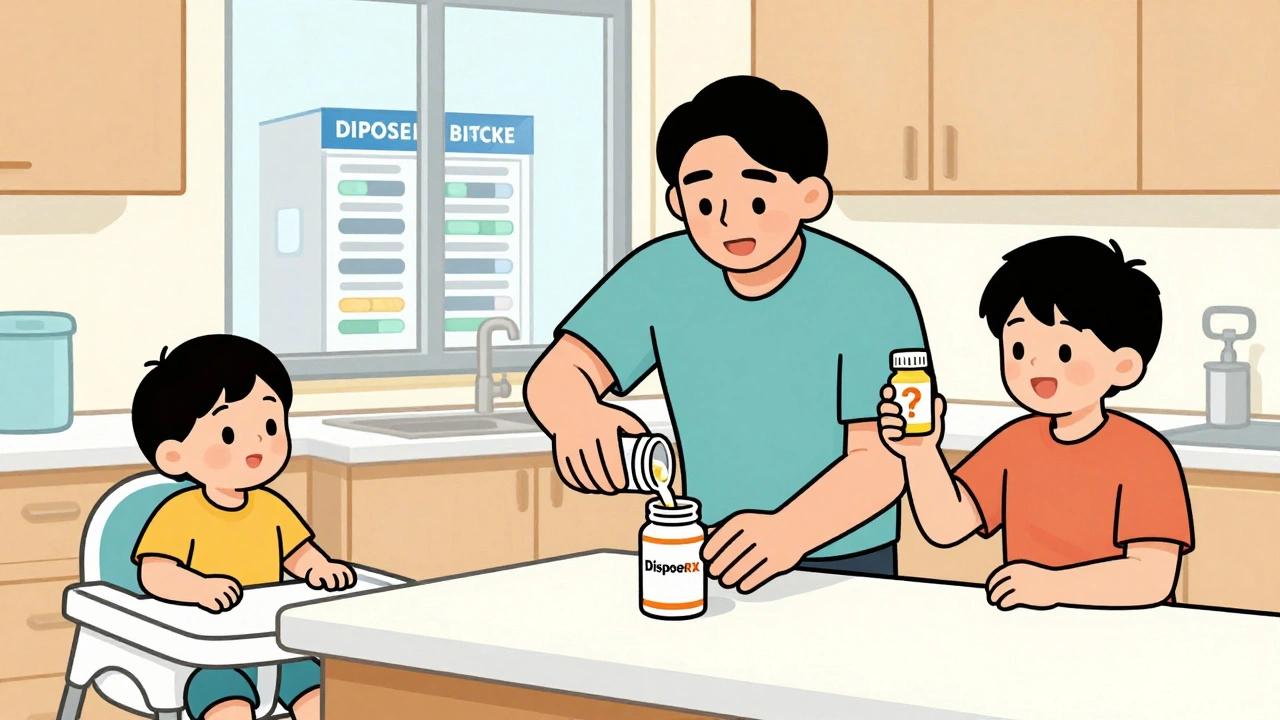
Don’t flush pills. Don’t throw them in the trash. Don’t pour them down the sink. These methods pollute water, attract wildlife, and make it easy for someone to dig through your garbage.Use a drug take-back program. CVS, Walgreens, and many pharmacies have secure disposal kiosks. You don’t need a receipt. Just drop it in. In 2023, the DEA’s National Prescription Drug Take Back Day collected over a million pounds of unused meds. That’s the power of community action.
If there’s no drop-off nearby, use DisposeRX powder. It’s free at many pharmacies-especially when you fill an opioid prescription. Just add it to the bottle, shake, and throw it in the trash. The powder turns liquids and pills into a gel that can’t be recovered or misused.
Teach Everyone in the House
Kids don’t understand "this is medicine, not candy." Teens think they can handle what adults take. Grandparents might not realize their arthritis pills are a risk for a visiting grandchild.Have a family talk. Show them where the cabinet is. Explain why it’s locked. Tell them: "If you need something, ask an adult first." Make it normal. Not scary. Just clear.
Post the Poison Help number-800-222-1222-on the fridge, by the phone, and in your phone’s speed dial. This service is free, confidential, and staffed 24/7 by poison control experts. If you ever suspect a child swallowed something, call immediately. Don’t wait for symptoms. Don’t Google it. Call.
Upgrade for the Future
Technology is catching up. Smart cabinets with motion sensors and phone alerts are becoming more common. ADT reports a 300% increase in smart medicine storage devices since 2020. Some are still pricey, but even basic lockboxes with keypads can help. In pilot programs at 12 children’s hospitals, smart pill bottles now track when doses are taken and alert parents if one’s missed.The CDC’s 2024 National Action Plan aims to cut pediatric medication poisonings by 15% by 2026. That’s not a distant goal-it’s a measurable target. And it starts with your cabinet.
By the end of 2025, 87% of U.S. pharmacies will offer safe disposal options. That’s progress. But it won’t matter if your cabinet is still in the bathroom, unlocked, and full of old bottles.
Build a safe cabinet once. Check it every six months. Teach your family why it matters. That’s how you stop the next accident before it happens.
Can I keep OTC medicines in the bathroom if I use a locked box?
Even with a locked box, the bathroom is still a bad location. Humidity and heat from showers can damage medications, making them less effective or unsafe. A locked box helps prevent access, but it doesn’t fix the environment. Move the entire cabinet to a dry, cool place like a bedroom or linen closet.
What if my child opens a childproof cap?
Childproof caps are designed to slow down kids, not stop them. Studies show over 40% of children aged 4-5 can open them in under 10 minutes. That’s why physical barriers like locked cabinets or drawers are essential. Don’t rely on caps alone. Combine them with secure storage.
Are vitamins safe to keep in the medicine cabinet?
Vitamins are not harmless. High doses of iron, vitamin D, or calcium can be toxic to children. They also expire and lose effectiveness. Treat them like any other medication: store them locked, away from moisture, and check expiration dates every six months.
How often should I clean out my medicine cabinet?
At least every six months. Check each item’s expiration date. Discard anything older than 12 months past its expiration. Also remove any pills you no longer use, even if they’re not expired. Unused meds are a risk for misuse or accidental ingestion.
Can I throw expired medicine in the trash?
Only if you mix it with something unappealing first. Empty pills into a sealable bag with coffee grounds, cat litter, or dirt. Add water to liquid meds. Seal the bag and throw it in the trash. Never leave pills loose in the trash. For the safest option, use a pharmacy take-back kiosk or DisposeRX powder.
What should I do if my child swallows medicine?
Call Poison Help at 800-222-1222 immediately. Do not wait for symptoms. Do not try to make them vomit. Do not give them milk or food unless instructed. Have the medicine container ready when you call. Poison control experts will guide you step by step. This service is free and available 24/7.
Is it safe to store medicines in the car?
No. Cars get extremely hot in summer and freezing in winter. Heat above 86°F damages most medications. Cold can cause liquids to freeze and break. If you need to carry medicine in the car, keep it in a padded, insulated container and bring it inside as soon as possible.
Should I keep an emergency medicine kit for travel?
Yes-but keep it separate from your home cabinet. Pack only what you need: pain relievers, antihistamines, antacids, and bandages. Store it in a small, locked container. Never leave it in a hot car or unattended in a hotel room. Always bring the list of what’s inside.


December 13, 2025 AT 11:43
My mom used to keep all her pills in the bathroom till she had a near-miss with my nephew. Now everything’s locked in a high closet. Best decision she ever made. No more panic attacks when the kids run through the house.