
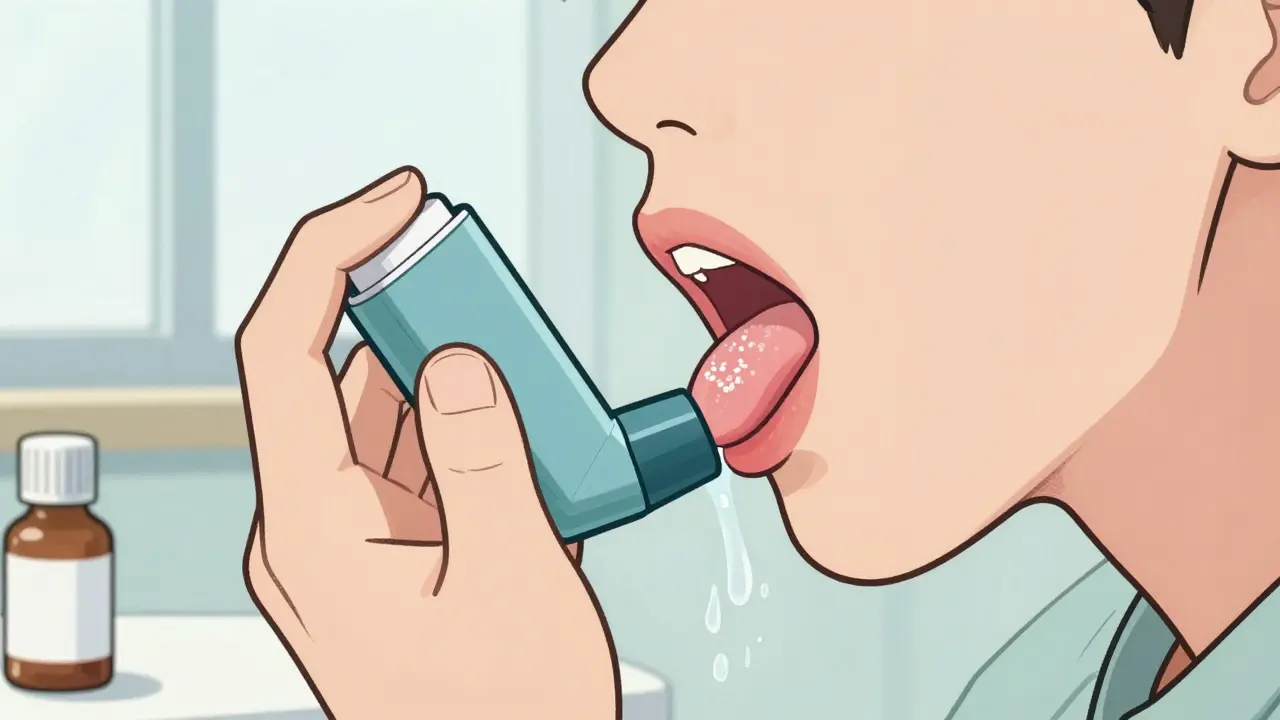
Millions of people take inhaled steroids for asthma, antibiotics for infections, or immunosuppressants after transplants - and many don’t realize one common side effect is oral thrush. It’s not just a minor annoyance. White patches on your tongue, a burning mouth, or trouble swallowing can make eating, talking, and even sleeping unbearable. And if you’re on long-term meds, this isn’t a one-time thing - it can come back again and again.
Why Medications Cause Oral Thrush
Oral thrush is caused by an overgrowth of Candida albicans, a fungus that normally lives harmlessly in your mouth. But when your body’s natural balance gets knocked off, it takes over. Medications are the biggest trigger. Inhaled corticosteroids - like Advair, Symbicort, or Flovent - are the top culprits. About 20% of people using these for asthma or COPD develop thrush, according to the NHS. Why? The powder settles in your mouth and throat, creating a moist, sugary environment where Candida thrives. Antibiotics are another major cause. When you take them, they wipe out good bacteria that keep Candida in check. A single course of broad-spectrum antibiotics can set the stage for an infection. Immunosuppressants, used after organ transplants or for autoimmune diseases, weaken your immune system’s ability to fight off fungi. Cancer treatments like chemotherapy do the same. It’s not just about the drug - it’s about how you use it. If you don’t rinse your mouth after using an inhaler, you’re practically inviting thrush in. Studies show rinsing right after inhaler use cuts the risk by 65%.How to Recognize Oral Thrush
You don’t need a lab test to spot it. Look for:- White, creamy patches on your tongue, inner cheeks, or roof of your mouth
- Redness or soreness underneath the patches
- Cracking at the corners of your lips
- A cottony feeling in your mouth
- Loss of taste or a bad taste that won’t go away
- Pain or difficulty swallowing (especially if it spreads to your throat)
Nystatin: The First-Line Treatment
For most people, especially those who are otherwise healthy, nystatin is the go-to treatment. It’s been around since the 1950s, and it’s still the most prescribed antifungal for oral thrush in the U.S. - with over 8 million prescriptions filled in 2022 alone. Nystatin comes as a liquid suspension. You swish 4 to 6 mL in your mouth for at least two minutes, then spit it out. Do this four times a day - after meals, ideally. It’s not a pill you swallow. The whole point is to let it coat your mouth, killing the fungus where it lives. Why it works: Nystatin binds to the fungal cell wall, punching holes in it until the Candida cells burst. It doesn’t get absorbed into your bloodstream, so it’s safe for pregnant women, kids, and people on multiple medications. But here’s the catch: 42% of treatment failures happen because people swallow it right away. One Reddit user, "AsthmaWarrior42," said the chalky taste made them want to spit it out fast - but that’s exactly what makes it fail. You need to hold it. Two minutes. Four times a day. For 7 to 14 days. Studies show it cures 92% of mild to moderate cases when used correctly. But if you skip doses or don’t swish long enough, it won’t work. And if your thrush spreads to your esophagus? Nystatin won’t touch it. That’s when you need something stronger.Fluconazole: When You Need More Power
Fluconazole (Diflucan) is the go-to for severe cases, recurrent thrush, or if you’re immunocompromised. It’s taken as a pill, once a day. It gets absorbed into your blood, so it can reach deeper infections - like in your throat or even your gut. It’s more effective than nystatin: 95% success rate versus 89%. And it’s easier - one pill a day for a week or two. No swishing. No spitting. No bad taste. But it comes with risks. Fluconazole interacts with 32 common medications, including blood thinners like warfarin, seizure drugs like phenytoin, and diabetes pills. It can cause liver damage - rare, but serious. One PatientsLikeMe user reported hospitalization after fluconazole triggered liver toxicity. The FDA warns about QT prolongation (a heart rhythm issue) and hepatotoxicity. It’s not for everyone. If you have liver disease, kidney problems, or are on other meds, your doctor needs to check your doses. Creatinine clearance below 50 mL/min? You need a lower dose. Cost-wise, generic fluconazole runs about $23.49 for a 30-day supply. Brand-name Diflucan? Over $347. That’s why most doctors start with nystatin - unless you’re at high risk.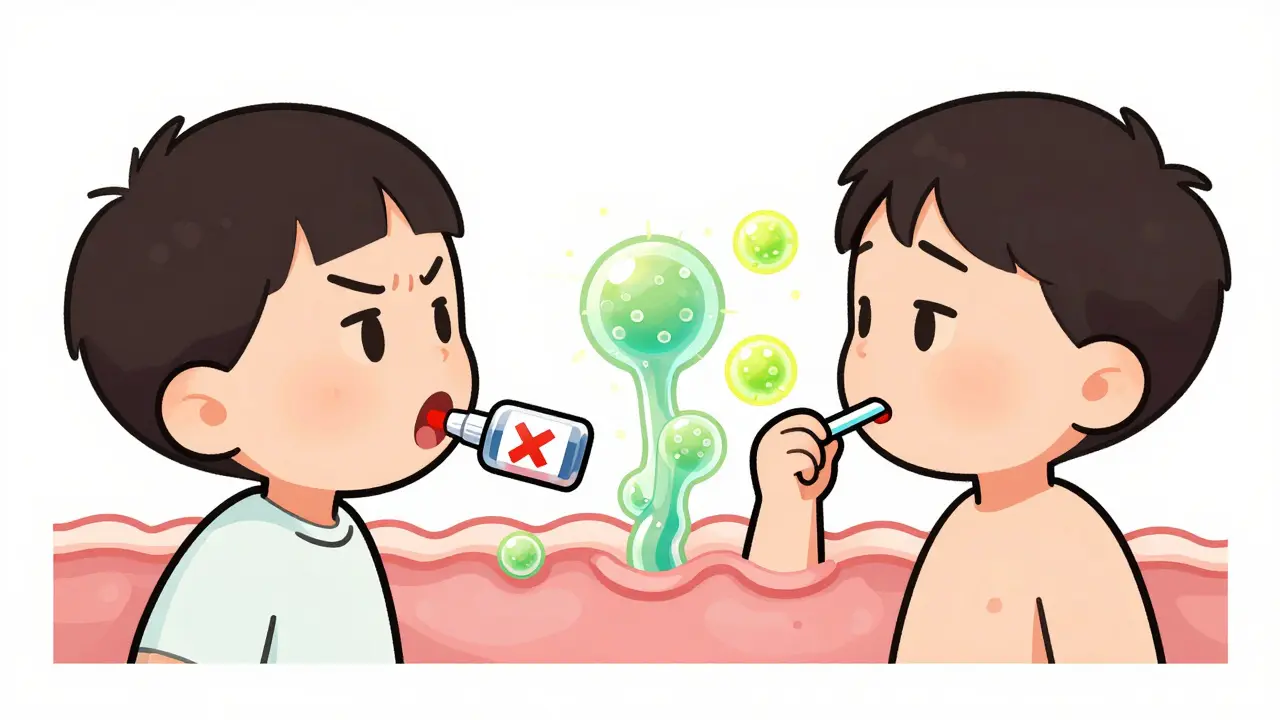
What Works Better? Nystatin vs. Fluconazole
| Feature | Nystatin | Fluconazole |
|---|---|---|
| Form | Oral suspension (swish and spit) | Oral tablet |
| Dosing | 4 times daily for 7-14 days | Once daily for 7-14 days |
| Systemic absorption | <5% | 98% |
| Success rate | 89% | 95% |
| Best for | Mild cases, children, elderly, pregnant women | Severe cases, immunocompromised, esophageal thrush |
| Side effects | Bad taste, mouth irritation | Headache, stomach pain, liver risk |
| Drug interactions | Nearly none | 32+ common meds (warfarin, phenytoin, sulfonylureas) |
| Cost (generic, 30-day supply) | $15.79 | $23.49 |
Bottom line: If you’re healthy and your thrush is mild, start with nystatin. It’s safer, cheaper, and just as effective if you use it right. If you’re on immunosuppressants, have diabetes, or the infection is deep or recurring - fluconazole might be necessary. But always talk to your doctor first.
How to Prevent Oral Thrush Before It Starts
Treatment is one thing. Prevention is better. If you use an inhaler, rinse your mouth with water immediately after every puff. Don’t just swish - spit it out. Do this every single time. That simple habit cuts your risk by two-thirds. Brush your teeth twice a day. Floss daily. Clean your dentures every night if you wear them. Candida loves sticky surfaces. Cut back on sugar. Candida feeds on glucose. If you have diabetes, keeping your HbA1c below 7.0% makes a huge difference. High blood sugar = more thrush. Try xylitol. It’s a natural sweetener that reduces Candida growth by 40%, according to a study in the Journal of Dental Research. Look for sugar-free gum or mouth sprays with xylitol as the first ingredient. Probiotics are gaining traction. A 2023 study in Nature Microbiology showed that taking Lactobacillus reuteri alongside antifungals cut recurrence by 57%. You can find it in capsules or fermented foods like kefir. And if you’ve had thrush before? Talk to your dentist. They can check for hidden spots under dentures or in your throat. Regular checkups every six months are non-negotiable if you’re on long-term meds.What’s New in 2025
The field is evolving. In March 2023, the FDA approved a new nystatin tablet called Mycolog-II. It sticks to your mouth lining for up to four hours - no swishing needed. Early trials show 94% success, and it’s already being used in hospitals. Also, resistance is rising. Fluconazole-resistant Candida strains jumped from 3% in 2010 to 12% in 2022. That’s why experts now recommend testing for Candida species in recurrent cases - not just guessing. New antifungals are in Phase II trials, designed to be more targeted and less toxic. But for now, nystatin and fluconazole remain the standard.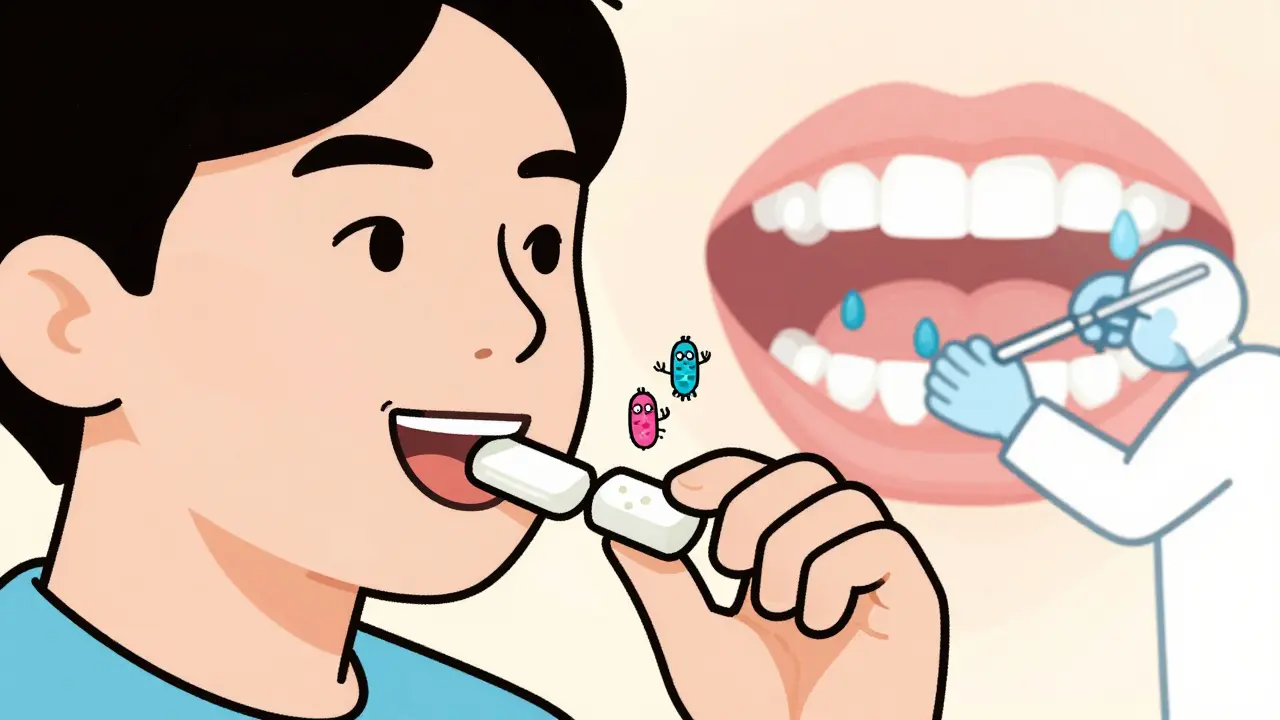
Real Stories, Real Lessons
One user on HealthUnlocked said: "I used nystatin for 10 days. It worked, but I almost quit because of the taste. Then I chilled the suspension - it made it bearable. I kept going. It cleared up in a week." Another said: "I took fluconazole for my asthma thrush. Headache on day two. But no more white patches. Worth it." The pattern? People who succeed follow instructions. They don’t skip doses. They rinse after inhalers. They don’t ignore the taste. They treat it like medicine - not an option.When to Call Your Doctor
See your doctor if:- The white patches don’t improve after 7 days of treatment
- You develop pain swallowing or feel like food is stuck
- You have a fever or feel unwell
- You’ve had thrush more than twice in six months
- You’re on immunosuppressants and get thrush - it could signal a bigger problem
Can oral thrush go away on its own without treatment?
Sometimes, yes - especially if it’s mild and caused by a short course of antibiotics. But if you’re on long-term medications like inhaled steroids or immunosuppressants, it won’t go away on its own. Left untreated, it can spread to your esophagus, causing serious swallowing problems. Don’t wait. Start treatment early.
Is oral thrush contagious?
Not really. Candida is already in your mouth. Thrush happens when it overgrows due to medication or weakened immunity. You can’t catch it from kissing or sharing utensils. But if you have a compromised immune system, avoid contact with someone who has active thrush - just in case.
Can I use nystatin while pregnant?
Yes. Nystatin is the safest antifungal for pregnant women because it doesn’t enter your bloodstream. The European Medicines Agency and FDA both approve it for use during pregnancy. Fluconazole, however, is not recommended in early pregnancy due to potential risks.
Why does my thrush keep coming back?
Recurrent thrush usually means one of three things: you’re not rinsing after your inhaler, you’re not finishing your full course of antifungal, or you have an underlying condition like uncontrolled diabetes or a hidden immune issue. If it keeps returning, ask your doctor about culture testing to check for resistant strains.
Can I use mouthwash to treat oral thrush?
Regular mouthwashes - even alcohol-based ones - won’t kill Candida. In fact, they can make it worse by killing off good bacteria. Some antifungal mouthwashes exist, but they’re prescription-only. Stick to nystatin or fluconazole as directed. Don’t self-treat with OTC rinses.
Does sugar make oral thrush worse?
Absolutely. Candida thrives on sugar. Eating sweets, drinking soda, or even taking sugary cough syrups can fuel the infection. If you’re being treated for thrush, cut back on added sugar. Choose water over juice, and check labels on medications - some liquid forms contain high sugar content.
Can children get oral thrush from medications?
Yes. Babies on antibiotics or children on inhaled steroids for asthma are at risk. Nystatin suspension is safe for infants and children. Dosing is based on weight. Always follow your pediatrician’s instructions. Don’t use adult doses.



December 31, 2025 AT 10:03
Let’s be real - nystatin tastes like chalk dipped in regret, but at least it doesn’t turn your liver into a cautionary tale. Fluconazole? Sure, it’s convenient. But if you’re popping that pill like it’s a gummy bear while on warfarin, you’re not being proactive - you’re playing Russian roulette with your hepatocytes. And don’t even get me started on people who swallow the suspension. That’s not treatment, that’s performance art. You’re not auditioning for a soap opera. Swish. Spit. Repeat. It’s not rocket science, it’s microbiology.
Also, xylitol gum? Genius. Why are we still treating symptoms when we could be starving the fungus? Candida doesn’t need a sugar rush - it needs a famine. And if your HbA1c is above 7, you’re basically hosting a Candida all-you-can-eat buffet. Stop feeding the enemy.
PS: Mycolog-II? Finally. Someone listened to the people who hate spitting. I’d pay extra for a nystatin patch. No more 4x/day rituals. Just stick it and forget it. Long live targeted antifungal delivery systems.