
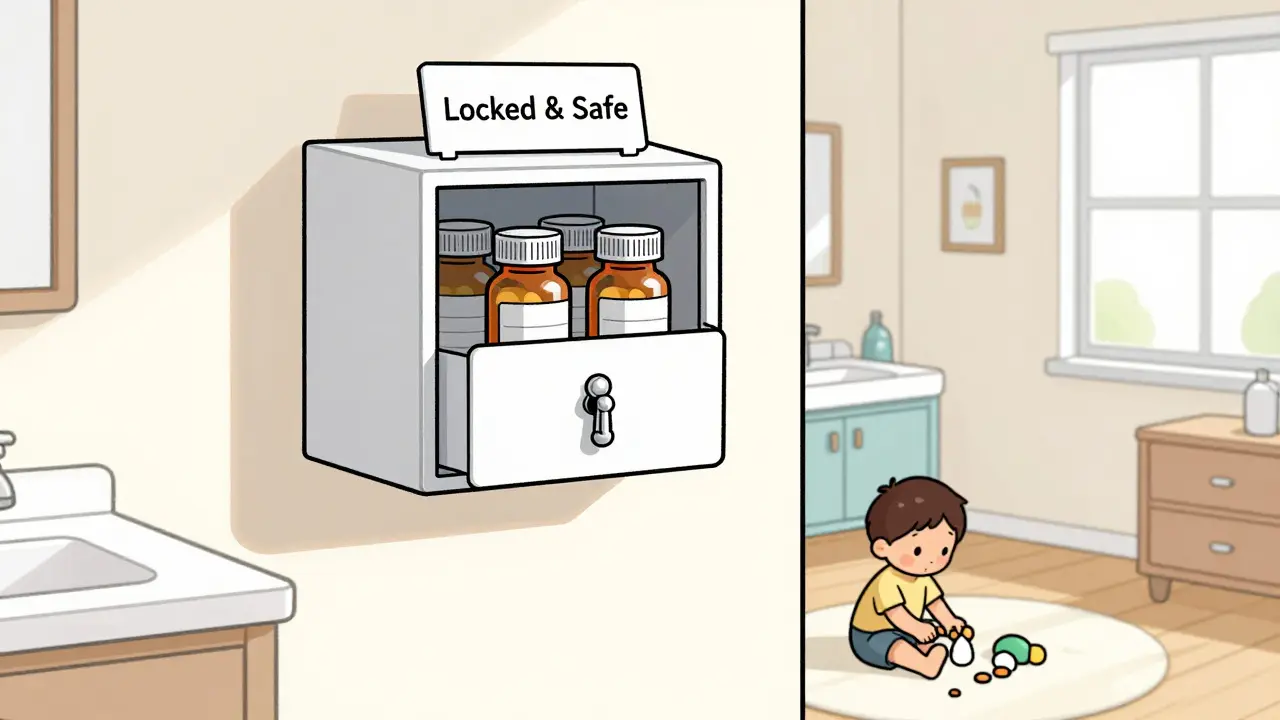
Every household in Australia keeps medicines - painkillers, antibiotics, heart pills, insulin, even over-the-counter cold remedies. But how many of those pills are still safe to take? And how many are sitting where a toddler can reach them, or a teenager might steal them? The truth is, most people store their meds wrong. And worse, they don’t even know if what they’re taking is real.
Why Your Medicine Cabinet Is a Dangerous Place
The bathroom medicine cabinet is the most common storage spot. It’s convenient. But it’s also the worst place for your pills. Humidity from showers can turn aspirin into vinegar and salicylic acid in as little as two weeks. Ampicillin loses 30% of its strength in just seven days at 75% humidity. Tetracycline degrades 40% faster in sunlight. These aren’t hypothetical risks - they’re documented by the FDA and MedlinePlus. If your pills look chalky, discolored, or smell odd, they’re not just expired - they could be chemically broken down and dangerous. And it’s not just about effectiveness. The U.S. Environmental Protection Agency says 95% of accidental poisonings in children under five could be prevented with proper storage. In Australia, similar patterns exist. A child finds a bottle left on the counter while you’re taking your morning pills. In under 30 seconds, it’s in their mouth. The American Association of Poison Control Centers reports 68% of pediatric ingestions happen during medication administration - not because the bottle was unlocked, but because it was left out.Locked Storage Isn’t Optional - It’s Essential
Child-resistant caps are not enough. They slow kids down, but they don’t stop them. The American Academy of Pediatrics found that child-resistant packaging alone reduces poisoning risk by only 45%. Add a locked cabinet, and that jumps to 92%. That’s not a suggestion. That’s science. You don’t need a fancy safe. A simple lockbox that meets ASTM F2090-19 standards works. Gun safes, fireproof document boxes, even a locked drawer in your bedroom dresser - as long as it’s out of reach and out of sight. Install it at least 1.5 meters high. Kids can climb. They can pull chairs over. They can figure out latches. But they can’t reach a locked box on a high shelf. For households with elderly members or chronic pain patients, accessibility matters. A combination lock with large, easy-to-turn dials - or a voice-activated smart lock - lets you get to your meds in seconds while keeping them away from kids. The Arthritis Foundation recommends these hybrid solutions. Security doesn’t mean sacrifice.Counterfeit Drugs Are Real - And They’re in Homes
You might think fake pills only show up in shady online pharmacies. But counterfeit medications are entering legitimate supply chains. In 2024, the Therapeutic Goods Administration (TGA) flagged over 1,200 batches of falsified painkillers, antibiotics, and diabetes meds in Australia. Some were sold through unregulated online sellers. Others were repackaged and resold by unlicensed resellers. Fake oxycodone pills look identical to the real thing. But they contain fentanyl, rat poison, or chalk. One pill can kill. How do you protect yourself? Always buy from licensed pharmacies - not random websites, not overseas suppliers, not unmarked kiosks. Check the packaging. Authentic medications have tamper-evident seals, batch numbers, and expiry dates printed clearly. If the label looks blurry, the font is off, or the pills are a different color or shape than usual, don’t take them. Report it to the TGA. Keep your meds in their original bottles. That’s not just for safety - it’s your proof of authenticity. Pill organizers are convenient, but they strip away the label. If you use one, keep the original bottle locked nearby. Never transfer pills without the packaging.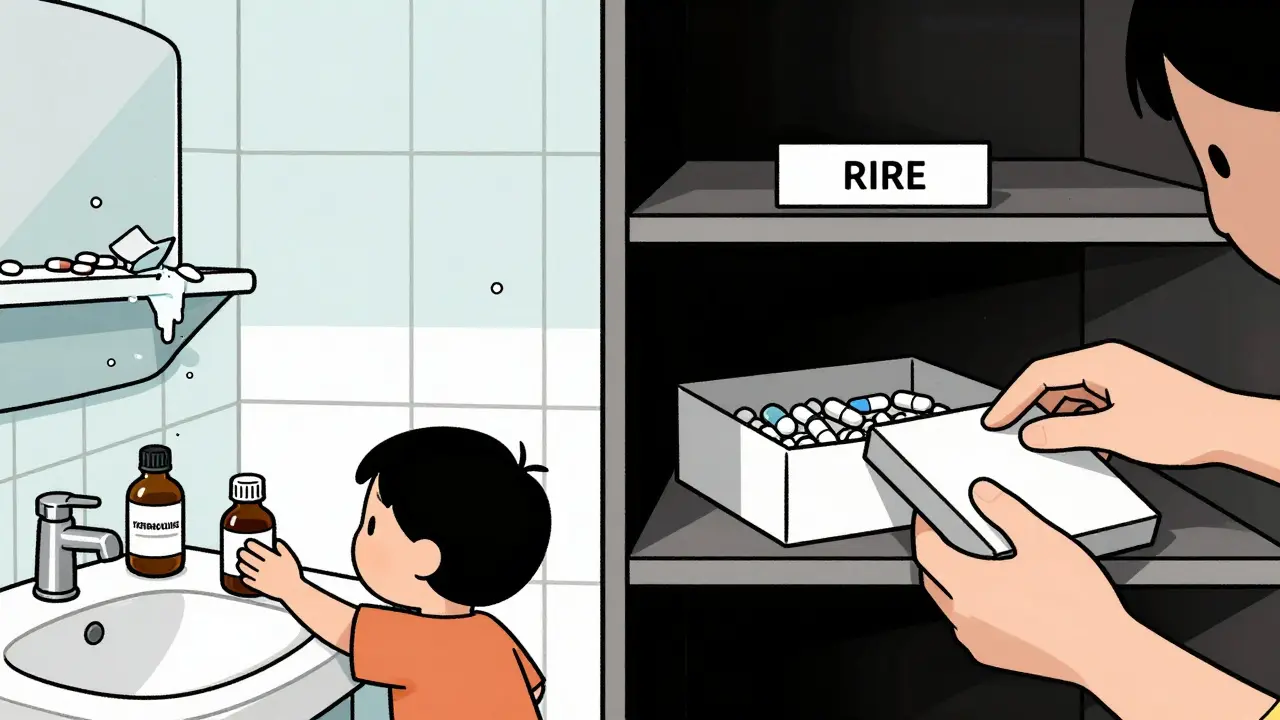
Storage Rules You Can’t Ignore
Here’s what actually works:- Temperature: Keep most meds between 20-25°C. Don’t store them in the car, near the stove, or on a windowsill.
- Humidity: Avoid bathrooms and kitchens. Store in a bedroom drawer or closet instead.
- Light: Keep light-sensitive drugs like tetracycline or nitroglycerin in dark containers or opaque boxes.
- Refrigeration: Only refrigerate if the label says so. Insulin, some biologics, and eye drops need it. Keep them in a separate locked container - never mixed with food.
- Locking: Use a lockbox, cabinet, or safe. Twist child-resistant caps until you hear a click. Test them - if your child can open it, so can a determined toddler.
What to Do With Old or Unused Meds
Don’t flush them. Don’t toss them in the trash. Don’t give them to a friend. The TGA and EPA both warn that improper disposal contaminates waterways and fuels drug abuse. Australia has over 1,500 permanent medicine take-back locations - pharmacies, hospitals, and community centers. Find your nearest one at the TGA website. Drop off expired, unused, or unwanted meds. It’s free. It’s safe. It’s the law. If you can’t get to a drop-off point, mix pills with coffee grounds or cat litter, seal them in a plastic bag, and throw them in the trash. That’s the last resort - not the first.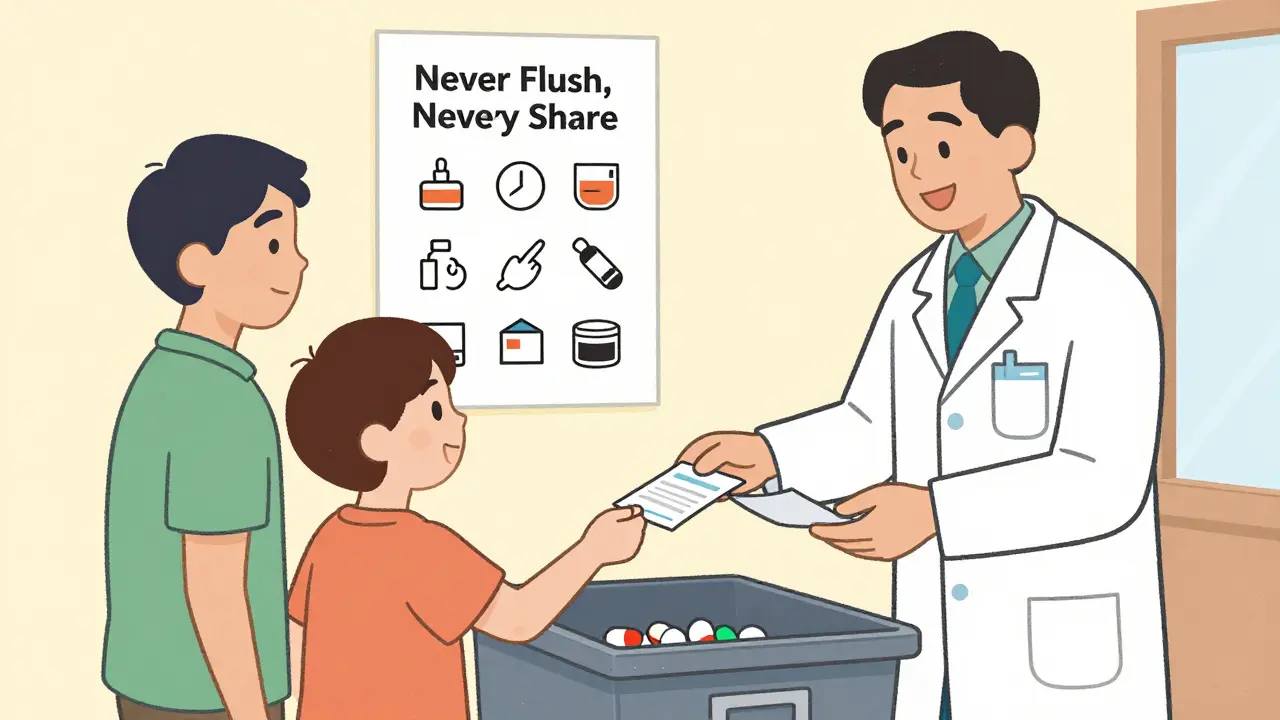
Build a Habit, Not Just a System
You won’t remember to lock your meds every day. That’s normal. The key is to make it automatic. Start with a 15-minute home audit. Find every pill bottle - in the bathroom, the car, the purse, the nightstand. Bring them all to one place. Sort them: active, expired, unused. Throw out the expired ones (safely). Put the rest in a locked container. Label it. Make it part of your routine. It takes 3-5 weeks to form a new habit. After that, locking your meds feels as natural as turning off the lights. Use a calendar reminder for quarterly checks. Are there pills you haven’t touched in six months? Maybe you don’t need them anymore. Get rid of them properly.Real Stories, Real Results
One mum in Geelong started using a Gunvault MicroVault on her nightstand after her 3-year-old nearly swallowed her thyroid pills. She says her anxiety dropped 90%. A man in Perth with chronic back pain uses a wall-mounted safe at shoulder height. He can reach it in seconds during flare-ups, but his two toddlers can’t. He says, “It’s the only thing that lets me sleep at night.” These aren’t extreme measures. They’re common sense. And they work.What Happens If You Don’t Act
Every year in Australia, hundreds of children are rushed to hospital after swallowing pills. Teenagers misuse prescription meds they find at home. Older adults take degraded drugs that don’t work - or make them sicker. And counterfeit pills keep appearing, often disguised as common painkillers. The cost? Emergency visits. Lost work. Long-term health damage. Even death. The fix? It’s simple. Lock it. Store it right. Dispose of it safely. Check it regularly. You don’t need to be a doctor or a safety expert. You just need to care enough to act.Can I store my medications in the fridge?
Only if the label says to. Insulin, some biologics, and certain eye drops need refrigeration. Store them in a separate, locked container away from food. Never put them in the freezer. Most other pills - like antibiotics, painkillers, or blood pressure meds - should stay at room temperature. Refrigerating them can damage the formula and make them less effective.
Are child-resistant caps enough to keep kids safe?
No. Child-resistant caps are designed to slow kids down, not stop them. Many children under five can open them in under a minute. The American Academy of Pediatrics says locking the entire container reduces poisoning risk by 92%, compared to just 45% with caps alone. Always combine child-resistant caps with a locked storage box.
How do I know if my medication is fake?
Buy only from licensed Australian pharmacies - not websites without a physical address or registration. Check the packaging: real meds have clear printing, batch numbers, expiry dates, and tamper-proof seals. If the pills look different - wrong color, shape, texture - or if the box feels cheap or smells odd, don’t take them. Report suspicious meds to the Therapeutic Goods Administration (TGA) immediately.
What’s the best way to dispose of old pills?
Take them to a medicine take-back location - most pharmacies and hospitals offer this for free. If that’s not possible, mix pills with coffee grounds or cat litter, seal them in a plastic bag, and throw them in the bin. Never flush them - it pollutes waterways. Never give them to someone else - it’s dangerous and illegal.
Can I use a pill organizer?
Yes - but only if you keep the original bottle locked nearby. Pill organizers make it easy to forget what you’re taking. Without the label, you can’t tell if the pills are real, expired, or meant for someone else. Always store the original container with the full prescription info, and only use the organizer as a daily helper - not your main storage.
What should I do if my elderly parent needs quick access to meds?
Use a combination lock with large, easy-to-turn dials, or a smart lock that responds to voice or code. Place the box at waist-to-shoulder height so it’s reachable without bending or climbing. Avoid locks that require fine motor skills - arthritis makes them hard to use. The Arthritis Foundation and Australian Ageing Association both recommend these balanced solutions for safety and accessibility.
Is it safe to store medications in the car?
No. Cars get extremely hot in summer - over 60°C on a sunny day. That heat destroys the chemical structure of most medications. Insulin, heart pills, and antibiotics can become useless or even toxic. Keep all meds inside your home, in a cool, dry place. If you need to carry pills for travel, use a small insulated case and keep it with you - never in the glovebox or trunk.
How often should I check my medicine supply?
Every three months. Look for expired dates, discolored pills, strange smells, or broken seals. Throw out anything questionable - safely. This also helps you notice if pills are missing, which could signal misuse or theft. Keep a list of what you have and where it’s stored. It’s a simple habit that prevents big problems.


January 10, 2026 AT 13:00
Lock it up. Simple. No excuses. I keep my dad's heart meds in a locked box on his nightstand. He can reach it. His grandkids can't. Done.