
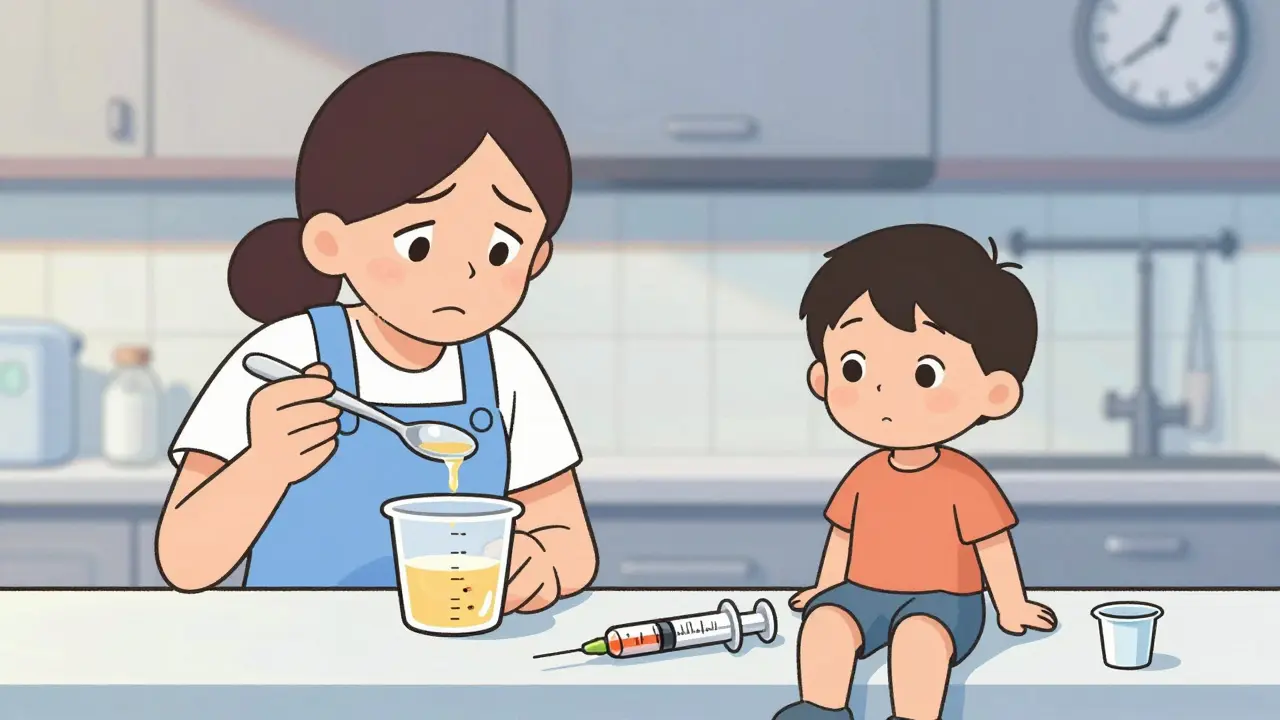
Every year, more than 10,000 calls are made to poison control centers in the U.S. because a child was given the wrong amount of liquid medicine. Most of these mistakes? They happen because someone used a kitchen spoon.
It seems harmless. You’re in a hurry. The medicine bottle says "teaspoon," so you grab the one from the drawer. But here’s the truth: a kitchen teaspoon is not a medicine teaspoon. Not even close.
That tiny difference-maybe half a milliliter here, a full milliliter there-can turn a safe dose into a dangerous one. Kids aren’t small adults. Their bodies react differently. Too little medicine? The infection won’t clear. Too much? They could end up in the hospital.
Why Kitchen Spoons Are a Risk
A standard medical teaspoon is exactly 5 milliliters (mL). A tablespoon is 15 mL. Simple, right? But your kitchen spoon? It could hold anywhere from 3 mL to 7 mL. That’s a 40% variation. One spoon might be too little. The next one might be way too much.
And it’s not just teaspoons. If you use a tablespoon thinking it’s the same as a teaspoon? You’ve just given your child three times the dose they were supposed to get. That’s not a mistake-it’s a medical emergency waiting to happen.
Research from the National Institutes of Health found that nearly 40% of parents gave the wrong dose when using household spoons. Over 41% made errors even when trying to measure the exact amount prescribed. These aren’t careless parents. They’re tired, stressed, and trusting what looks familiar.
What the Experts Say
The American Academy of Pediatrics (AAP), the CDC, and the FDA have been warning about this since 1978. That’s almost 50 years of consistent advice. And yet, according to the Consumer Medication Safety Institute, about 75% of American families still use kitchen spoons to give medicine.
Dr. Shonna Yin, lead author of a major NIH study published in Pediatrics, put it plainly: "A big part of the problem is parents confusing medicine spoons with kitchen spoons. Many people confuse the two. Errors are much less likely when parents use medicine droppers and oral syringes calibrated in milliliters."
The CDC’s "Spoons are for Soup" campaign is one of the clearest public health messages ever made: Milliliters (mL) are for medicine. Not teaspoons. Not tablespoons. Not "a little bit." Just mL.
The Right Tools for the Job
There are three tools you should use-and only these:
- Oral syringes (with mL markings): These are the gold standard. They’re accurate down to 0.1 mL. Perfect for doses like 2.5 mL or 4.7 mL. Easy to use. Easy to read. You can even squirt the medicine gently between your child’s cheek and gum-no choking risk.
- Dosing cups (with mL markings): These are okay if the dose is a multiple of 5 mL (like 5 mL, 10 mL, 15 mL). But if the dose is 3.5 mL? You’re guessing. And guessing is dangerous.
- Medicine droppers: These are good for babies and small doses. Make sure they’re marked in mL, not "drops." Drops vary by liquid thickness and dropper design. Don’t rely on them for accuracy.
Never use a regular spoon, a coffee spoon, a dessert spoon, or a shot glass. Even if it "looks right," it’s not. Medication isn’t soup. It’s not guesswork.
How to Measure Correctly
Here’s how to get it right every time:
- Read the label in mL. If it says "teaspoon," ask your pharmacist to rewrite it in milliliters. Many now do this automatically.
- Use the tool that came with the medicine. If it’s an oral syringe, use that. Don’t switch to a different one unless it’s marked in mL.
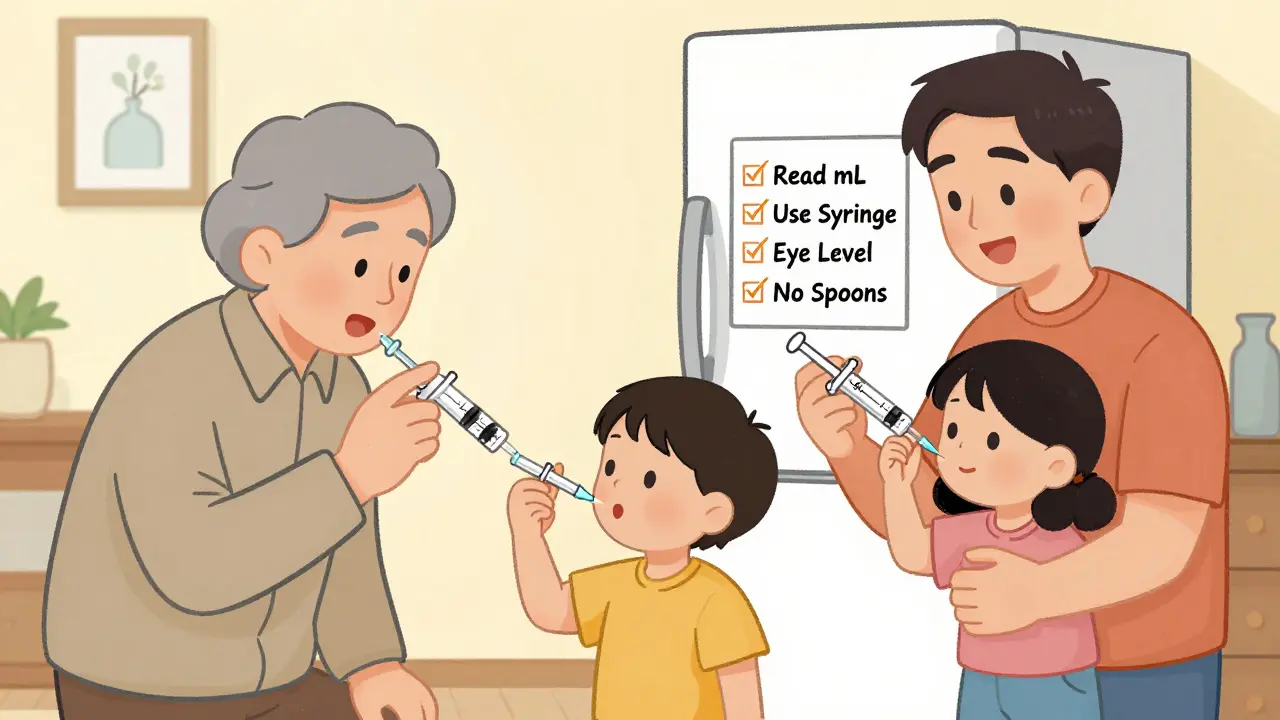
- Measure at eye level. Hold the syringe or cup so the line is level with your eyes. Tilting it up or down changes the reading.
- Don’t use kitchen spoons. Not even "just this once." That’s when accidents happen.
- Ask your pharmacist. If you don’t have a proper measuring tool, ask for one. Most pharmacies give them out for free.
Safe Kids Worldwide also recommends giving medicine by squirting it gently into the side of the mouth, not the back of the throat. That reduces choking and gagging.
What If the Label Still Says "Teaspoon"?
Some older bottles still say "tsp" or "teaspoon." That’s a problem. Research from Academic Pediatrics showed that when labels use "teaspoon," nearly one-third of parents think it’s okay to use a kitchen spoon. But when the label says "mL," fewer than 10% make that mistake.
So here’s what to do: Ask your pharmacist to convert it. Say: "Can you write this dose in milliliters?" They’ll do it. They’ve been trained to. And if they don’t have a measuring tool, ask for one. Most pharmacies keep them on hand.
Pharmacies like Aspirus now routinely include oral syringes with every pediatric liquid medication. They’re labeled clearly in mL. That’s the new standard. And it’s working.
Why This Matters More Than You Think
This isn’t just about avoiding a bad reaction. It’s about trust in healthcare. When parents make dosing mistakes, they blame themselves. They feel guilty. They start doubting whether they can care for their child properly.
But here’s the truth: you’re not failing. The system is still letting you down. Labels that say "teaspoon." Packaging that doesn’t include a proper tool. Pharmacy staff who don’t always explain how to measure.
That’s why the push for milliliter-only labeling is growing. The FDA is pushing for it. The AAP is pushing for it. And studies show that when labels use only mL, error rates drop by 20 percentage points.
This change isn’t about being picky. It’s about saving lives.
What You Can Do Today
You don’t need to wait for a new bottle or a new label. Here’s what to do right now:
- Find every liquid medicine in your home. Check the label. If it says "tsp," circle it.
- Call your pharmacy. Ask for free oral syringes. They’ll send them to you or give them to you at pickup.
- Throw out any old dosing spoons from past prescriptions. They’re not reliable.
- Keep a small oral syringe (1 mL or 5 mL) in your diaper bag, purse, or car. You never know when you’ll need it.
- Teach everyone who gives your child medicine-grandparents, babysitters, teachers-how to use it.
It takes two minutes to get the right tool. It could save your child from a hospital visit.
Final Thought
Medicine isn’t a guess. It’s science. And science needs precision. Your kitchen spoon is for cereal. For soup. For stirring coffee. Not for medicine.
Milliliters are for medicine. Always. No exceptions.
Why can’t I just use a regular spoon if the bottle says "teaspoon"?
Because a kitchen teaspoon isn’t standardized. It can hold anywhere from 3 to 7 milliliters, while a medical teaspoon is exactly 5 mL. That difference can mean giving your child too much or too little medicine. Even a 1 mL error can be risky for a small child.
Are dosing cups safe to use?
Only if they’re marked in milliliters and the dose is a multiple of 5 mL (like 5, 10, or 15 mL). For doses like 3.5 mL or 2.7 mL, dosing cups aren’t accurate enough. Oral syringes are better for those amounts because they show smaller increments.
What should I do if my child’s medicine doesn’t come with a measuring tool?
Call your pharmacy. They’re required to provide a proper measuring device-usually an oral syringe-at no cost. Don’t use a kitchen spoon. Don’t eyeball it. Always ask for the right tool.
Is it safe to mix medicine with juice or food to make it taste better?
Only if your pharmacist or doctor says it’s okay. Some medicines lose effectiveness when mixed. Others can become too concentrated in one part of the food. Always check first. If approved, use the full dose and make sure your child eats or drinks the entire portion.
Why do some pharmacies still give out dosing spoons?
Some still do because older inventory or habits haven’t changed. But the standard is shifting. Oral syringes are now the recommended tool because they’re more accurate. If you’re given a spoon, ask for a syringe instead. Most pharmacies will gladly swap it.
How do I know if I gave my child the right dose?
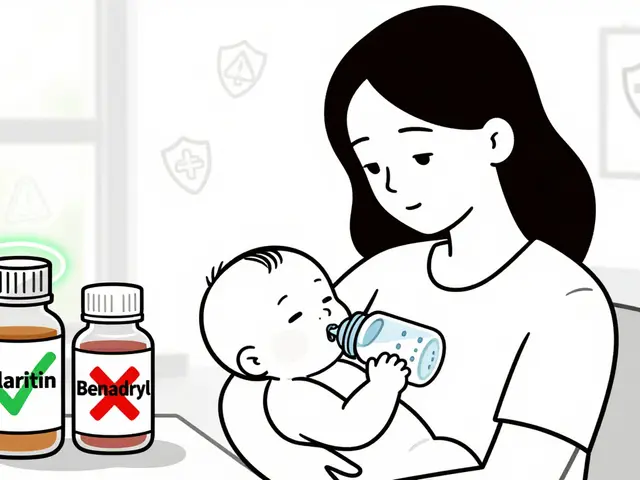
Always measure at eye level using a device marked in milliliters. Write down the dose and time you gave it. If you’re unsure, call your pharmacist. Never guess. If your child shows signs of an overdose-drowsiness, vomiting, trouble breathing-call poison control immediately.



January 6, 2026 AT 14:22
My kid’s last cold turned into a mini horror movie because I used a spoon. Don’t be me. Get the syringe. It’s free. It’s easy. It doesn’t involve guessing if your spoon is a ‘good’ one or a ‘killer’ one.