
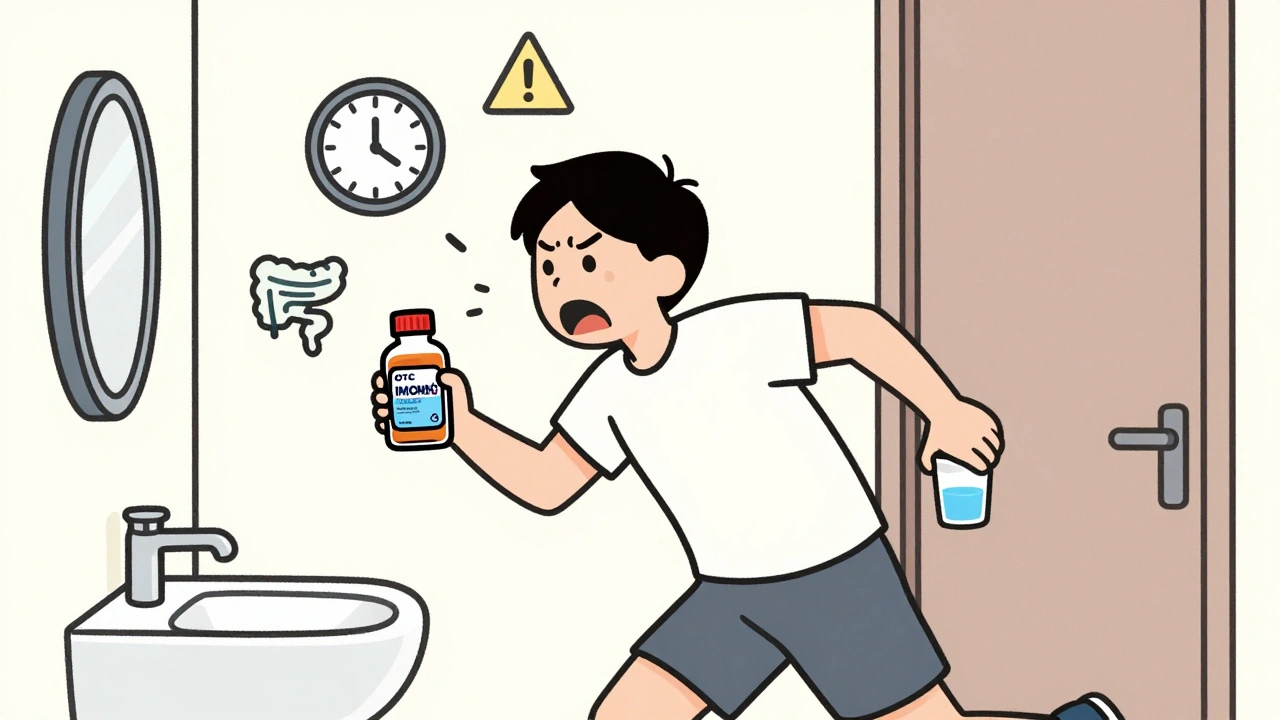
Diarrhea is one of those things that hits fast and hard - no warning, no plan, and suddenly you’re racing for the bathroom. It’s common, often unpleasant, and usually harmless. But when it sticks around or gets worse, you start wondering: should I just grab something from the pharmacy, or is this something I need a doctor for?
Over-the-counter (OTC) diarrhea treatments like loperamide (Imodium) and bismuth subsalicylate (Pepto-Bismol, Kaopectate) can offer quick relief. But they’re not magic pills. Used wrong, they can make things worse. Used right, they help you get back on your feet without a trip to the clinic. The key isn’t just knowing which one to take - it’s knowing when to stop.
What’s Actually Happening in Your Gut?
Diarrhea isn’t a disease. It’s your body’s way of flushing out something harmful - a virus, bacteria, or toxin. Your intestines are pushing fluid through faster than usual, leaving you with loose, frequent stools. Most cases are viral, like norovirus or rotavirus, and clear up on their own in 2-3 days. Bacterial causes - like E. coli or Salmonella - are less common but can be more serious.
OTC meds don’t cure the infection. They just slow things down. Loperamide works by targeting opioid receptors in your gut, slowing muscle contractions and letting more water get absorbed. Bismuth subsalicylate coats the lining, reduces inflammation, kills some bacteria, and even helps with nausea. Both cut down on bathroom trips - loperamide by about 60%, bismuth by 45% - but they do it in different ways.
Loperamide (Imodium): Fast, But Risky if Misused
If you need to stop diarrhea fast - say, you’re heading out for a long drive or stuck at work - loperamide is your best bet. It kicks in within 30 to 60 minutes. The standard dose is 4mg after the first loose stool, then 2mg after each one after that. But here’s the hard rule: never take more than 8mg in 24 hours.
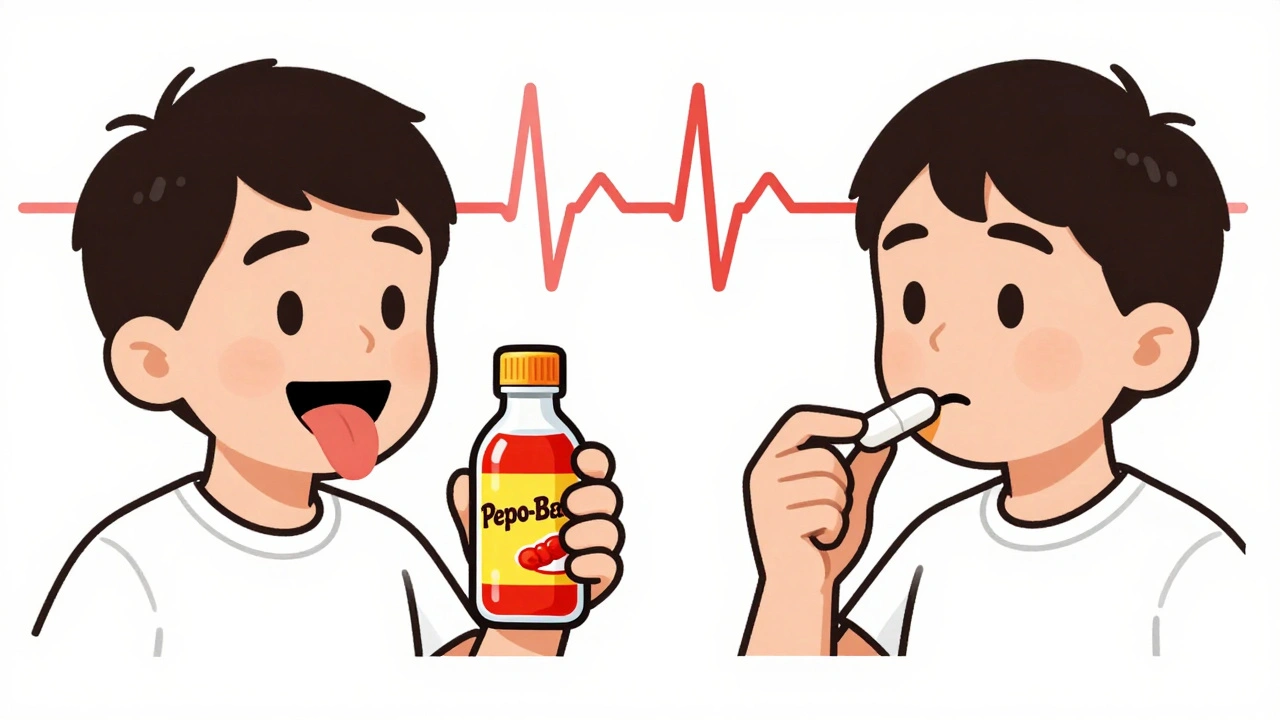
That limit exists for a reason. People have died from taking too much. In 2016, the FDA warned about loperamide abuse, where people took 50-100mg a day to ease opioid withdrawal symptoms. At those doses, it crosses into the brain and can cause dangerous heart rhythms. Between 1976 and 2015, 48 deaths were linked to loperamide overdose. Even at normal doses, 12% of users get constipated. If you’re already bloated or not pooping at all, stop taking it.
Imodium is approved for kids 6 and up in liquid form, and 12 and up in caplets. But don’t give it to a child without checking with a doctor first. The NHS has documented over 100 cases of paralytic ileus - where the gut stops moving - in kids under 12 who took it.
Bismuth Subsalicylate (Pepto-Bismol): More Than Just Diarrhea
Pepto-Bismol isn’t just for diarrhea. It’s also one of the few OTC options that helps with nausea, stomach cramps, and even mild heartburn. That’s because it does four things at once: protects the gut lining, reduces inflammation, kills some bugs, and absorbs toxins.
It’s especially useful for traveler’s diarrhea. Studies show taking it before or during travel cuts your risk by 65%. It’s also better than loperamide if you have signs of infection - like fever or cramps - because it doesn’t trap bacteria inside you.
But there’s a catch. It turns your stool black. And your tongue. It’s harmless, but it freaks people out. About 98% of users see this. If you’re worried about bleeding, this makes it harder to tell. Also, it contains salicylate - the same active ingredient as aspirin. So don’t give it to kids under 12, or anyone with a salicylate allergy, flu symptoms, or Reye’s syndrome risk. And don’t mix it with other NSAIDs like ibuprofen.
When to Skip the Medicine Altogether
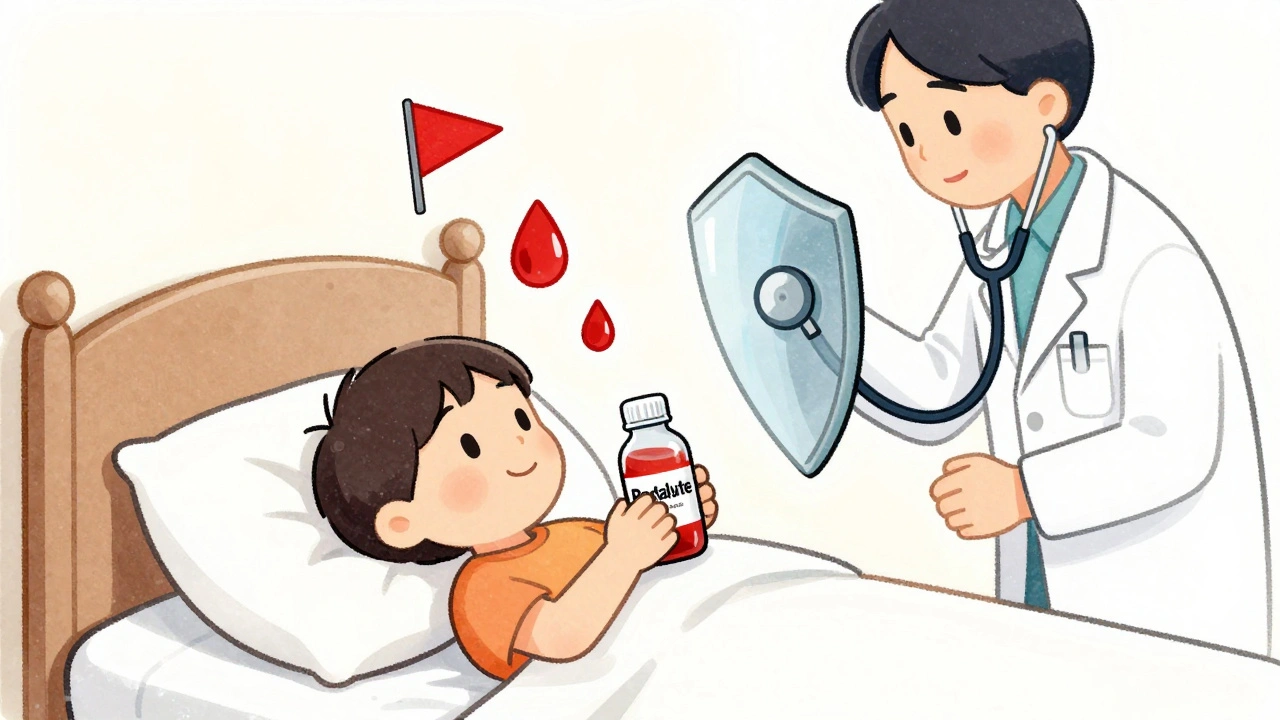
Here’s the most important part: don’t use OTC diarrhea meds if you have fever, bloody stools, or severe pain.
Those are red flags. Fever over 100.4°F (38°C) means your body is fighting an infection - maybe something like Salmonella or C. diff. Bloody stools could mean inflammatory bowel disease, a serious infection, or even colon issues. Slowing down your gut in these cases traps harmful bacteria and toxins inside, making things worse. The Mayo Clinic, CDC, and American Gastroenterological Association all say the same thing: if you have these symptoms, see a doctor. Don’t take loperamide or Pepto-Bismol.
Same goes for diarrhea lasting more than 48 hours. If you’re still having 5-6 loose stools a day after two days, your body isn’t clearing it. That’s not normal. It could be a parasite, antibiotic side effect, or something else needing treatment.
Hydration Is Non-Negotiable
No OTC pill works if you’re dehydrated. Diarrhea drains water and electrolytes - sodium, potassium, chloride. If you’re dizzy, have dry mouth, or haven’t peed in 8 hours, you’re in trouble.
Drink oral rehydration solutions (ORS), like those sold under brands like Pedialyte or generic versions. They contain the right balance of salt and sugar to help your body absorb water. WHO guidelines say the ideal mix is 75mmol/L sodium. Avoid sugary drinks, coffee, and alcohol - they make dehydration worse.
After the first 24 hours, ease back into food. The BRAT diet - bananas, rice, applesauce, toast - is gentle on the gut. Bananas replace potassium. Rice and toast are low-fiber and binding. Avoid dairy, fatty foods, and spicy stuff until you’re back to normal.
What People Get Wrong (And How to Avoid It)
Most mistakes aren’t about choosing the wrong pill. They’re about how people use them.
- Taking too much: One Reddit user took 6 Imodium caplets in 4 hours and ended up in the ER with severe constipation. That’s 12mg - 50% over the safe limit.
- Using it too long: If diarrhea lasts beyond 48 hours, you’re not helping - you’re masking a problem. Stop the meds and get checked.
- Combining products: Don’t take Pepto-Bismol and another NSAID. Don’t mix loperamide with other anti-diarrheals. You’re asking for trouble.
- Ignoring kids: Children under 12 need special care. Loperamide isn’t safe for them unless a doctor says so. Pepto-Bismol isn’t approved under 12.
- Assuming it’s just a bug: If you’ve been on antibiotics recently, or you’ve traveled overseas, or you’re over 65 - this could be something serious. Don’t guess.
Who Shouldn’t Use These at All?
Some people should avoid OTC diarrhea meds completely:
- Anyone with a history of heart problems - especially QT prolongation or arrhythmias
- People taking medications that affect heart rhythm - like certain antidepressants or antibiotics
- Anyone with bloody diarrhea, fever, or severe abdominal pain
- Children under 6 (for loperamide) or under 12 (for Pepto-Bismol)
- People allergic to aspirin or salicylates
- Pregnant or breastfeeding women - talk to your doctor first
If you’re unsure, skip the OTC stuff. A phone call to your doctor or a visit to a clinic takes 15 minutes. A trip to the ER because you ignored warning signs? That takes hours - and costs way more.
When to Call a Doctor
Here’s your quick checklist. If any of these apply, don’t wait - get help:
- Diarrhea lasting more than 48 hours
- Fever over 100.4°F (38°C)
- Bloody, black, or tarry stools
- Severe stomach pain or cramping
- Signs of dehydration - dizziness, dry mouth, no urine for 8+ hours
- Weight loss over 5% of your body weight
- Diarrhea after starting a new antibiotic
- Diarrhea in infants under 12 months
These aren’t “maybe” signs. They’re clear signals your body needs more than an OTC pill can give. Doctors can test for parasites, check for C. diff, or rule out inflammatory conditions. They can also prescribe better treatments if needed.
What’s Changing in the World of Diarrhea Treatment
Things are shifting. The FDA recently approved a new drug called racecadotril for kids - it reduces diarrhea duration without slowing gut movement. But it’s not available OTC in the U.S. yet.
Emergency rooms are also changing their approach. The American College of Emergency Physicians now says: don’t give anti-diarrheals in the ER. Instead, focus on IV fluids and testing. Why? Because the infection usually clears on its own - and stopping diarrhea doesn’t speed up recovery.
Meanwhile, traveler’s diarrhea is rising. With more people flying internationally, cases are up. Bismuth subsalicylate is still the top pick for prevention - take it before and during travel. But resistance to antibiotics is growing. In 38% of cases now, the usual drugs don’t work. That means OTC options will stay relevant longer than some predict.
But here’s the truth: the best treatment for most cases of diarrhea isn’t a pill. It’s rest, fluids, and time.
Can I take loperamide and Pepto-Bismol together?
No. Don’t combine them. Loperamide slows your gut, and Pepto-Bismol coats it and kills bacteria. Using both doesn’t make you better faster - it just increases your risk of side effects like constipation, nausea, or salicylate toxicity. Stick to one at a time, and only if your symptoms are mild and you don’t have a fever or bloody stool.
Is it safe to use OTC diarrhea meds for my child?
For children under 6, avoid loperamide unless a doctor says so. For kids under 12, don’t use Pepto-Bismol because of the salicylate risk. For mild cases in older kids, use pediatric-specific oral rehydration solutions first. If diarrhea lasts more than 24 hours or they have a fever, see a doctor. Kids dehydrate faster than adults - don’t wait.
Why does my stool turn black after taking Pepto-Bismol?
It’s normal. Bismuth subsalicylate reacts with sulfur in your digestive tract to form bismuth sulfide, a black compound. It’s harmless and goes away once you stop taking it. But if you’re unsure whether it’s from the medicine or actual bleeding - especially if you have other symptoms like pain or dizziness - get checked. Better safe than sorry.
Can I use these if I’m pregnant?
Loperamide is considered low-risk in pregnancy, but only use it for short periods and at the lowest dose. Pepto-Bismol contains salicylate, which is not recommended during pregnancy, especially in the third trimester. Always talk to your doctor or midwife before taking anything. Hydration and diet changes are safer first steps.
How do I know if my diarrhea is viral or bacterial?
You usually can’t tell without a test. Viral diarrhea often comes with nausea and vomiting, clears in 1-3 days, and doesn’t cause fever. Bacterial diarrhea often includes fever, bloody stools, and lasts longer. But the treatment approach is the same: hydrate, rest, and avoid OTC meds if you have red flags. Testing isn’t always needed - your symptoms and duration matter more than the exact bug.
Is it true that OTC meds can make diarrhea worse?
Yes - if you have an infection with fever or bloody stools. Slowing your gut with loperamide traps harmful bacteria or toxins inside. That can turn a mild case into a serious one. Bismuth subsalicylate is safer in these cases because it also kills bacteria. But if you’re unsure, skip the meds and see a doctor. The goal isn’t to stop diarrhea - it’s to let your body heal safely.
How long should I wait before seeing a doctor?
If diarrhea lasts more than 48 hours, you have a fever over 100.4°F, or you’re showing signs of dehydration - don’t wait. If you’re over 65, have a chronic illness, or are taking immunosuppressants, see a doctor after 24 hours. For healthy adults, 48 hours is the cutoff. For kids, infants, or pregnant people, call sooner.
Final Thought: Don’t Rush the Cure
Diarrhea feels urgent, but it’s rarely an emergency. Your body knows how to fix itself - if you give it time and fluids. OTC meds are tools, not solutions. Use them to buy comfort, not to force your gut to shut down. If it doesn’t get better, or if something feels off - it’s not weakness to ask for help. It’s smart.




December 10, 2025 AT 00:30
Let me just say this: if you're taking loperamide like it's candy, you're not brave-you're just dumb. I've seen people on Reddit brag about 12mg doses like it's a personal best. That's not a marathon, it's a death wish. The FDA warning exists for a reason. Stop glorifying self-medication like it's a TikTok trend.