
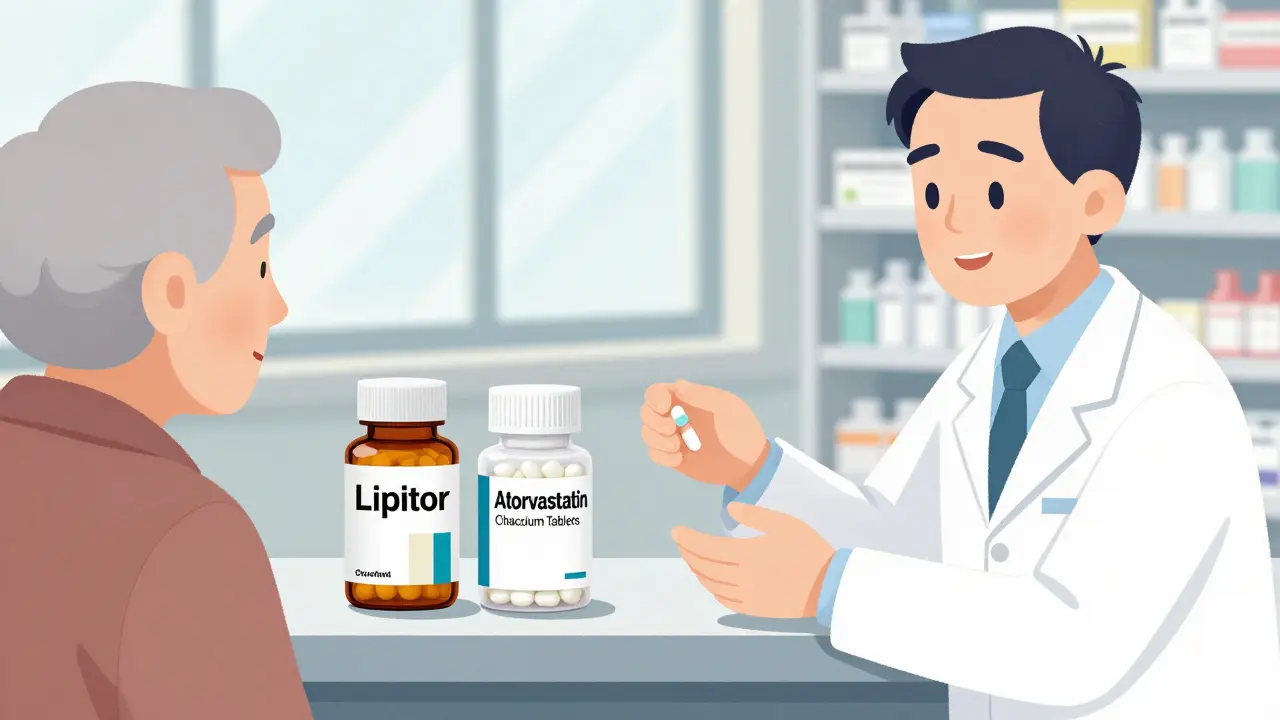
When a patient walks into the pharmacy with a prescription for a brand-name drug, the pharmacist has more options than just swapping it for any generic. One of the most powerful, yet underused, tools in their arsenal is the authorized generic. Unlike regular generics, which may have different fillers or coatings, an authorized generic is the exact same pill-same active ingredient, same inactive ingredients, same manufacturing process-as the brand-name drug. The only difference? It doesn’t carry the brand name on the label.
What Exactly Is an Authorized Generic?
An authorized generic is made by the original brand-name manufacturer-or under their direct license-and sold without the brand’s name, logo, or packaging. It’s not a copy. It’s the same drug, just unlabeled. The FDA defines it clearly: it’s a listed drug approved under Section 505(c) of the Federal Food, Drug, and Cosmetic Act, but marketed with different labeling or packaging. You won’t find it listed separately in the Orange Book because it doesn’t need to be. It’s already proven safe and effective-it’s the brand itself, just cheaper.
For example, if a patient is prescribed Lipitor (atorvastatin), the authorized generic is made by Pfizer, the same company that makes Lipitor, but sold under a different label-maybe as “Atorvastatin Calcium Tablets” from Prasco or Greenstone. The tablet inside? Identical. Same shape, same color, same inactive ingredients like lactose or corn starch. No guessing. No risk.
When Should Pharmacists Recommend Authorized Generics?
Not every patient needs an authorized generic. But for certain groups, it’s not just a cost-saver-it’s a safety necessity.
1. Patients with Allergies or Dietary Restrictions
Regular generics often change inactive ingredients to cut costs. That’s fine for most people-but not for everyone. Patients with celiac disease need gluten-free fillers. Those with severe lactose intolerance can’t handle dairy-based binders. Vegans avoid gelatin capsules. Religious groups may avoid animal-derived ingredients.
Here’s the problem: a regular generic for a drug like levothyroxine might use a different filler than the brand. One patient switched from Synthroid to a generic and developed diarrhea and weight loss-because the generic contained lactose. They had no idea. The pharmacist didn’t check. The prescriber didn’t know.
An authorized generic solves this. Since it uses the same inactive ingredients as the brand, if the brand was safe for the patient, the authorized generic is too. No guesswork. No risk.
2. Narrow Therapeutic Index (NTI) Drugs
Some medications have a razor-thin margin between effective and toxic. Warfarin, phenytoin, levothyroxine, and lithium fall into this category. Even tiny differences in absorption-caused by different fillers or coatings in regular generics-can lead to serious consequences: blood clots, seizures, or thyroid crashes.
A 2023 FDA analysis found that 3-5% of patients switching from brand to regular generic for NTI drugs experienced measurable changes in blood levels. That’s not rare. That’s clinically significant.
Authorized generics eliminate this risk. Because they’re identical to the brand, they don’t trigger those fluctuations. For patients on warfarin, where INR levels must stay within 2.0-3.0, switching to an authorized generic can mean fewer lab visits, fewer dose adjustments, and fewer ER trips.
3. Modified-Release Formulations
Drugs designed to release slowly over time-like extended-release metformin or controlled-release oxycodone-are especially tricky. Bioequivalence studies for regular generics are based on blood levels over time, but they don’t always capture how the drug behaves in the gut. One patient on OxyContin switched to a generic and started feeling “zoned out” after meals. The generic released too fast. The authorized generic? Same as the brand. No issues.
When a patient reports unexpected side effects after switching to a regular generic, the first question should be: Is there an authorized generic available? It’s often the missing link.
How to Find Authorized Generics
There’s no single database that pops up when you search for “authorized generic.” But there’s a reliable source: the FDA’s quarterly list, updated every three months and available on their website. As of September 2023, there were 257 authorized generics on that list-about 5% of all brand-name drugs with generic alternatives.
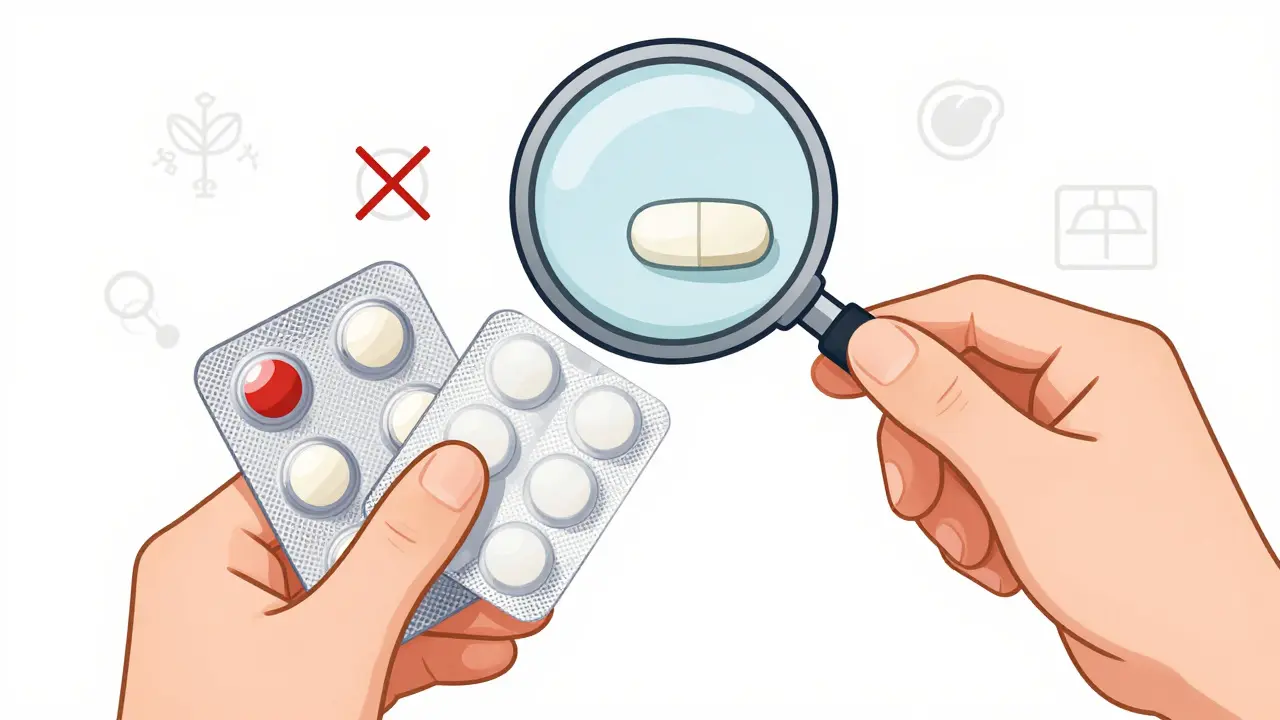
Pharmacists can also check the National Drug Code (NDC) directory. Look for the labeler code. If it matches the brand-name manufacturer (like Pfizer, Merck, or AbbVie) or one of their authorized partners (like Prasco or Greenstone), it’s an authorized generic. If it’s a company like Teva or Mylan, it’s a regular generic.
Don’t rely on pharmacy software alone. Many systems don’t clearly flag authorized generics. Always cross-check with the FDA list.
Insurance and Cost: What Patients Don’t Realize
Authorized generics usually cost 20-80% less than the brand. That’s huge. But here’s the catch: insurance companies often treat them like brand-name drugs.
A 2022 Health Affairs study found that 63% of pharmacy benefit managers (PBMs) put authorized generics in the brand-tier formulary. That means a patient might pay $50 for an authorized generic instead of $10 for a regular generic-even though the pill inside is identical to the brand.
So, before recommending an authorized generic, check the patient’s insurance formulary. If the authorized generic is in the brand tier, it might not be worth the switch. But if it’s in the generic tier? That’s a win. Lower cost, zero risk.
What to Tell Patients
Patients get confused when their pill changes color or shape. They think it’s a different drug. A 2022 study found that 27% of patients stopped taking their medication after switching to a generic that looked different-even if it was safe.
When you switch someone to an authorized generic, explain it clearly:
- “This pill is the exact same as your old one. Same ingredients, same manufacturer.”
- “It just doesn’t have the brand name on it. That’s why it’s cheaper.”
- “If your old pill was safe for you, this one is too.”
Don’t assume they understand. Show them the label. Point out the active ingredient matches. Reassure them. It’s not just about cost-it’s about trust.
Legal and Documentation Notes
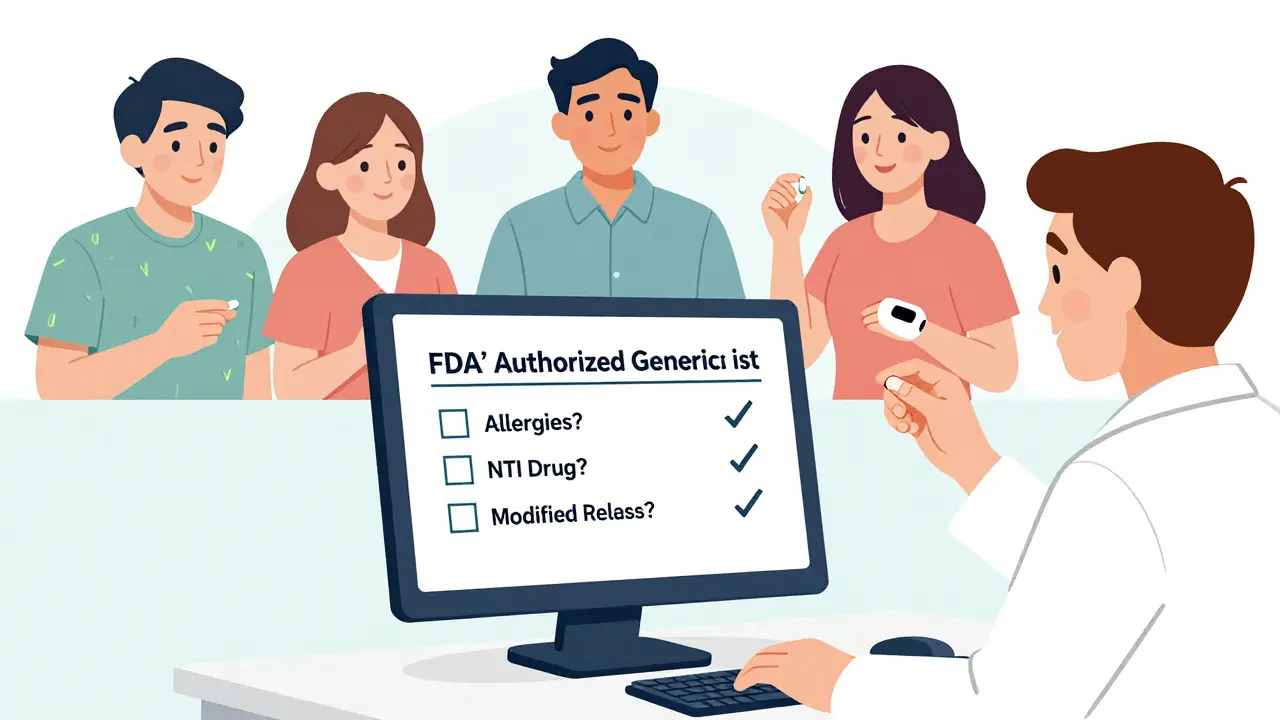
Federal law allows pharmacists to substitute a brand with an authorized generic unless the prescriber wrote “dispense as written.” But state laws vary. In 42 states, substitution is allowed without notifying the prescriber. In 18 states, you must notify them.
Always check your state’s pharmacy board rules. Document the substitution clearly in your system using the correct modifier code (like “DA” for drug substitution). Keep a record of the FDA list date and the NDC you dispensed. If there’s ever a question, you’ll have proof it was therapeutically equivalent.
Limitations and What to Watch Out For
Not every brand has an authorized generic. Only about 5% do. And while they’re usually identical, rare cases exist where the manufacturer made a small change when launching the authorized version. The FDA requires disclosure of any formulation changes, so always check the latest updates.
Also, availability can be spotty. Some authorized generics are only distributed through certain wholesalers. If your pharmacy doesn’t carry one, ask your wholesaler. Sometimes, it’s just a matter of requesting it.
The Bigger Picture
Authorized generics aren’t just a cost-cutting trick. They’re a precision tool. For patients with allergies, chronic conditions, or complex meds, they’re the safest, most predictable option. As more patients become aware-searches for “authorized generic” rose 47% in 2022-pharmacists who understand and recommend them will stand out.
It’s not about pushing the cheapest option. It’s about matching the right drug to the right patient. Sometimes, the best generic isn’t the cheapest. It’s the one that’s exactly the same as what they’ve always taken.
Are authorized generics the same as brand-name drugs?
Yes. Authorized generics are manufactured by the same company that makes the brand-name drug, using the exact same formula, active ingredients, and inactive ingredients. The only difference is the label and packaging-they’re sold without the brand name. This means they’re chemically and therapeutically identical.
Why are authorized generics cheaper than brand-name drugs?
They’re cheaper because they don’t carry the marketing, advertising, or patent protection costs of the brand. The manufacturer saves money by selling the same product under a generic label. Savings typically range from 20% to 80% compared to the brand-name version.
Can I switch a patient from a brand to an authorized generic without consulting the prescriber?
In most cases, yes. Federal law allows substitution unless the prescriber wrote “dispense as written.” However, 18 states require pharmacists to notify the prescriber before substituting any generic-including authorized generics. Always check your state’s pharmacy regulations before making the switch.
Do insurance plans cover authorized generics at the generic tier?
Not always. About 63% of pharmacy benefit managers (PBMs) classify authorized generics under the brand-name tier in their formularies. This means patients may pay more out-of-pocket than they would for a regular generic-even though the medication inside is identical. Always verify the patient’s plan coverage before recommending one.
How do I know if a generic is an authorized generic?
Check the FDA’s quarterly updated list of authorized generics. You can also look up the National Drug Code (NDC) in the database. If the labeler code matches the brand-name manufacturer (like Pfizer or Merck) or an authorized partner (like Prasco or Greenstone), it’s an authorized generic. Regular generics will have labeler codes from companies like Teva, Mylan, or Accord.
Are authorized generics safe for patients with celiac disease or allergies?
Yes-if the brand-name version was safe for them. Authorized generics use the same inactive ingredients as the brand, so if a patient tolerated the brand without allergic reactions or digestive issues, the authorized generic will be safe too. Regular generics often change fillers, which can introduce gluten, lactose, or other allergens.
Why aren’t authorized generics listed in the Orange Book?
The Orange Book lists therapeutically equivalent generic drugs approved through the ANDA process. Authorized generics aren’t approved separately-they’re the brand drug itself, just repackaged. So they don’t need a separate listing. The FDA considers them automatically equivalent because they’re identical to the brand.




December 15, 2025 AT 15:46
Let me break this down for you like you’re five: authorized generics aren’t ‘generics’ at all-they’re the exact same damn pill with a different label. The FDA doesn’t even list them separately because they’re not generics, they’re the brand in disguise. And yet, PBMs still stick them in the brand-tier formulary like some kind of corporate fraud scheme. This isn’t pharmacy-it’s economic warfare against patients who can’t afford to be guinea pigs. If you’re still prescribing regular generics for NTI drugs, you’re not a pharmacist-you’re a liability.