

Thousands of people in the U.S. get sick every year from parasites they never see. Two of the most common culprits? Giardia and pinworms. One hides in your water. The other crawls out at night. Both cause real discomfort-and both are treatable if you know what to do.
What Is Giardia and How Do You Catch It?
Giardia is a microscopic parasite called Giardia lamblia. It lives in the small intestine and causes diarrhea, bloating, and fatigue. It’s not just a travel bug-you can catch it in your own backyard. Contaminated tap water, untreated lake water, or even a handshake with someone who didn’t wash their hands after using the bathroom can spread it.
The parasite survives as a tough cyst, especially in cold water. One study found these cysts can live for months in a fridge. You only need to swallow 10 to 25 of them to get infected. That’s less than a drop of water.
People in developing countries are at higher risk, but it’s also common in the U.S. Among kids in daycare, hikers, and campers, giardia is the top cause of parasitic diarrhea. Even in cities with treated water, outbreaks happen-especially after heavy rain or pipe breaks.
What Are the Symptoms?
Not everyone feels sick. About 1 in 3 people infected with Giardia show no symptoms at all. But if you do, it usually starts 1 to 2 weeks after exposure. Common signs include:
- Watery, greasy diarrhea that smells bad
- Bloating and gas
- Stomach cramps
- Nausea and vomiting
- Fatigue and weight loss
- Metallic taste in the mouth
Some people feel fine for weeks, then suddenly get sick again. That’s because Giardia can damage the lining of your small intestine, making it harder to absorb nutrients. Long-term cases can lead to lactose intolerance-even after the parasite is gone.
What Are Pinworms and How Do They Spread?
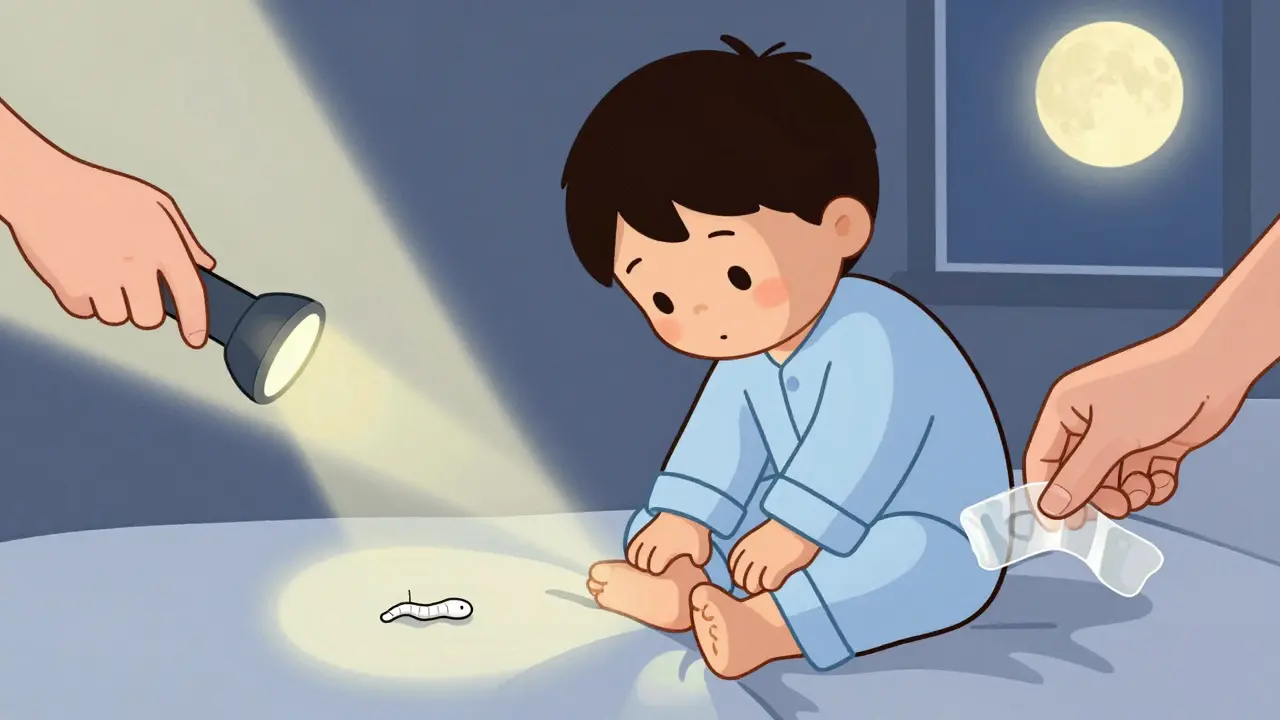
Pinworms are tiny white worms, about the size of a thread. They live in the colon and rectum. The female worm crawls out of the anus at night to lay eggs on the skin around the butt. That’s when the real problem starts: intense itching.
It’s not just kids who get pinworms. Anyone who lives with kids, works in daycare, or shares a bed is at risk. The eggs stick to fingers, bedding, toys, and even dust in the air. You don’t even need to touch poop-just brushing your hand against a contaminated surface and then touching your mouth can infect you.
Pinworms are the most common worm infection in the U.S. The CDC estimates 40 to 80 million Americans have them at any time. Most cases happen in children between 5 and 10 years old, but adults get them too-especially moms and teachers.
What Does a Pinworm Infection Feel Like?
The main symptom? Itching. Not just any itching-intense, sleep-ruining itching around the anus, especially at night. Kids might wake up crying or scratch until their skin bleeds. Some adults report trouble sleeping or feeling restless.
Other signs are less obvious:
- Restlessness or irritability
- Loss of appetite
- Mild stomach ache
- Seeing tiny white worms in stool or around the anal area (best seen at night with a flashlight)
Like Giardia, many people have no symptoms at all. That’s why pinworms spread so easily-someone can be carrying eggs for weeks without knowing.
How Are These Infections Diagnosed?
For Giardia, doctors don’t just look at your stool under a microscope anymore. The gold standard is a stool antigen test. It detects parasite proteins and is 95% accurate. A single test can miss the infection-so if symptoms persist, ask for a repeat test.
For pinworms, the scotch tape test is still the best method. First thing in the morning, before bathing or using the toilet, press a piece of clear tape against the skin around the anus. Stick it to a slide or take it to the lab. The eggs stick to the tape and show up under a microscope. One test catches about half the cases. Three tests in a row catch 90%.
Doctors rarely do blood tests for these infections. They’re not useful. If you’re having diarrhea and have been camping or traveled recently, mention Giardia. If your child is scratching their bottom at night, mention pinworms. That’s how you get the right test.
Treatment: What Actually Works
Good news: both infections respond well to treatment. Bad news: if you don’t treat everyone in the household, you’ll just get reinfected.
For Giardia:
- Metronidazole (250 mg three times a day for 5 to 7 days) - most common, but can cause nausea and a strong metallic taste
- Tinidazole (single 2g dose) - just one pill, same effectiveness, fewer side effects
- Nitazoxanide (500 mg twice a day for 3 days) - approved for kids as young as 1 year
Cure rates are 80 to 95% with the right drug. But resistance is rising. In Southeast Asia, 15% of cases don’t respond to metronidazole. In North America, it’s still around 5%.
For Pinworms:
- Mebendazole (100 mg single dose, repeat in 2 weeks)
- Albendazole (400 mg single dose, repeat in 2 weeks)
- Pyrantel pamoate (11 mg per kg, up to 1 gram, single dose)
The CDC updated its guidelines in January 2024 to recommend a triple dose of albendazole (400 mg on days 1, 8, and 15) for stubborn cases. That approach worked in 98% of patients in a recent trial.
Don’t stop treatment after one dose. Even if symptoms disappear, eggs can still hatch. A second dose two weeks later kills any new worms that hatched from leftover eggs.
How to Prevent Reinfection
Treatment alone isn’t enough. You have to clean your environment.
For Giardia:
- Boil water for at least 1 minute before drinking-especially if you’re camping or using well water
- Use a water filter labeled to remove cysts (pore size under 1 micron)
- Wash hands with soap and water after using the toilet, changing diapers, or before eating
- Keep infected people out of swimming pools for 2 weeks after symptoms stop
For Pinworms:
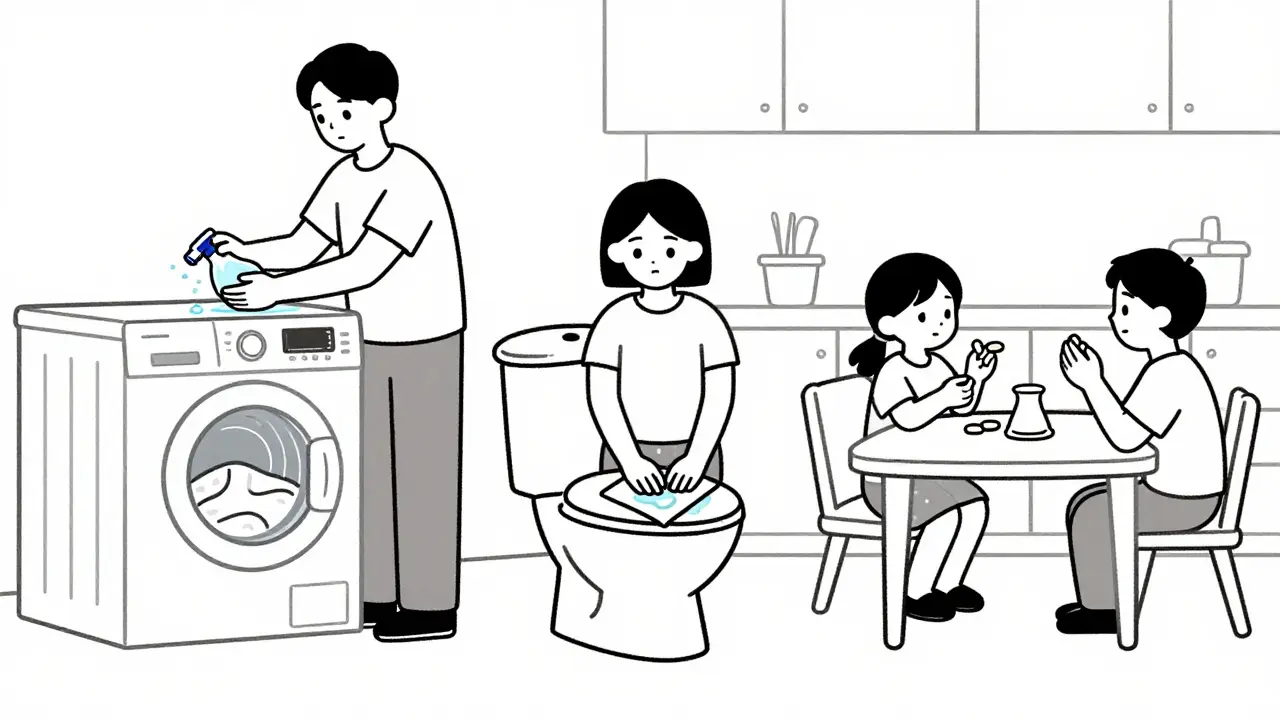
- Wash all bedding, pajamas, and towels in hot water (at least 54°C) on the same day treatment starts
- Shower in the morning to wash off eggs laid overnight
- Trim fingernails short and discourage nail-biting
- Disinfect surfaces like toilet seats, doorknobs, and toys with a bleach solution
- Treat everyone in the house at the same time-even if they feel fine
Studies show that when families follow these steps, over 90% of pinworm cases are fully cleared. Skip the cleaning, and you’ll be back where you started.
Who’s Most at Risk?
Giardia hits hard in places without clean water. But in the U.S., it’s common among:
- Children in daycare centers
- Hikers and campers who drink from streams
- Travelers to countries with poor sanitation
- People with weakened immune systems (like those with HIV)
Pinworms are the opposite-they thrive in clean environments. The more people living together, the faster they spread:
- Children aged 5 to 10
- Parents and caregivers of young kids
- Residents of long-term care facilities
- People sharing beds or bathrooms
And here’s something surprising: in households where one person has pinworms, 75% of others test positive-even if they show no symptoms.
What About Natural Remedies?
You’ll find online claims about garlic, pumpkin seeds, or probiotics curing parasites. There’s no solid proof they work. Some studies show garlic might slow Giardia growth in a lab, but no human trials prove it clears the infection.
Don’t skip proven medicine. Antiparasitic drugs are safe, cheap, and effective. Natural remedies might help your gut feel better, but they won’t kill the parasite.
What Happens If You Don’t Treat It?
Giardia can turn chronic. Some people have diarrhea and fatigue for months. Malnutrition and weight loss follow. In kids, it can delay growth. In adults with weak immune systems, it can last for years.
Pinworms won’t kill you, but the itching can ruin sleep, cause skin infections from scratching, and lead to anxiety. Kids may struggle in school from lack of rest.
Left untreated, both infections keep spreading. One infected child can bring it home to the whole family-and then to school, daycare, or work.
What’s New in 2025?
Research is moving fast. In 2023, a new Giardia vaccine (GID1) showed 70% immune response in early trials. It’s still years away, but it’s the first real hope for prevention.
Climate change is making things worse. Warmer temperatures and heavier rains are increasing water contamination. Experts predict Giardia cases could rise 20 to 30% in temperate regions by 2040.
And drug resistance? It’s real. In parts of Southeast Asia, metronidazole is failing more often. Doctors are switching to tinidazole or nitazoxanide as first-line treatment.
The CDC now recommends point-of-use water filters in homes with private wells or in areas with frequent boil-water notices. Simple, cheap, and effective.
Final Takeaway
Parasitic infections like Giardia and pinworms aren’t glamorous. They don’t make headlines. But they’re everywhere-and they’re treatable. The key isn’t magic cures or expensive tests. It’s knowing the signs, getting the right diagnosis, treating everyone at once, and cleaning your home like your health depends on it-because it does.
If you’ve had diarrhea after camping, or your child won’t stop scratching at night, don’t ignore it. Talk to your doctor. Get tested. Take the pills. Wash the sheets. Break the cycle.
Can you get Giardia from swimming pools?
Yes. Giardia cysts are resistant to chlorine and can survive for days in a pool. If someone with an active infection swims, they can contaminate the water. That’s why the CDC recommends staying out of pools for at least 2 weeks after symptoms stop.
Do pinworms lay eggs inside the body?
No. Female pinworms crawl out of the anus at night to lay eggs on the skin around the butt. The eggs don’t hatch inside the body-they’re swallowed later, usually by the same person or someone else, and then hatch in the intestine.
Is it safe to treat pinworms during pregnancy?
Mebendazole and albendazole are not usually recommended during pregnancy, especially in the first trimester. Talk to your doctor. In many cases, strict hygiene (washing hands, changing underwear daily, laundering bedding) is enough to break the cycle until after delivery.
Can pets give you Giardia or pinworms?
Giardia from dogs or cats rarely infects humans-the strains are usually different. Pinworms only infect humans. You can’t catch them from pets. But pets can carry other parasites, so always wash your hands after handling them.
How long does it take to get rid of pinworms after treatment?
The medicine kills adult worms in a few days. But eggs can survive for up to 3 weeks. That’s why a second dose is needed after 2 weeks-to kill any worms that hatched from eggs laid before treatment. Full clearance usually takes 3 to 4 weeks with proper hygiene.
Can you test for Giardia at home?
No reliable home tests exist. Stool antigen tests require lab equipment. If you suspect Giardia, see a doctor. They’ll give you a collection container and instructions. Don’t rely on over-the-counter kits-they’re not accurate.






December 28, 2025 AT 10:19
I got giardia in Nigeria from a water fountain that looked clean as a whistle. One sip and I was a sobbing mess on the bathroom floor for 3 days. 🤢 The metallic taste? Like licking a battery. Took me 2 months to feel human again. Don't sleep on this stuff.