Antibiotics for Bronchitis: When They Work, When They Don’t, and What to Know
When you have bronchitis, your airways are swollen and producing mucus, making you cough nonstop. Many people assume antibiotics for bronchitis, medications designed to kill bacteria. Also known as antibacterial drugs, they are essential for certain infections—but not this one. Most cases of bronchitis are caused by viruses, not bacteria. That means antibiotics won’t touch the root cause. They won’t shorten your cough, reduce your fever, or make you feel better faster. Yet, doctors still get asked for them every day—and too often, they’re prescribed anyway.
So when do antibiotics, drugs that target bacterial infections actually make sense for bronchitis? Only if there’s strong evidence of a bacterial infection. That’s rare. If you’ve had symptoms for less than two weeks, have clear or white mucus, and no high fever or breathing trouble, it’s almost certainly viral. But if you’re over 65, have COPD, or your cough lasts longer than three weeks with thick yellow or green mucus, your doctor might consider amoxicillin, a common first-line antibiotic for respiratory infections or azithromycin, a macrolide antibiotic often used for stubborn chest infections. Even then, it’s not guaranteed to help. Studies show that in most cases, antibiotics offer no real benefit over rest, fluids, and time.
Using antibiotics when they’re not needed doesn’t just waste money—it fuels antibiotic resistance. That’s when bacteria evolve to survive the drugs meant to kill them. Soon, the antibiotics that once worked for pneumonia or ear infections won’t work anymore. And that affects everyone. The Centers for Disease Control calls this one of the biggest public health threats of our time. You’re not helping yourself by asking for them—you’re risking the next person’s treatment.
What you can do instead? Focus on symptom relief. Drink water. Use a humidifier. Try honey for coughs—it’s as good as some OTC meds. Skip the cough suppressants unless your sleep is wrecked. If you’re a smoker, now’s the time to quit. Bronchitis often lingers because the airways stay irritated. The longer you smoke, the longer you’ll cough.
The posts below cut through the noise. You’ll find real patient guides on how moxifloxacin is sometimes used in stubborn cases, why some doctors still prescribe azithromycin even when guidelines say not to, and what alternatives actually help when antibiotics don’t. You’ll also see how other medications—like those for allergies or sleep—can accidentally make bronchitis worse. This isn’t about quick fixes. It’s about understanding what’s really going on in your lungs, and making choices that protect your health now and later.
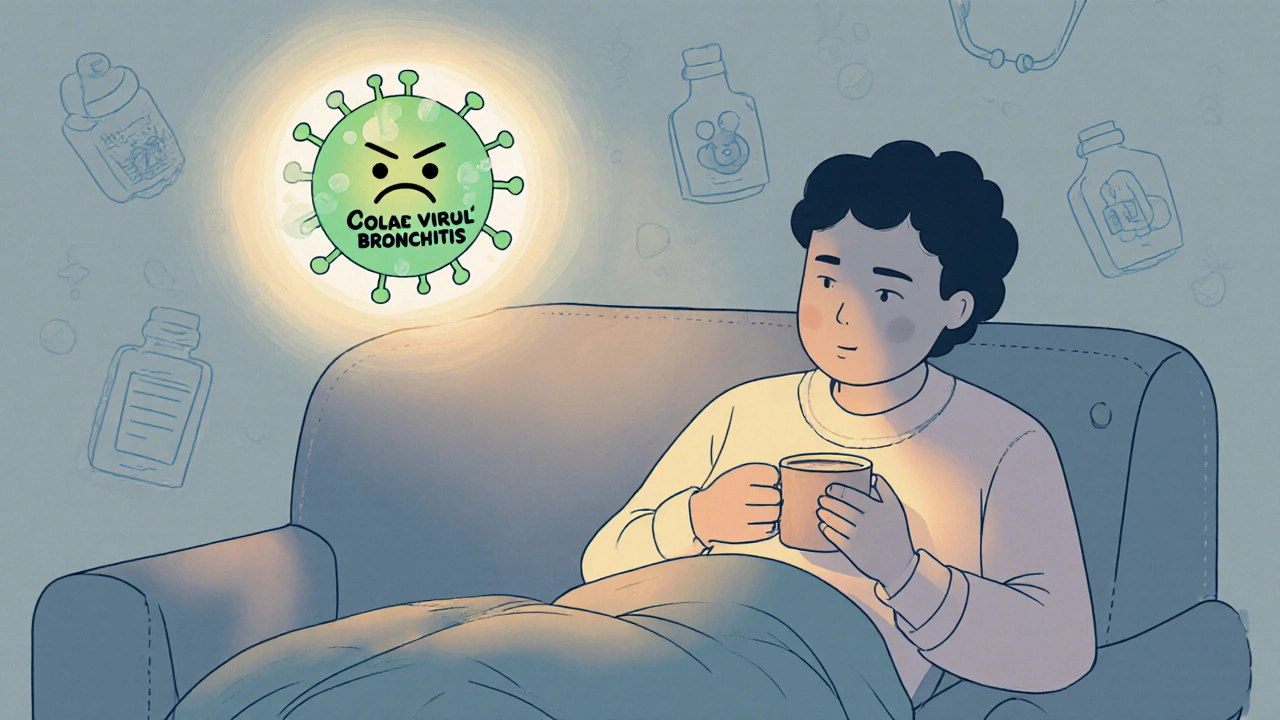
Acute bronchitis is usually viral and doesn't need antibiotics. Learn how to manage the cough safely with rest, fluids, honey, and proven remedies-without unnecessary drugs.