Antiviral Therapy: What It Is, How It Works, and What You Need to Know
When your body fights a virus, antiviral therapy, a targeted treatment designed to stop viruses from multiplying inside the body. It's not the same as antibiotics, which only work on bacteria. Antiviral therapy is used for infections like influenza, HIV, hepatitis B and C, herpes, and even COVID-19. These drugs don’t kill viruses outright—they slow them down enough for your immune system to catch up. Without them, some viral infections can become chronic, spread to others, or cause serious organ damage.
Antiviral drugs, medications that interfere with specific stages of the viral life cycle. Examples include oseltamivir for flu, tenofovir for HIV, and sofosbuvir for hepatitis C. They work in different ways: some block the virus from entering cells, others stop it from copying its genetic material, and a few help your immune system recognize infected cells. But they’re not magic bullets. Timing matters—most antivirals work best when started early. And if you don’t take them exactly as prescribed, the virus can mutate and become resistant. That’s why antiviral resistance, when viruses evolve to survive drug treatment. It’s a growing problem, especially with flu and HIV. Doctors now avoid using broad-spectrum antivirals unless necessary, and they often combine drugs to reduce this risk.
Side effects vary. Some people feel nauseous or tired. Others get headaches or rashes. Rarely, antivirals can harm the liver or kidneys. That’s why monitoring lab work during long-term treatment—like with HIV or hepatitis—is standard. You can’t just grab an antiviral off the shelf. These are prescription-only for a reason. Even over-the-counter supplements claiming to "boost immunity" against viruses rarely have solid proof. Real antiviral therapy is science-backed, targeted, and carefully managed.
What you’ll find below are real, practical guides on how antiviral therapy fits into everyday health. From how to handle missed doses to what happens when drugs stop working, these posts cut through the noise. You’ll see how antiviral treatment connects to things like drug interactions, kidney function, and even travel emergencies when you lose your meds abroad. No fluff. Just what works—and what doesn’t.
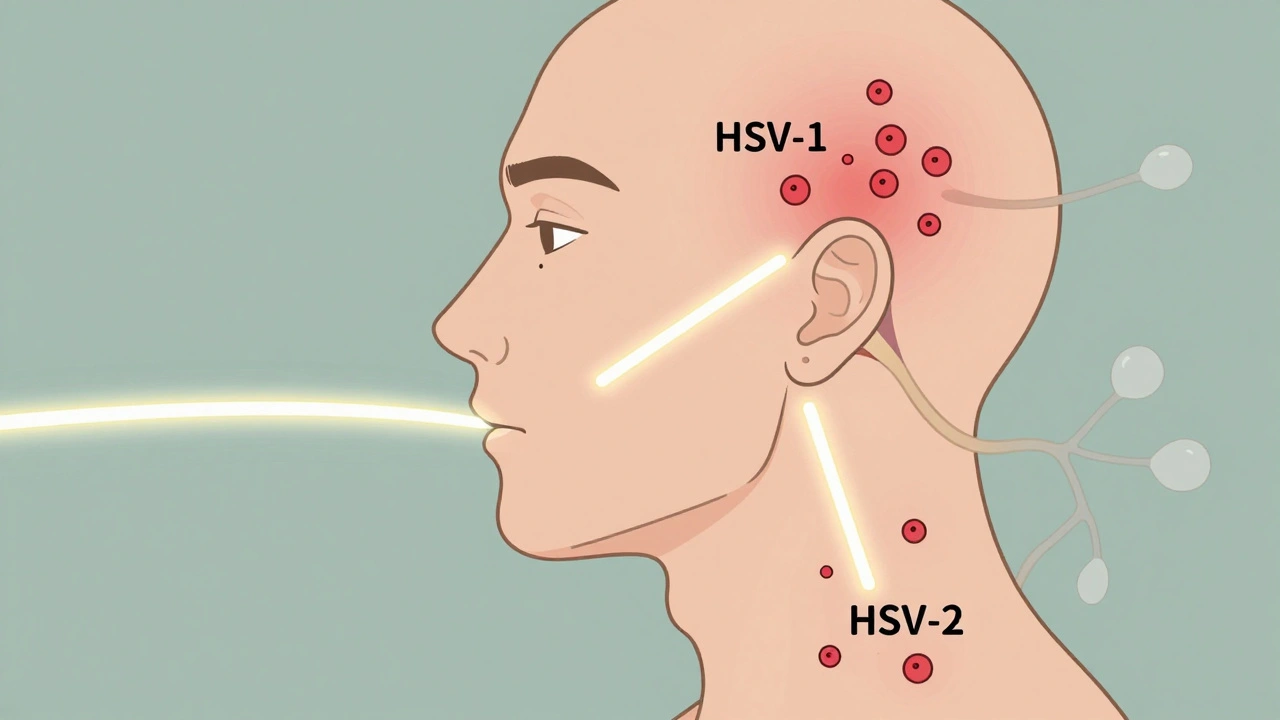
Herpes simplex virus affects billions worldwide. Learn the differences between HSV-1 and HSV-2, what outbreaks look like, how antiviral therapy works, and how to reduce transmission and manage symptoms effectively.