Genital Herpes: Causes, Symptoms, and How to Manage Outbreaks
When people talk about genital herpes, a viral infection caused primarily by herpes simplex virus type 2 (HSV-2). Also known as HSV-2, it’s one of the most common sexually transmitted infections worldwide—yet it’s still shrouded in misunderstanding and stigma. Unlike cold sores (which are usually HSV-1), genital herpes lives in nerve cells and can reactivate without warning, causing painful blisters, itching, or even no symptoms at all.
Many assume genital herpes means constant outbreaks, but that’s not true. For most people, the first outbreak is the worst. After that, flare-ups become less frequent and milder over time. What triggers them? Stress, illness, hormonal shifts, or even tight clothing. The virus doesn’t care about your schedule—it shows up when your body’s defenses dip. And here’s the thing: you can spread it even when you feel fine. That’s why testing and open conversations with partners matter more than shame.
There’s no cure, but antiviral treatment, medications like acyclovir, valacyclovir, and famciclovir that suppress viral activity can cut outbreaks by 70% or more. Daily suppressive therapy isn’t just for symptom control—it also lowers the chance of passing it on. Topical creams? They don’t do much. What works is consistent dosing, good hygiene, and avoiding triggers when you sense an outbreak coming. And yes, you can still have a full sex life, use condoms, and reduce risk significantly.
It’s not just about medicine. Emotional health matters too. People living with genital herpes often feel isolated, but they’re not alone. Support groups, counseling, and accurate info make a real difference. The goal isn’t to eliminate the virus—it’s to live well despite it.
Below, you’ll find practical guides on how to spot early signs, what to do during an outbreak, how to talk to your doctor about long-term management, and what treatments are backed by real data—not myths. Whether you’re newly diagnosed, managing recurring symptoms, or just trying to understand the science behind the stigma, these posts give you clear, no-fluff answers.
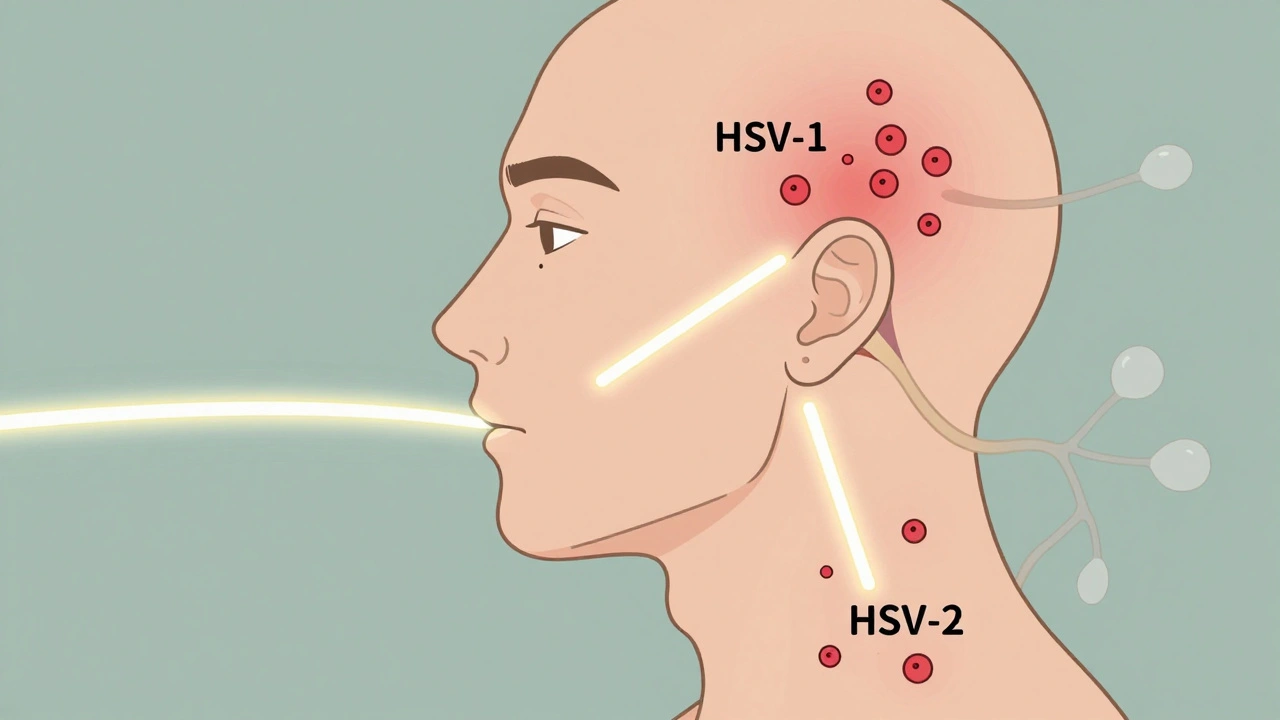
Herpes simplex virus affects billions worldwide. Learn the differences between HSV-1 and HSV-2, what outbreaks look like, how antiviral therapy works, and how to reduce transmission and manage symptoms effectively.