Lp(a) Risk: What It Is, Why It Matters, and How to Manage It
When it comes to heart disease, most people focus on LDL cholesterol—but there’s another silent player: Lp(a), a type of lipoprotein that carries cholesterol and is genetically determined. Also known as lipoprotein(a), it’s not affected by diet or exercise, and high levels can dramatically raise your risk of heart attack and stroke—even if your other numbers look fine. Unlike regular cholesterol, Lp(a) isn’t measured in routine blood tests. If you’ve had early heart disease, a family history of heart attacks before age 55, or unexplained blockages, you might have high Lp(a) and not even know it.
Lp(a) risk doesn’t care how healthy you are. You could be fit, eat clean, and never smoke, but if your genes gave you high Lp(a), your risk stays elevated. It’s like having a built-in timer for cardiovascular trouble. Studies show that people with Lp(a) levels above 50 mg/dL have up to a 3x higher risk of heart disease than those with lower levels. And because it’s inherited, if a parent has high Lp(a), you have a 50% chance of inheriting it too. That’s why knowing your family history matters just as much as your own lab results.
What can you do? Right now, there’s no magic pill to lower Lp(a) easily. Statins won’t touch it. Niacin helps a little, but has side effects. New drugs like pelacarsen and olpasiran are in late-stage trials and show real promise—but they’re not widely available yet. What you can control is everything else: keeping your blood pressure low, avoiding smoking, managing diabetes, and staying active. These steps won’t lower Lp(a), but they reduce the overall damage it can cause. Some doctors also recommend low-dose aspirin or PCSK9 inhibitors for high-risk patients, but only under close supervision.
The bottom line: Lp(a) risk is not something you can fix with a diet plan or a new workout. But it’s something you can manage—if you know it’s there. If you’ve had early heart trouble, or if your family has a history of sudden cardiac events, ask your doctor for an Lp(a) test. It’s a simple blood draw, and it could be the most important one you ever get. Below, you’ll find real patient guides on related topics—from cholesterol management to heart-safe medications—that help you take action, even when the numbers feel out of your hands.
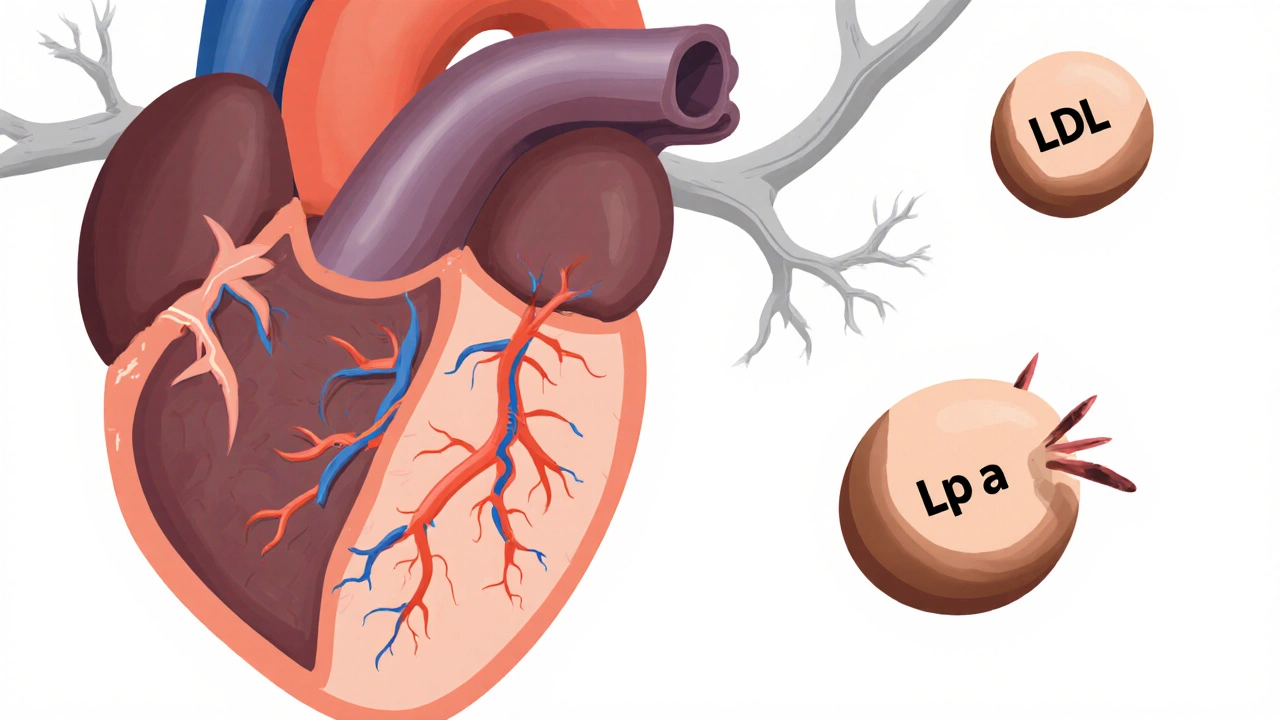
Lipoprotein(a) is a genetic cholesterol risk that doubles your chance of heart attack or stroke - even if your other numbers are normal. Learn who should be tested and what you can do now.