Patent Thicket: How Drug Companies Block Generic Competition
When a drug company files patent thicket, a dense cluster of overlapping patents designed to delay generic entry. Also known as patent stacking, it’s a legal strategy used to keep prices high by making it too expensive and complicated for generic makers to enter the market. This isn’t just one patent—it’s dozens, sometimes hundreds, covering everything from the pill’s shape to the way it’s manufactured, even minor changes that don’t improve effectiveness.
Think of it like a maze of legal fences around a drug. Generic companies can’t just copy the active ingredient—they have to navigate patent after patent, each one potentially blocking them. Some patents are for the original drug, others for new delivery methods, new dosages, or even software used to manage the drug’s use. The generic drugs, lower-cost versions of brand-name medications that become available after patents expire often get stuck in court for years trying to prove they don’t infringe. Meanwhile, the original maker keeps selling at high prices, and patients pay the cost.
This isn’t theoretical. In 2023, the FDA reported that over 60% of new drugs faced patent thickets that delayed generics by more than five years. Some drugs, like insulin and biologics, have had their market exclusivity stretched for over two decades through this method. The pharmaceutical patents, legal protections that give drugmakers exclusive rights to sell a medicine for a set time were meant to reward innovation, but now they’re often used to protect profits, not invention. And while the drug competition, the market dynamic where generics challenge brand-name drugs to lower prices is supposed to drive down costs, thickets make it nearly impossible.
What’s worse? Many of these patents are filed right before the original patent expires—sometimes called "evergreening." A company tweaks the drug’s coating, changes the release time, or adds a new inactive ingredient, then files a new patent. Courts often approve them, even if the change does nothing for the patient. The result? A patient who needs a life-saving drug might pay $500 a month instead of $20, not because the drug is better, but because the system lets companies lock it down.
Below, you’ll find real-world examples of how this plays out—from how calcium channel blockers get stuck in patent limbo, to how biosimilar makers fight through legal barriers, to why some generic drugs never even make it to market. These aren’t abstract legal debates. They’re about who gets treated, who can afford it, and who gets left behind.
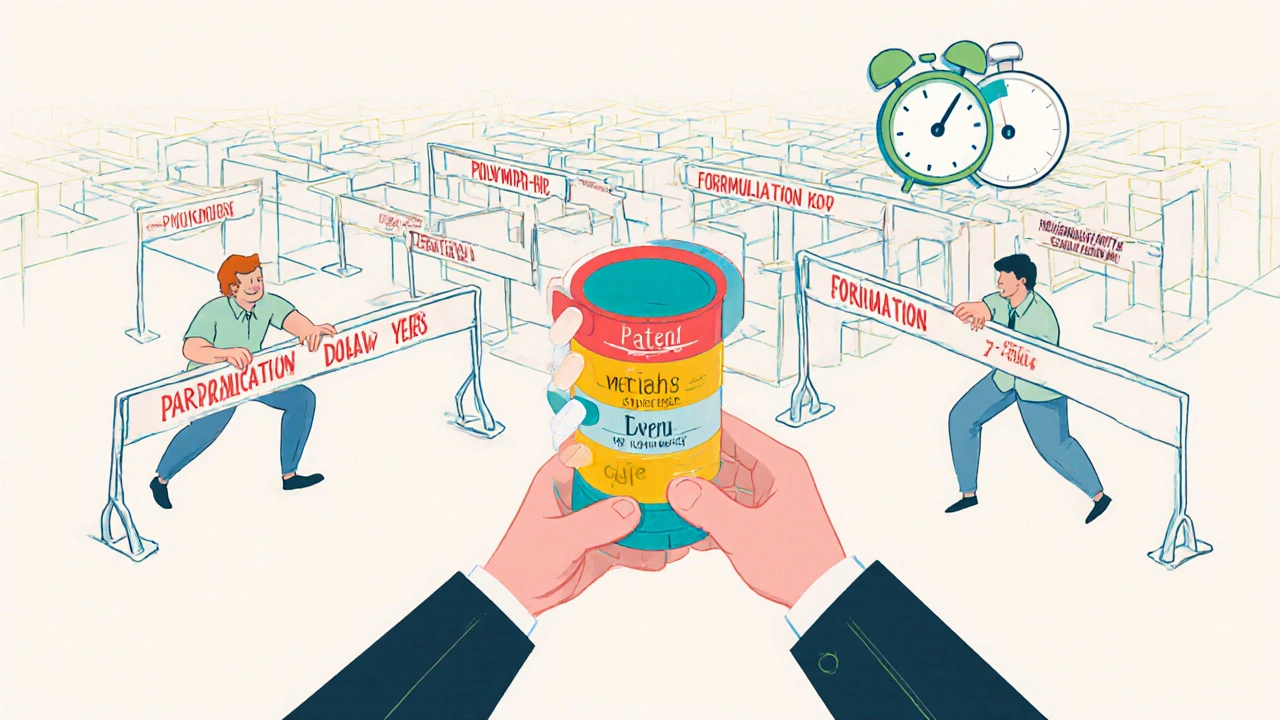
Secondary patents let pharmaceutical companies extend market exclusivity by patenting minor changes to existing drugs, delaying generic competition and keeping prices high. Learn how these patents work, who benefits, and why they’re under growing scrutiny.