
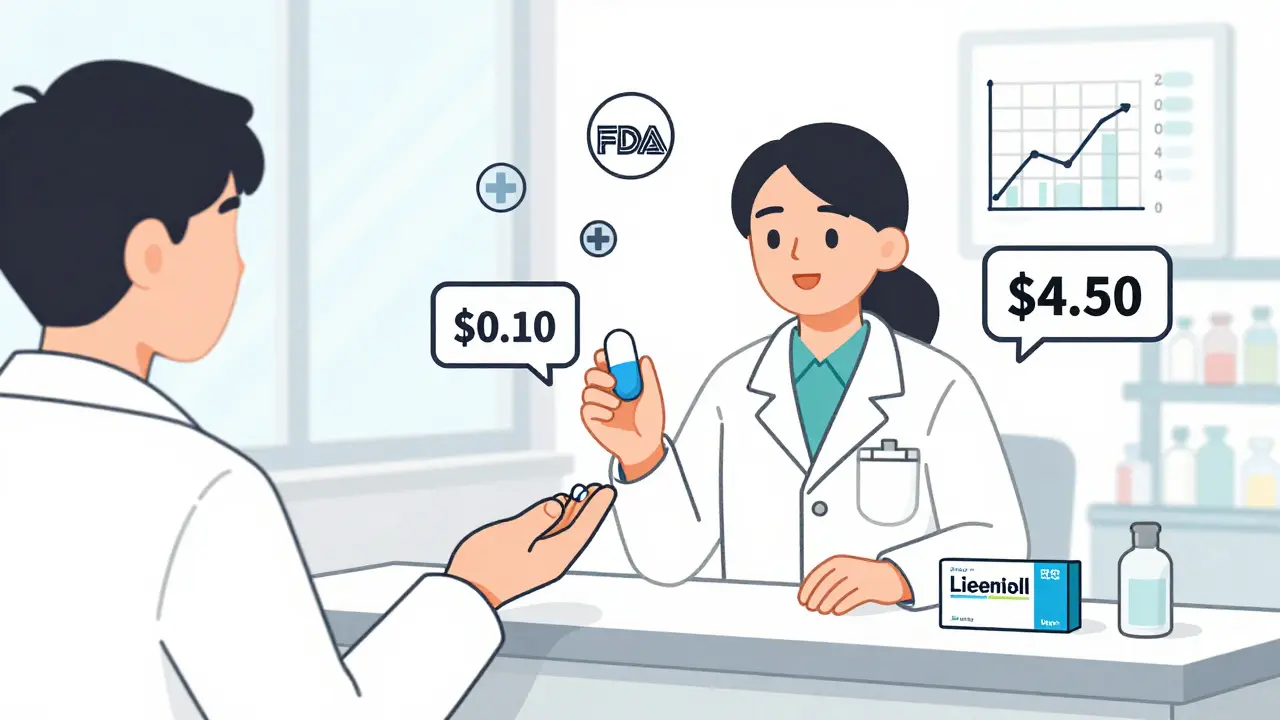
When you pick up a prescription, you might see two options on the label: a brand-name drug like Lipitor or its generic version, atorvastatin. The price difference can be dramatic - $4.50 per pill for the brand versus just $0.10 for the generic. That’s not a typo. So why do so many people still choose the expensive version? The answer isn’t about effectiveness. It’s about fear, confusion, and misinformation.
What Makes a Generic Drug ‘Generic’?
A generic drug isn’t a copy. It’s not a cheaper knockoff. It’s the exact same medicine, legally required by the FDA to have the same active ingredient, strength, dosage form, and route of administration as the brand-name version. The difference? The inactive ingredients - things like dyes, fillers, and binders - and the price. The FDA mandates that generic drugs must deliver the same amount of active ingredient into your bloodstream at the same rate as the brand. This is called bioequivalence.
How strict is that rule? For a generic to be approved, the amount of drug absorbed by your body must fall within 80% to 125% of the brand’s levels. In real-world testing, the average difference is just 3.5%. That’s less than the natural variation your body has from day to day. A 2008 study of over 2,000 bioequivalence trials found no meaningful clinical difference between generics and brands in over 98% of cases.
Why Are Generics So Much Cheaper?
Brand-name drug companies spend years and billions of dollars developing a new medication. They pay for clinical trials, marketing, patents, and regulatory filings. Once the patent expires - usually 20 years after filing - other companies can make the same drug without repeating those costs. They don’t need to re-prove safety or effectiveness. They just need to show their version works the same way in your body.
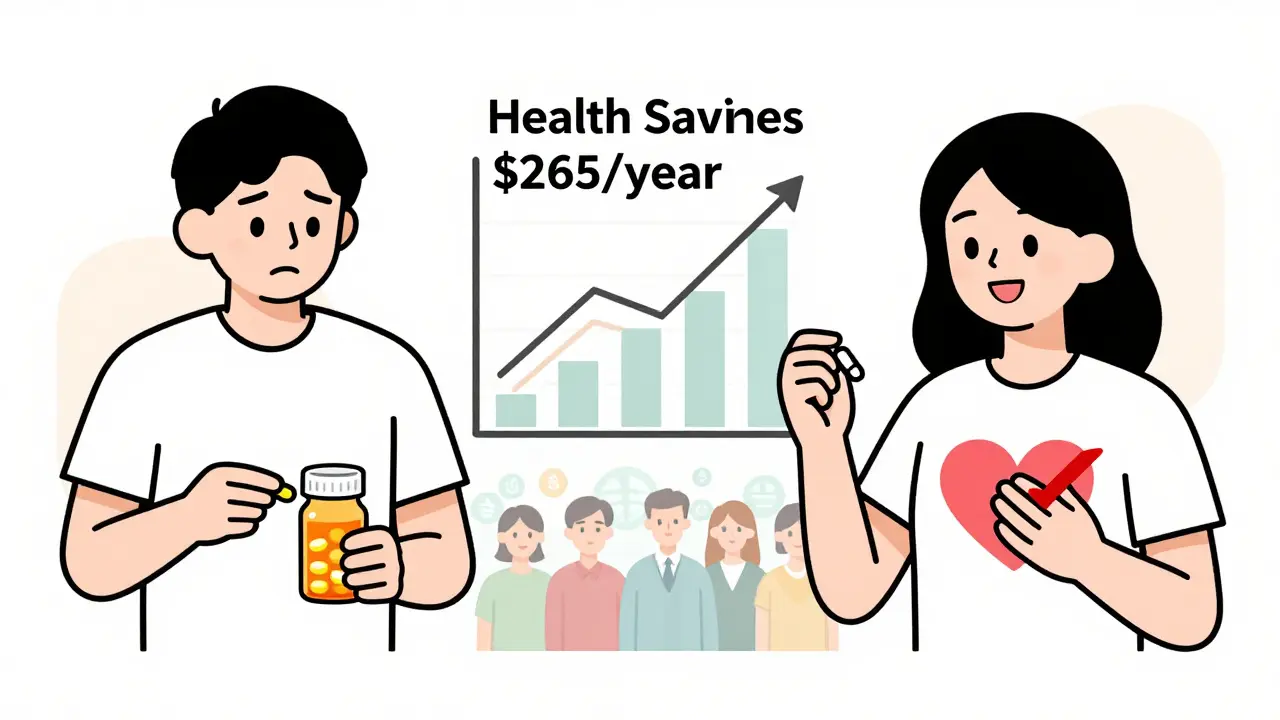
That’s why a 30-day supply of sertraline (the generic for Zoloft) costs about $4, while Zoloft itself can run $400. The active ingredient is identical. The pill might be a different color or shape, but it does the same thing. Over the last decade, generics saved the U.S. healthcare system $1.67 trillion. That’s $265 saved per person each year.
When Do Generics Not Work the Same?
Most of the time, they work perfectly. But there are exceptions. For drugs with a narrow therapeutic index - meaning the difference between a helpful dose and a dangerous one is very small - even tiny changes can matter. That’s why doctors sometimes stick with brand names for:
- Levothyroxine (for thyroid disease): Different generic brands can vary slightly in absorption. Patients on this drug often need more frequent blood tests if they switch manufacturers.
- Warfarin (a blood thinner): Studies show no major difference in outcomes when switching to generic, but some patients and doctors prefer consistency.
- Carbamazepine (for seizures): A 2017 study found rare cases of breakthrough seizures after switching to certain generics.
- Extended-release formulations: Like Wellbutrin XL or Advair Diskus. These rely on complex delivery systems. A 2016 study found 12% of patients had trouble using a generic inhaler because the device felt different - even though the medicine inside was identical.
These cases are rare. But they’re real. That’s why the FDA and medical groups like the American College of Physicians recommend sticking with the brand only when there’s documented evidence of a problem - not just because it’s more expensive.
What Patients Actually Experience
Surveys of over 15,000 patients on Drugs.com show 82% are satisfied with generics, compared to 85% for brand-name drugs. That’s a tiny gap. But the complaints aren’t about effectiveness - they’re about confusion.
People report:
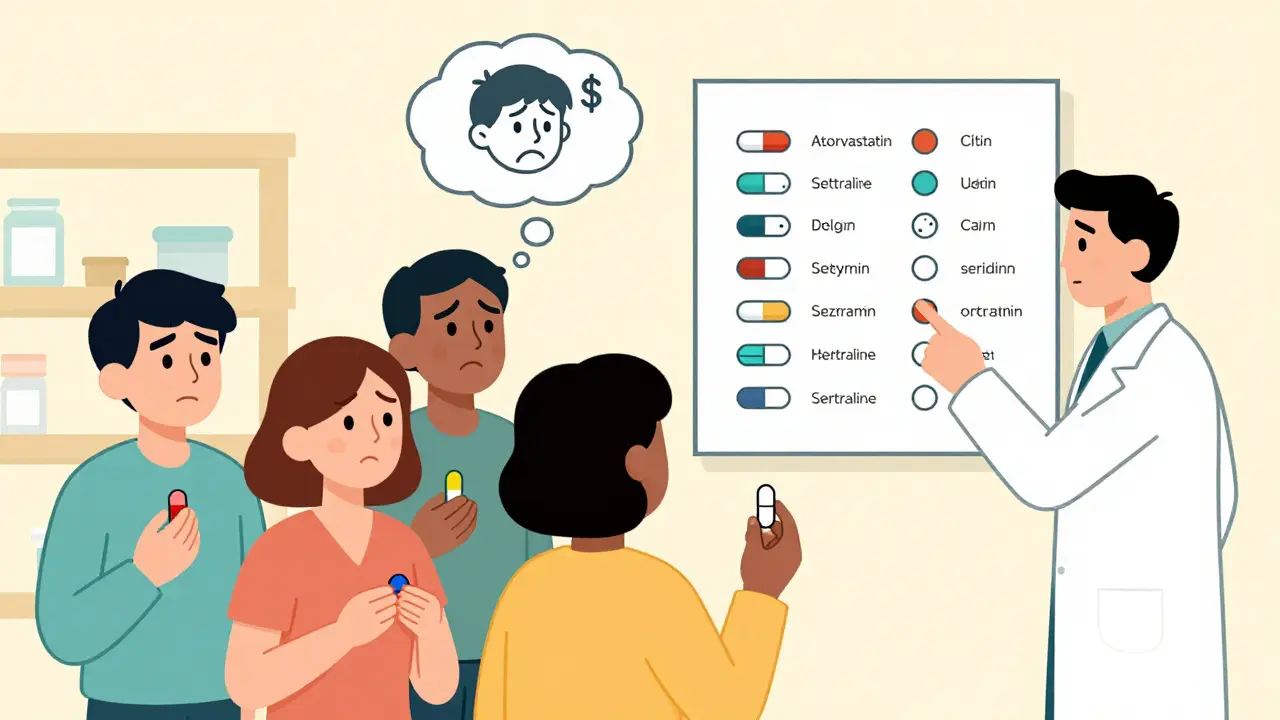
- Getting a pill that looks completely different from last month - same name, different color, shape, or imprint.
- Worrying the new pill isn’t the “real” medicine.
- Feeling worse after switching - even when blood tests show no change.
That’s not the drug failing. That’s the mind reacting. A 2023 study found that giving patients a visual chart showing what each generic version looks like reduced medication errors by 37%. Knowing what to expect helps.
On Reddit’s r/pharmacy, 27% of threads mention appearance changes causing anxiety. But in r/PersonalFinance, 93% of positive comments cite cost savings as the main reason for choosing generics. The same people who worry about pills are often the ones who skip doses because they can’t afford the brand.
What Doctors and Pharmacists Say
Dr. Niteesh Choudhry at Harvard Medical School puts it plainly: “Brand-name medications are not always better. Many of them are highly expensive - and that’s why patients skip doses.”
Pharmacists are on the front lines. A 2022 survey found that 68% of patients express concern when a generic is dispensed. But after a quick explanation - “This is the same medicine, just cheaper” - 89% continue using it. And adherence improves by 22% because they can actually afford to take it.
Here’s the truth: If you’re skipping doses because the brand costs too much, you’re not getting the benefit of any drug - generic or brand. That’s far riskier than switching.
How to Make the Right Choice
Here’s what you can do to make an informed decision:
- Ask your doctor: “Is there a generic version? Is it safe for me?” For most conditions - high blood pressure, cholesterol, depression, diabetes - the answer is yes.
- Check your pharmacy: Ask which generic manufacturer they use. If you switch pharmacies and the pill looks different, ask why. It’s normal - but you should know.
- Use free tools: Go to GoodRx or the FDA’s Drugs@FDA to compare prices and see which generics are approved.
- Don’t assume the brand is better: The FDA says generics have the same risks and benefits. If your doctor didn’t say “dispense as written,” the pharmacy is legally allowed to substitute.
- Watch for changes: If you start feeling different after switching - fatigue, dizziness, mood changes - talk to your doctor. It’s rarely the drug. But it’s worth checking.
The Bigger Picture
Generics aren’t just a cost-saving trick. They’re a public health win. In the U.S., 90% of prescriptions filled are generics. Yet they make up only 23% of total drug spending. That’s because they’re affordable enough for people to actually take them.
By 2027, generics will be used in 93% of prescriptions. That’s not because people are being forced - it’s because they’re choosing them. When patients understand the facts, they choose savings without sacrificing care.
And when you choose a generic, you’re not just saving money. You’re helping the system work better. Lower drug costs mean fewer people skip doses. Fewer skipped doses mean fewer hospital visits. Fewer hospital visits mean lower overall healthcare costs for everyone.
When to Stick With the Brand
There are times when sticking with the brand makes sense:
- You’ve tried a generic and had a clear, documented reaction - like worsening symptoms or side effects.
- Your doctor has specifically written “dispense as written” on the prescription.
- You’re on a narrow therapeutic index drug and your doctor recommends consistency (like levothyroxine).
- You’re using a complex delivery system - like an inhaler or patch - and you’ve had trouble with the generic version.
But if none of those apply? There’s no medical reason to pay more.
Are generic drugs as safe as brand-name drugs?
Yes. The FDA requires generic drugs to meet the same strict standards for safety, strength, quality, and purity as brand-name drugs. They’re held to the same manufacturing rules, inspected in the same facilities, and monitored the same way. The only difference is cost.
Why do generic pills look different?
By law, generic drugs can’t look exactly like the brand-name version - that would violate trademark rules. So they use different colors, shapes, or markings. But the active ingredient is identical. If you’re confused by the change, ask your pharmacist for a pill identifier or check the FDA’s Drugs@FDA database.
Can I switch back and forth between generic and brand?
For most medications, yes. But for drugs with narrow therapeutic indices - like warfarin or levothyroxine - frequent switching can make it harder to keep your dose stable. If you’re on one of these, it’s best to stick with one version unless your doctor advises otherwise.
Why do some people say generics don’t work for them?
Sometimes it’s the placebo effect - if you believe the brand is better, your brain may interpret any change as worse. Other times, it’s a change in inactive ingredients causing mild side effects, like stomach upset. Rarely, it’s a formulation issue with complex drugs like extended-release pills. If you feel different, talk to your doctor - don’t assume the generic is faulty.
Is it true that most generics are made in China or India?
Yes, about 78% of the active ingredients in U.S. generics come from India and China. But the FDA inspects those facilities just like U.S. ones. A 2022 report found 98.7% of generic manufacturers met quality standards. Where the drug is made doesn’t change its safety or effectiveness - only how much it costs.
Will my insurance cover generics?
Almost always - and at a much lower cost. Most insurance plans require you to try the generic first. If you insist on the brand, you’ll pay more out of pocket. Some plans even offer $0 copays for generics.
What to Do Next
Check your next prescription. Is there a generic? If yes, ask your pharmacist to explain the difference. If you’re on a long-term medication, look up its generic version on GoodRx. Compare the prices. If you’ve been paying $200 a month for a brand-name drug that has a $10 generic - you’re overpaying. Not because you’re being fooled. But because you weren’t told the truth.
Medicine isn’t about brands. It’s about results. And generics deliver the same results - at a fraction of the cost. Choosing one isn’t a compromise. It’s a smart, evidence-based decision.





December 15, 2025 AT 18:03
Wow. This is one of the most clear-headed pieces on generics I’ve ever read. I used to be terrified of switching from my brand-name antidepressant-until my pharmacist sat me down with a chart showing the exact same active ingredient in both. I cried. Not because I was sad-but because I realized I’d been paying $300/month for a pill that was chemically identical to the $5 one. My mental health didn’t change. My bank account did.