Combination Therapy: How Multiple Drugs Work Together for Better Outcomes
When one drug isn’t enough, doctors turn to combination therapy, the use of two or more medications together to target a disease from different angles. Also known as multimodal treatment, it’s not just about adding more pills—it’s about making each one work smarter. This approach is common in treating conditions like type 2 diabetes, rheumatoid arthritis, cancer, and chronic pain, where the body doesn’t respond to a single drug anymore.
Combination therapy works because diseases rarely have just one cause. For example, in diabetes, SGLT2 inhibitors, a class of drugs that help the kidneys remove excess sugar are often paired with metformin to lower blood sugar in different ways. In cancer, one drug might stop tumor growth while another blocks blood supply to the tumor. Even in pain management, combining non-opioid options like CBT and exercise with targeted meds can reduce reliance on addictive drugs. But this isn’t risk-free. The real challenge lies in how these drugs interact—some affect how your body breaks them down, like when grapefruit blocks CYP450 enzymes, the liver system that processes many medications, causing dangerous buildup. Others change how drugs act in your body, known as pharmacodynamic interactions, when two drugs amplify or cancel each other’s effects. These aren’t theoretical risks—they show up in real cases, like increased yeast infections with SGLT2 inhibitors or delayed bowel recovery after surgery when opioids are combined with other sedatives.
What makes combination therapy so powerful is also what makes it tricky. It’s not just about picking the right drugs—it’s about timing, dosing, and knowing your body’s unique response. That’s why monitoring tools like CDAI and DAS28 for rheumatoid arthritis or tracking kidney function when using creatine with other meds are so critical. You can’t just start a combo and hope for the best. You need to track symptoms, watch for side effects, and sometimes switch one drug out to find the sweet spot. The posts below dive into exactly these real-world scenarios: how opioid-induced ileus is prevented with early movement, why statin side effects can be managed by switching types, and how pharmacists help patients safely switch to biosimilars without losing effectiveness. Whether you’re managing a chronic condition or just trying to avoid dangerous interactions, understanding combination therapy means understanding your own treatment—not just the pills on the label.
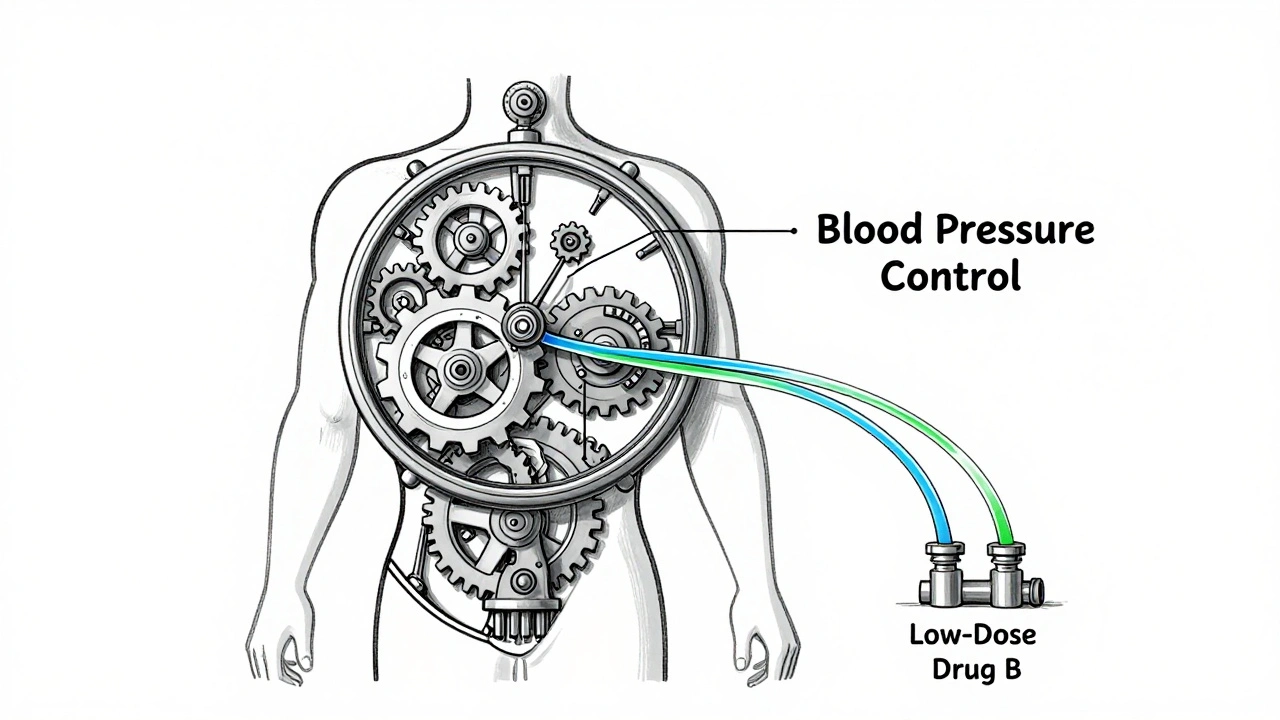
Combination therapy uses lower doses of multiple medications to improve effectiveness and reduce side effects. Proven in hypertension, diabetes, and cancer, it offers better control with fewer adverse reactions and improved patient adherence.