Cough Care: Effective Remedies, Medications, and When to See a Doctor
When you have a cough care, the practical approach to managing cough symptoms through medication, home remedies, and lifestyle adjustments. Also known as cough management, it’s not just about silencing the cough—it’s about understanding why it’s there and treating the root cause. A cough isn’t a disease. It’s your body’s alarm system. Sometimes it’s just a minor irritation from a cold. Other times, it’s a sign something deeper is going on.
There are two main types: dry cough, a tickly, non-productive cough that doesn’t bring up mucus, often from post-nasal drip or throat irritation, and wet cough, a productive cough that clears mucus from the lungs, usually tied to infections like bronchitis. Knowing which one you have changes everything. Dry coughs respond to suppressants like dextromethorphan. Wet coughs need expectorants like guaifenesin to thin the mucus so your body can clear it. Using the wrong one? You could make things worse.
Antihistamines like loratadine and cetirizine often show up in cough remedies—not because they target the cough directly, but because they reduce post-nasal drip, a common trigger. That’s why you’ll find them in multi-symptom cold formulas. But if your cough lingers past two weeks, or comes with fever, wheezing, or blood, you’re not dealing with a simple cold anymore. It could be asthma, GERD, or even something like whooping cough. And if you’re pregnant, some OTC cough meds are off-limits. You need to know which ones are safe.
OTC sleep aids like diphenhydramine are sometimes used to quiet nighttime coughs—but they’re not meant for long-term use. They cause next-day grogginess, dry mouth, and can even raise your risk of falls in older adults. And don’t assume natural remedies like honey or steam are harmless. Honey is great for kids over one, but it won’t fix a bacterial infection. Steam might feel good, but it doesn’t shorten the illness. What you need is clarity: what’s causing this, what actually helps, and when to stop guessing.
This collection pulls together real, tested advice—from how to choose between cough syrups, to understanding why some meds work better for certain people, to what doctors look for when a cough won’t go away. You’ll find clear breakdowns of ingredients, warnings about dangerous combinations, and what to do when home care isn’t enough. No hype. No guesswork. Just what you need to make smart, safe choices for your cough care.
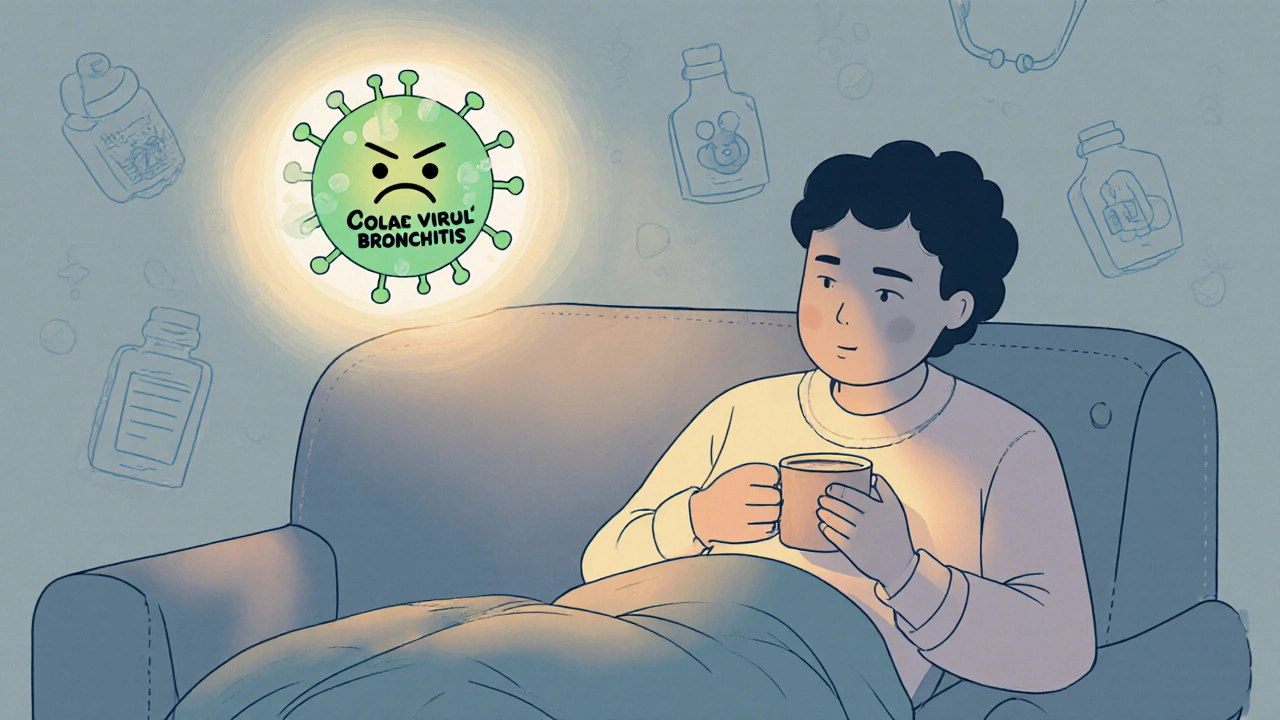
Acute bronchitis is usually viral and doesn't need antibiotics. Learn how to manage the cough safely with rest, fluids, honey, and proven remedies-without unnecessary drugs.