
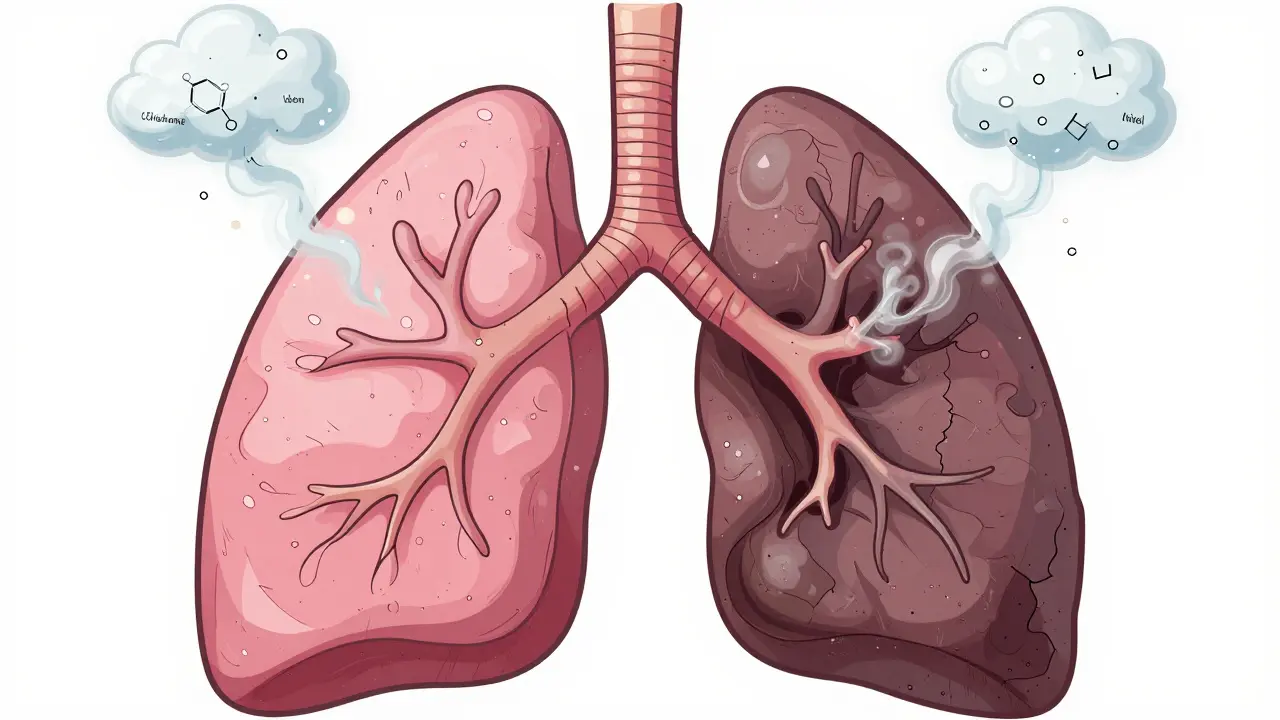
When you see someone vaping on the street, it’s easy to assume they’re just avoiding cigarette smoke. After all, ads have told us for years that e-cigarettes are a safer choice. But here’s the truth: vaping isn’t harmless. Even if you’ve never smoked a traditional cigarette, inhaling vapor from an e-cigarette is putting something into your lungs that wasn’t there 20 years ago-and your lungs don’t know how to handle it.
What’s Actually in Vaping Aerosol?
Most people think vaping just means inhaling flavored water vapor. It’s not. The liquid inside these devices-called e-juice-contains propylene glycol, vegetable glycerin, nicotine, and dozens of flavoring chemicals. When heated, these ingredients turn into an aerosol that carries tiny particles deep into your lungs. Studies from the University of North Carolina show that the more ingredients in the liquid, the more toxic the vapor becomes. Even "nicotine-free" vapes aren’t safe.
What you’re breathing in includes chemicals like acetaldehyde, formaldehyde, and acrolein. These aren’t random additives-they’re known irritants and carcinogens. Acrolein, for example, is used in weed killers and industrial cleaners. Benzene, a chemical found in car exhaust, shows up too. And then there are heavy metals: nickel, lead, tin-all released from the heating coils as they degrade over time. These aren’t trace amounts. They’re measurable, and they build up.
Flavorings sound harmless. But diacetyl, the chemical that gives microwave popcorn its buttery taste, was once common in vape flavors. It’s now banned in many countries because it causes a rare but devastating lung disease called bronchiolitis obliterans-nicknamed "popcorn lung." While there are no confirmed cases of popcorn lung directly linked to vaping, the chemical is still found in some unregulated products. And even without diacetyl, other flavor chemicals like cinnamaldehyde and vanillin have been shown to damage lung cells in lab tests.
The Real Risk: Inflammation and Immune Suppression
Your lungs have a defense system. Tiny hair-like structures called cilia sweep out dust, germs, and toxins. Special immune cells patrol the airways, ready to fight infection. Vaping doesn’t just irritate-it disables. Research from the American Thoracic Society shows that e-cigarette vapor suppresses these defenses. In one study, lung cells exposed to vape aerosol were 50% less able to clear bacteria than unexposed cells.
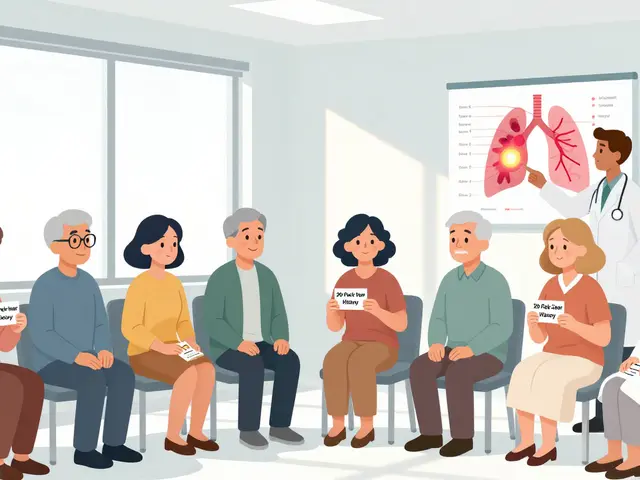
This isn’t just about getting sick more often. It’s about long-term damage. Chronic inflammation from daily vaping can lead to scarring, stiffening of lung tissue, and reduced oxygen exchange. You might not notice it at first. But over time, your lungs lose their elasticity. You get winded walking up stairs. You cough more in the morning. Your exercise tolerance drops. These aren’t "just allergies"-they’re early signs of lung injury.
And it’s not just smokers. A 2025 Lyracore report found that people who’ve never smoked but vape regularly show the same patterns of airway inflammation as long-term tobacco users. The damage isn’t tied to nicotine alone-it’s tied to the aerosol itself.
EVALI: When Vaping Almost Killed People
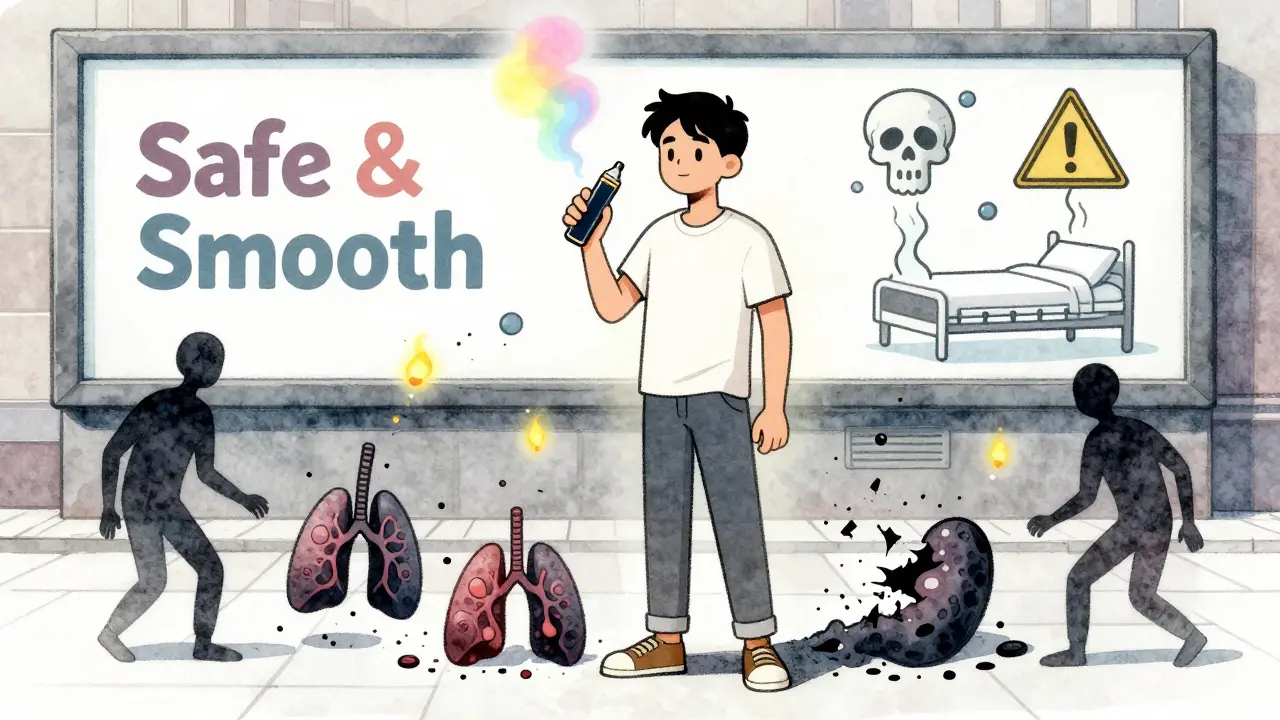
In 2019, something terrifying happened. Across the U.S., over 2,800 people were hospitalized with severe lung injury linked to vaping. Sixty-eight died. This wasn’t a slow burn. It was a sudden, dramatic collapse of lung function-fever, cough, chest pain, vomiting, and difficulty breathing. Doctors called it EVALI: E-cigarette or Vaping Use-Associated Lung Injury.
The cause? Vitamin E acetate. It was added to THC vape cartridges as a thickener. When heated, it turned into a sticky oil that coated lung tissue, blocking oxygen exchange. The CDC traced nearly all cases back to black-market THC vapes. But the real lesson wasn’t just about THC. It was about regulation. These products weren’t tested. They weren’t labeled. They were sold in convenience stores and online with no oversight.
Even now, in 2025, unregulated vaping products are still on the market. In Australia, some online sellers import vape pens from overseas with no ingredient disclosure. The EVALI outbreak showed us how fast things can go wrong when there’s no safety net.
Vaping and COPD: A Growing Link
Chronic Obstructive Pulmonary Disease (COPD) used to be called "smoker’s lung." But new data says that’s outdated. A major 2024 NIH study pooled results from 17 global studies and found that current e-cigarette users had a 48% higher risk of developing COPD compared to non-users. The odds ratio? 1.48. The confidence interval? 1.36-1.61. That’s not a small bump. That’s a clear, statistically solid link.
And it’s not just about smoking history. The same study found that even people who never smoked tobacco but vaped regularly showed elevated COPD risk. The damage isn’t limited to people with a long history of smoking. It’s happening in young adults, in people in their 20s and 30s, who thought they were making a "healthy" choice.
Compare that to traditional cigarettes: smoking increases COPD risk by 300-400%. Vaping doesn’t come close to that. But it’s not zero. And for someone who’s never smoked, 48% is still a massive increase. Your lungs don’t care if the toxin came from a cigarette or a vape-you’re still breathing in something that damages them.
What About Quitting Smoking With Vaping?
This is the biggest argument for vaping: it helps people quit cigarettes. And there’s some truth to that. For adult smokers who’ve tried everything else, switching to vaping can reduce exposure to tar and thousands of other carcinogens found in tobacco smoke. But here’s the catch: most people don’t quit cigarettes-they dual-use. They keep smoking and vape on the side. That’s worse than either alone.
And even if you do quit smoking completely, you’re still exposing your lungs to a new set of risks. The American Lung Association says vaping isn’t a proven cessation tool. The FDA hasn’t approved any e-cigarette for quitting smoking. There are better, safer options: nicotine patches, gum, counseling, prescription medications like varenicline. These have decades of research backing them. Vaping? Not so much.
Dr. NeSmith, a pulmonologist in Melbourne, says bluntly: "If you’re trying to quit smoking, the safest choice is to quit both. Vaping isn’t a bridge-it’s a detour that leads to another set of problems."
What Symptoms Should You Watch For?
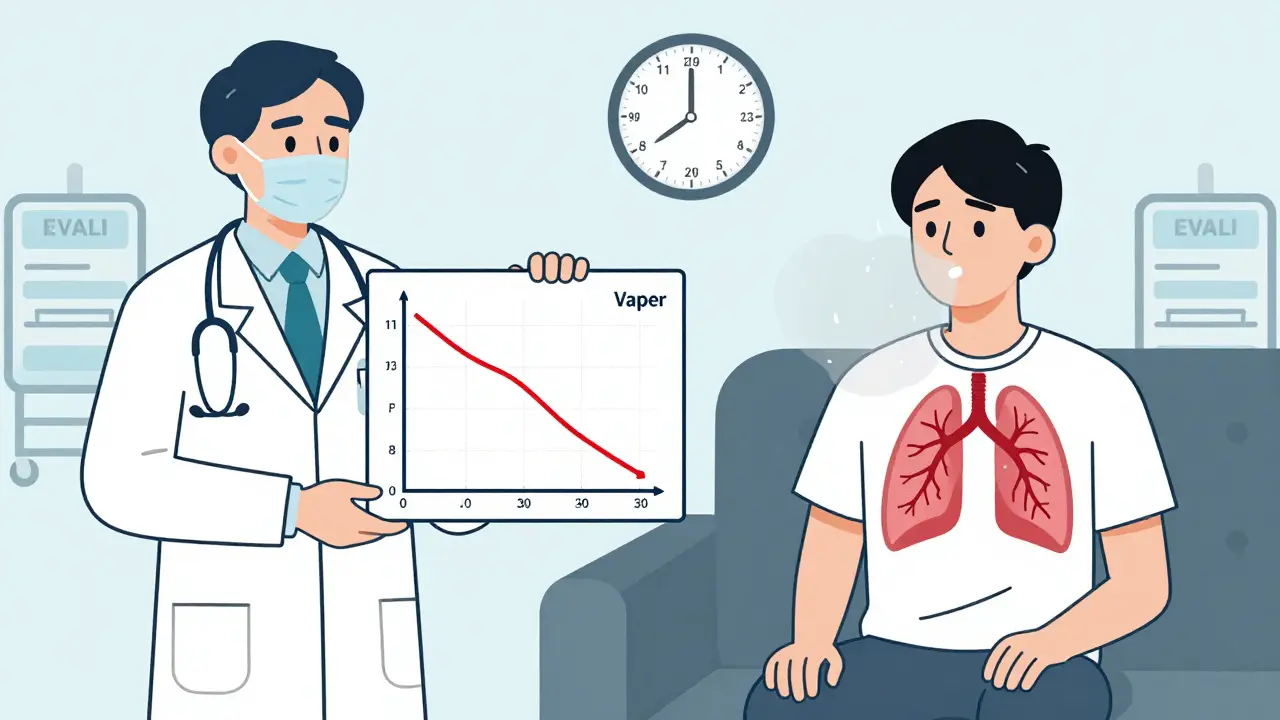
You don’t need to wait for a hospital visit to know something’s wrong. If you vape and you notice any of these, get checked:
- Chronic cough that won’t go away
- Shortness of breath during normal activities
- Chest tightness or pain
- Wheezing or whistling when breathing
- Frequent bronchitis or pneumonia
- Reduced ability to exercise or climb stairs
These aren’t "just a cold." They’re signs your lungs are under stress. Even if you feel fine, if you vape regularly, you should mention it during your next doctor’s visit. Pulmonary function tests can detect early changes before you feel them.
Is There Any Safe Level of Vaping?
No. Not according to the evidence we have now. The National Academies of Sciences, Engineering, and Medicine concluded in 2018 that vaping causes health risks-and that hasn’t changed. In fact, newer data shows the risks are broader than we thought.
Some people say, "I only vape once a week." But even occasional use has been linked to airway inflammation. Others say, "I only use nicotine-free vapes." But without nicotine, you’re still inhaling propylene glycol, flavorings, and metal particles. There’s no safe threshold.
Think of it like this: you wouldn’t say, "I only smoke one cigarette a month-it’s harmless." The same logic applies here. Your lungs aren’t designed to process synthetic aerosols. Every puff adds up.
What’s the Bottom Line?
Vaping isn’t the same as smoking. It doesn’t produce tar or carbon monoxide. But it introduces new, poorly understood risks. The chemicals are different. The damage is different. The timeline is different. And we’re still learning.
By 2025, we know vaping can cause lung inflammation, weaken your immune system, raise your risk of COPD, and trigger sudden, life-threatening injuries like EVALI. We know it’s not harmless. We know it’s not a proven quit-smoking tool. And we know it’s especially dangerous for young people whose lungs are still developing.
If you vape and you’re worried about your lungs, the best thing you can do is stop. There’s no magic fix. No "safer" vape. No flavor that makes it okay. Your lungs heal better the sooner you quit. Some damage may reverse. Some won’t. But you won’t know unless you stop.
And if you’ve never vaped? Don’t start. You don’t need it. You don’t owe it to anyone. Your lungs are already working hard enough.
Can vaping cause permanent lung damage?
Yes. While some inflammation from vaping may improve after quitting, studies show that long-term or heavy use can lead to scarring and reduced lung function that doesn’t fully recover. Damage to the airway lining and immune cells can become permanent, increasing the risk of chronic diseases like COPD.
Is vaping worse than smoking?
No, vaping is generally less harmful than smoking traditional cigarettes because it doesn’t involve burning tobacco, which releases thousands of toxic chemicals. But vaping isn’t safe. It still exposes your lungs to harmful substances that can cause inflammation, COPD, and immune suppression. "Less harmful" doesn’t mean "harmless."
Can vaping cause asthma or make it worse?
Yes. Multiple studies, including one from the National Academies of Sciences, show that vaping increases the risk of asthma symptoms and exacerbations, especially in young people. The chemicals in vape aerosol irritate the airways and trigger inflammation, which can worsen existing asthma or even trigger new cases.
What is EVALI, and is it still a threat today?
EVALI stands for E-cigarette or Vaping Use-Associated Lung Injury. It was a severe, sometimes fatal lung illness that spiked in 2019, mostly linked to THC vapes containing vitamin E acetate. While outbreaks have slowed due to tighter regulations, unregulated products still exist. The risk remains, especially with black-market or homemade vapes. EVALI is a warning sign that vaping can cause sudden, serious lung damage.
Does vaping affect non-users nearby?
Yes. Secondhand vape aerosol contains nicotine, ultrafine particles, and toxic chemicals like formaldehyde and acrolein. The U.S. Surgeon General confirmed in 2016 that these emissions pose health risks. While less concentrated than secondhand smoke, exposure isn’t harmless-especially for children, pregnant women, and people with lung conditions.
Are flavored vapes more dangerous than unflavored ones?
Yes. Flavors add chemicals that aren’t present in plain nicotine solutions. Many flavorings, like diacetyl and cinnamaldehyde, are toxic to lung cells when inhaled. Even "natural" flavors can become harmful when heated. Studies show that flavored vapes cause more airway inflammation than unflavored ones. The more flavorings, the greater the risk.
How long does it take for lungs to heal after quitting vaping?
Improvement can start within weeks. Cilia begin to regrow, and inflammation decreases. Within 1-3 months, many people notice better breathing and less coughing. But full recovery depends on how long and how heavily you vaped. Some lung changes, especially if scarring has occurred, may be permanent. The sooner you quit, the better your chances.
Can vaping lead to cancer?
There’s no direct evidence yet that vaping causes cancer in humans, but several chemicals in vape aerosol-like formaldehyde and acrolein-are known carcinogens. Animal studies show DNA damage from long-term exposure. While cancer takes decades to develop, the presence of these toxins means vaping isn’t risk-free. It’s a potential long-term threat that we’re still studying.



December 23, 2025 AT 19:58
The pulmonary toxicological profile of e-cigarette aerosol is unequivocally pathological. Propylene glycol and vegetable glycerin pyrolysis generates aldehydic compounds, including formaldehyde and acrolein, at concentrations exceeding occupational exposure limits. The presence of heavy metals-nickel, lead, tin-leached from coil degradation further establishes a mechanistic pathway for oxidative stress and epithelial damage. Moreover, flavorant additives such as diacetyl and cinnamaldehyde induce mitochondrial dysfunction in bronchial epithelial cells in vitro. The absence of tobacco combustion does not equate to safety; it merely substitutes one class of toxins for another, equally insidious.
Current regulatory frameworks are woefully inadequate. The 2019 EVALI outbreak was not an anomaly-it was a predictable consequence of unregulated market expansion. Vitamin E acetate was a proximate cause, but the root cause is systemic: lack of pre-market toxicological screening, absence of batch traceability, and zero enforcement of ingredient disclosure. Until these structural failures are addressed, vaping remains a public health experiment with human subjects.
The notion of "harm reduction" is a dangerous misnomer when applied to nicotine delivery systems without longitudinal safety data. The American Lung Association’s position is correct: no e-cigarette is FDA-approved for smoking cessation. The burden of proof lies with manufacturers, not consumers.
Long-term pulmonary function decline in young, non-smoking vapers is now empirically documented. The 48% increased COPD risk is not statistical noise-it is a clinical red flag. We are witnessing the emergence of a new iatrogenic disease paradigm: vape-induced chronic lung injury. Denial is not science. It is negligence.