Disease Activity Scores: What They Are and How They Guide Treatment
When you have a chronic condition like disease activity scores, standardized measurements used by doctors to track how active an autoimmune disease is over time. Also known as disease activity indices, these scores turn vague symptoms like joint pain or fatigue into numbers that guide treatment. They’re not just paperwork—they’re the reason your doctor might switch your drug, lower your dose, or tell you you’re in remission.
These scores are most common in rheumatoid arthritis, a long-term autoimmune disease that attacks the joints, causing swelling, pain, and stiffness, but they’re also used for psoriatic arthritis, a type of inflammatory arthritis linked to psoriasis that affects joints and sometimes the spine. Tools like DAS28, CDAI, and PASDAS combine physical exams, blood tests, and patient reports into one number. A score under 2.6 might mean you’re in remission. A score above 5.1? That’s high activity—and your doctor will likely act fast.
Why does this matter? Because treatment isn’t one-size-fits-all. Two people with the same diagnosis can have wildly different scores. One might feel fine but have rising inflammation markers. Another might be in pain but show low scores on tests. Disease activity scores cut through the noise. They tell you if your meds are working, if your flare is real, or if you need to try something new. They’re why you’re not just guessing whether you’re getting better—you’re measuring it.
You’ll find posts here that dig into how these scores are used in real life: how they connect to drug choices, what happens when scores don’t match how you feel, and how to talk to your doctor about them. You’ll also see how they tie into broader topics like medication safety, treatment adherence, and long-term outcomes. Whether you’re managing arthritis, tracking treatment response, or just trying to understand your lab results, this collection gives you the facts you need—not the fluff.
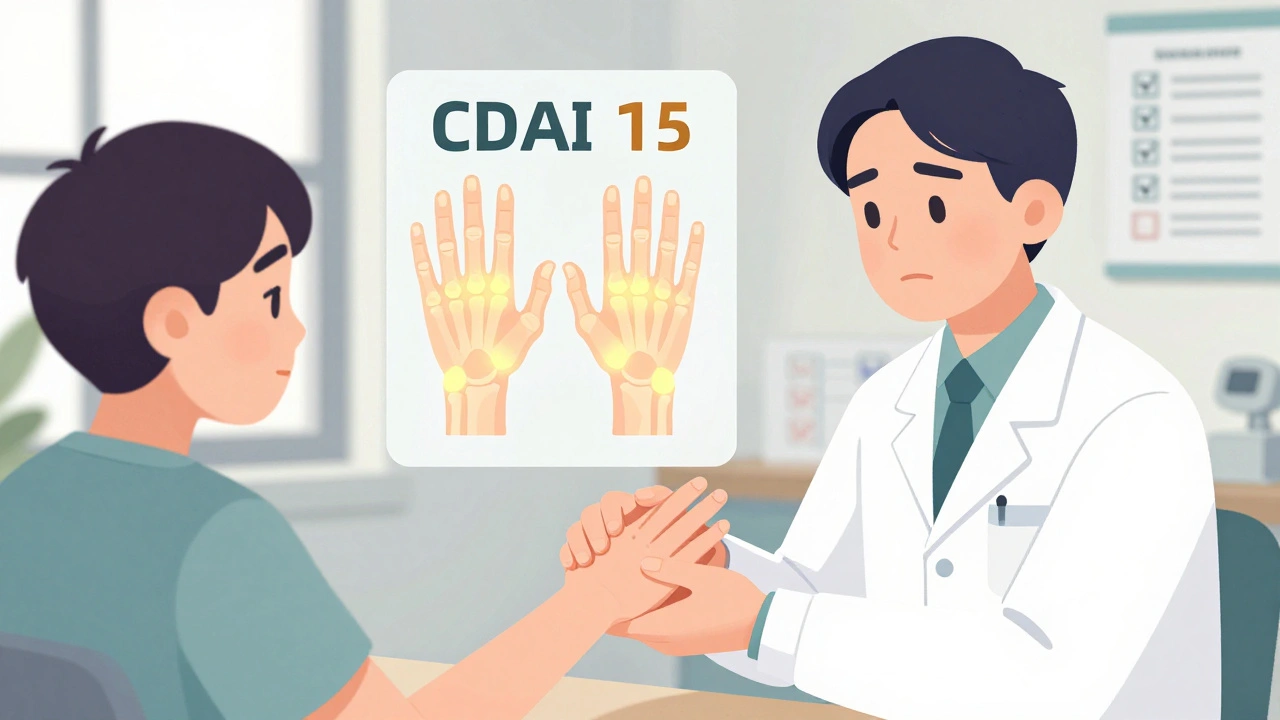
CDAI, DAS28, and imaging are key tools for tracking rheumatoid arthritis. Learn how each works, when to use them, and why combining them leads to better outcomes and less joint damage.