Herpes Simplex Virus: Causes, Symptoms, and What You Can Actually Do
When you hear herpes simplex virus, a common viral infection that causes cold sores and genital outbreaks. Also known as HSV, it doesn’t vanish after the first outbreak—it hides in your nerves and can come back for years. About 1 in 6 adults in the U.S. has genital herpes, and nearly 70% carry the oral type. Most don’t even know they have it because symptoms are mild or absent.
The virus comes in two main types: HSV-1, typically linked to cold sores around the mouth, and HSV-2, usually associated with genital infections. But that’s not a hard rule anymore. Oral sex can spread HSV-1 to the genitals, and HSV-2 can cause mouth sores. It spreads through skin-to-skin contact—even when no sore is visible. That’s why so many people pass it on without realizing.
Outbreaks can be triggered by stress, sunburn, illness, or even your period. The first flare-up is often the worst: tingling, blisters, pain, and sometimes fever. Later outbreaks are usually shorter and milder. Antiviral meds like acyclovir can cut the duration if taken early, but they don’t cure it. Topical creams? Mostly useless. What actually helps is managing triggers and knowing when to treat.
Here’s the thing: having herpes doesn’t mean your life is over. Most people live normally—have relationships, kids, sex—without major issues. The stigma is worse than the virus. Testing is simple, treatment is effective, and transmission risk drops significantly with medication and safe practices.
Below, you’ll find real, practical posts that cut through the noise. Learn how to spot early signs before a breakout, what meds work best and when to take them, how to talk to partners without panic, and why some "natural remedies" do more harm than good. These aren’t theory pieces—they’re based on what patients and clinicians actually see in clinics and emergency rooms. No fluff. No fearmongering. Just what you need to know to handle this virus without shame or confusion.
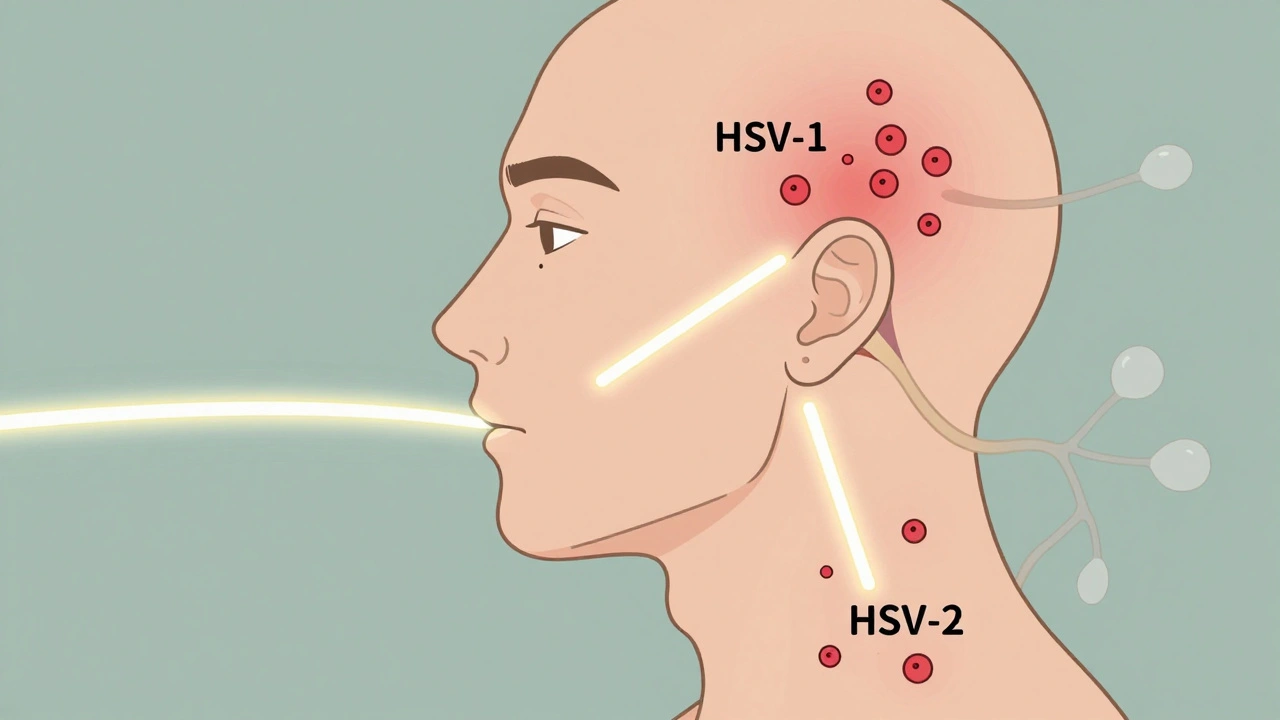
Herpes simplex virus affects billions worldwide. Learn the differences between HSV-1 and HSV-2, what outbreaks look like, how antiviral therapy works, and how to reduce transmission and manage symptoms effectively.