IBS Treatment: What Actually Works for Irritable Bowel Syndrome
When you have irritable bowel syndrome, a chronic digestive disorder marked by bloating, cramping, diarrhea, or constipation without visible damage to the gut. Also known as spastic colon, it’s not just "bad digestion"—it’s a real condition tied to how your gut and brain talk to each other. Millions live with it, and most are told to just "eat more fiber" or "avoid stress," but that rarely fixes the root issue. The truth? IBS treatment isn’t one-size-fits-all. What helps one person might make another worse. That’s because IBS isn’t a single disease—it’s a collection of symptoms shaped by your gut bacteria, food sensitivities, nervous system response, and even past infections.
Successful IBS treatment often starts with understanding the gut-brain axis, the two-way communication system between your digestive tract and your central nervous system. Stress doesn’t just make you feel anxious—it triggers real gut spasms and changes how food moves through your intestines. That’s why therapies like CBT and mindfulness show up in studies as effective as some medications. Then there’s the dietary triggers, specific foods that worsen symptoms in sensitive individuals, often linked to FODMAPs. Low-FODMAP diets aren’t a fad—they’re backed by clinical trials showing symptom relief in up to 70% of people. But cutting out onions, garlic, and beans isn’t a lifelong sentence. It’s a tool to identify your personal triggers, then rebuild a tolerable diet.
Medications play a role too, but they’re not the first step for most. Antispasmodics can calm cramps. Laxatives or anti-diarrheals target specific symptoms. Newer drugs like eluxadoline or linaclotide work on gut nerves and fluid balance—but they’re not magic pills. They work best when paired with lifestyle changes. And don’t ignore the gut microbiome. Probiotics like Bifidobacterium infantis have shown real results in reducing bloating and pain. But not all probiotics are equal. The right strain matters.
What you won’t find here are quick fixes or miracle cures. What you will find are real stories, tested methods, and clear guidance from posts that cut through the noise. Whether you’re struggling with constant bloating after meals, sudden diarrhea at work, or the frustration of doctors saying "it’s all in your head," the articles below give you the tools to take back control. No fluff. No jargon. Just what works—for your body, your life, and your daily routine.
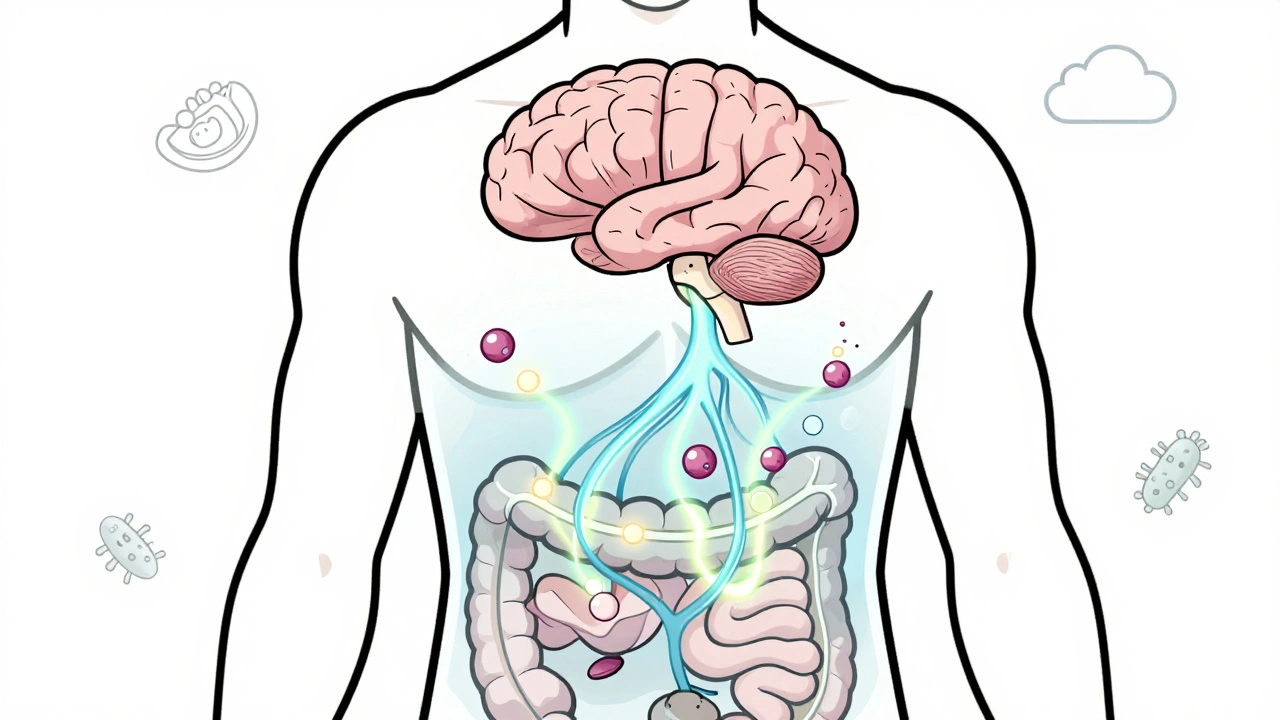
Irritable Bowel Syndrome is not just a digestive issue-it's a breakdown in gut-brain communication. Learn how serotonin, gut bacteria, and brain wiring affect symptoms-and what treatments actually work.