Oral Herpes: Causes, Triggers, and What Actually Works
When you get a painful blister on your lip, it’s usually oral herpes, a viral infection caused by the herpes simplex virus type 1 (HSV-1). Also known as cold sores, it’s not rare—it affects over half of adults in the U.S. and spreads easily through kissing, sharing utensils, or even touching an active sore. Unlike the myth that it only shows up when you’re sick, oral herpes can flare for no obvious reason at all. Stress, sunburn, hormonal shifts, or even a rough day at work can trigger it. The virus hides in your nerve cells after the first infection and wakes up when your body’s defenses dip.
What makes oral herpes tricky is that you can spread it even when you don’t have a visible sore. That’s called asymptomatic shedding. It’s why people often don’t realize they’re carriers until they pass it to someone else—or get it themselves from someone who seemed fine. Herpes simplex virus, the root cause of oral herpes doesn’t go away, but it doesn’t always cause trouble either. Many people have mild or no symptoms after the first outbreak. The real challenge is managing the flares before they turn into painful, embarrassing blisters.
There’s no cure, but there are proven ways to shorten outbreaks and reduce how often they happen. Antiviral pills like acyclovir or valacyclovir work best when taken at the first sign—tingling, itching, or redness—before the blister forms. Topical creams help a little, but they’re not magic. Sunscreen on your lips matters more than you think. Stress management and sleep aren’t just good for your mood—they’re part of your herpes defense system. And yes, you can still kiss someone, hug, or share a drink if you know the risks and take smart steps.
What you’ll find below isn’t a list of myths or miracle cures. These are real posts from people who’ve dealt with this, doctors who treat it, and studies that tested what actually works. You’ll see how antivirals compare, why some treatments fail, what triggers to watch for, and how to stop feeling ashamed of something so common. This isn’t about perfection. It’s about control.
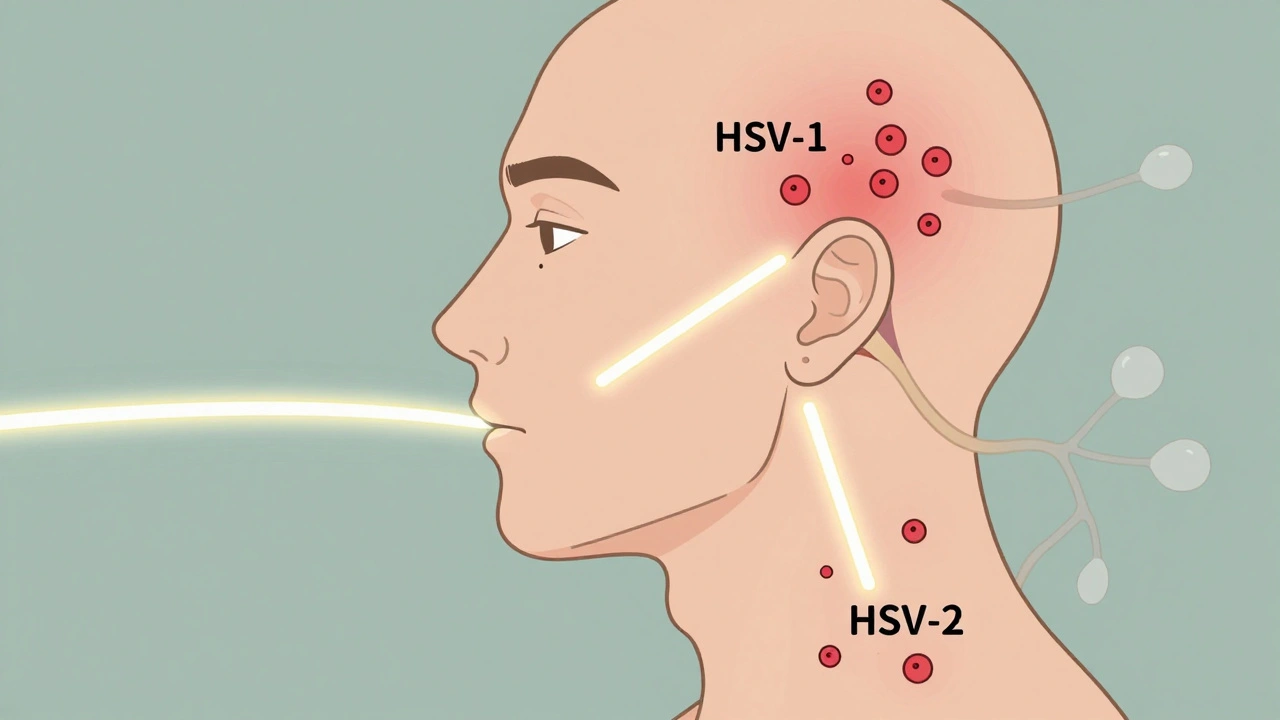
Herpes simplex virus affects billions worldwide. Learn the differences between HSV-1 and HSV-2, what outbreaks look like, how antiviral therapy works, and how to reduce transmission and manage symptoms effectively.