Postoperative Ileus: Causes, Risks, and How to Manage It
When your gut goes quiet after surgery, it’s not just discomfort—it’s postoperative ileus, a temporary paralysis of the intestines that happens after surgery, often delaying when you can eat or leave the hospital. It’s not a blockage, but your bowel stops moving like it should, and that’s why food, gas, and fluids pile up instead of passing through. This isn’t rare—up to half of all abdominal surgery patients experience it. And while it usually clears on its own, knowing what triggers it and how to speed up recovery can save you days in the hospital.
Gastrointestinal motility, the natural rhythm of contractions that push food through your digestive tract gets disrupted by surgery, pain meds like opioids, inflammation, or even just lying still too long. Opioids are a big culprit—they calm pain but also shut down gut movement. That’s why hospitals are cutting back on them, switching to acetaminophen or nerve blocks when possible. And bowel obstruction, a true physical blockage that needs urgent care is different—you don’t have one unless your gut is physically blocked by scar tissue or a twist. Postoperative ileus is functional, not mechanical. That’s why imaging and exams matter: doctors need to rule out the dangerous stuff before calling it just ileus.
What helps? Early movement. Walking the day after surgery isn’t just a suggestion—it’s one of the most effective treatments. Chewing gum might sound odd, but studies show it tricks your brain into thinking you’re eating, which kicks the gut back into gear. Avoiding long-term IV fluids and getting solid food as soon as you can also helps. Some hospitals use medications like methylnaltrexone to block opioid effects on the gut without killing pain relief. And if you’re still bloated and not passing gas after three days? That’s when you need to talk to your team—because too long without movement raises infection risk.
The posts below cover real cases, recovery tips, drug interactions that make ileus worse, and how pharmacists help patients get back on track after surgery. You’ll find advice on managing pain without slowing your gut, what to eat when you’re cleared to eat, and how to spot when something’s more serious than typical post-op sluggishness. This isn’t just about waiting it out—it’s about knowing what to ask for, what to avoid, and how to get back to normal faster.
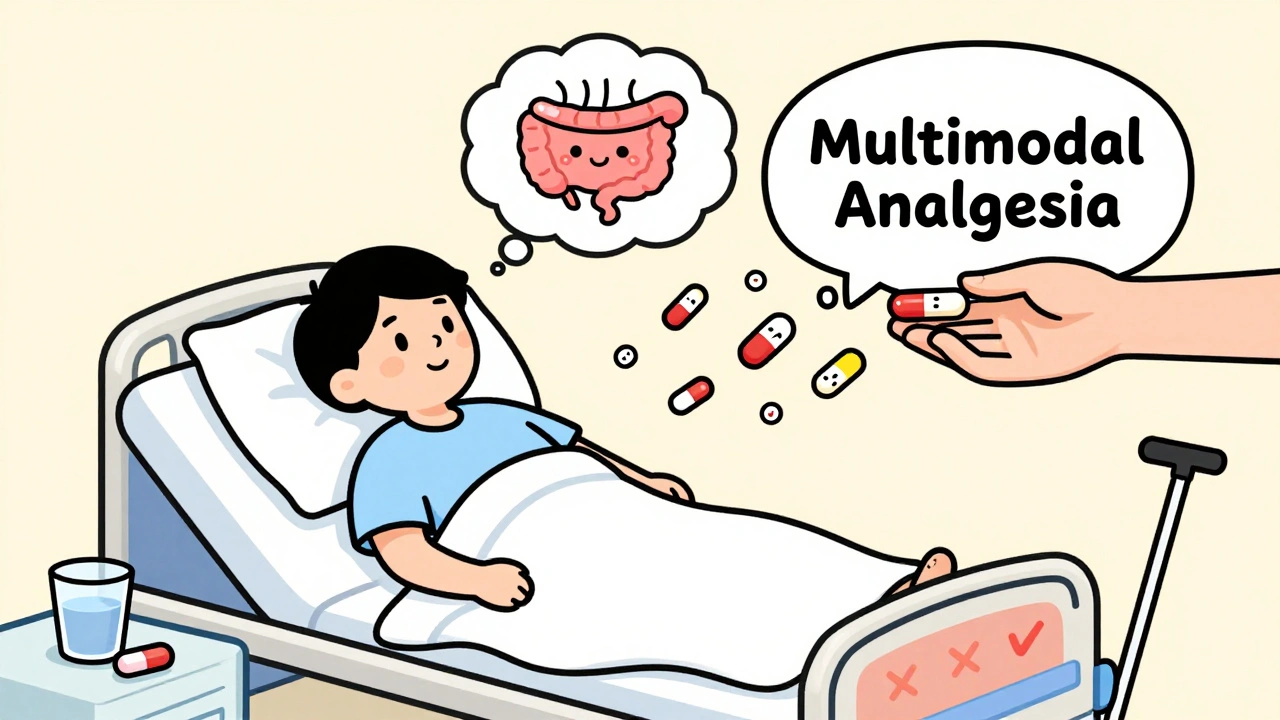
Postoperative ileus is a common, painful delay in bowel function after surgery-often caused by opioids. Learn how multimodal pain control, early movement, and targeted drugs can prevent it and speed recovery.