How to Prevent Swimmer's Ear: Simple Steps to Avoid Infection
When water gets trapped in your ear after swimming, it doesn’t just feel uncomfortable—it can lead to swimmer's ear, an infection of the outer ear canal often caused by bacteria thriving in moist environments. Also known as otitis externa, it’s not just a problem for competitive swimmers. Anyone who spends time in pools, lakes, or even showers is at risk if moisture lingers. The good news? You don’t need fancy gear or expensive treatments to stop it before it starts.
Most cases happen because water stays in the ear canal long enough for bacteria to multiply. Your ear naturally cleans itself, but excess moisture disrupts that balance. dry ears, a simple but critical step after swimming or bathing can make all the difference. Tilt your head to the side and gently pull your earlobe to help water drain. A soft towel or a hairdryer on the coolest, lowest setting held at least a foot away can also help evaporate trapped water. Avoid cotton swabs—they push debris deeper and scratch the delicate skin, creating entry points for infection.
ear drops, specifically designed to dry out the ear canal and kill bacteria are another proven tool. Over-the-counter solutions with alcohol or vinegar can help prevent infection after swimming. They’re not a cure if you already have symptoms, but using them right after getting out of the water is like locking the door before the burglar shows up. If you wear hearing aids or earbuds often, clean them regularly—bacteria can hide there too. And if you’re prone to swimmer’s ear, consider using custom-fitted earplugs designed for swimmers. They’re not 100% waterproof, but they cut down the amount of water that gets in.
Some people think that chlorine in pools kills all germs, but that’s not true. Chlorine can irritate the skin and make your ears more vulnerable. Saltwater isn’t safer either—it carries its own bacteria. Even a quick dip in a hot tub can trigger it if you don’t dry off properly. The real enemy isn’t the water itself—it’s what happens after. That’s why prevention is so much easier than treatment. You won’t need antibiotics, painkillers, or ear drops prescribed by a doctor if you build a simple habit: get the water out, keep it dry, and don’t poke around inside.
It’s not just about swimming. Showering, shampooing, or even sweating heavily can cause the same issue if your ears stay damp. People with eczema, psoriasis, or narrow ear canals are at higher risk, but anyone can get it. The key is consistency—not perfection. You don’t need to do everything every time. Just focus on one or two habits that stick. Dry your ears after water exposure. Skip the cotton swabs. Use preventive drops if you’re prone to it. That’s it.
Below, you’ll find real patient stories, science-backed tips, and comparisons of the most effective prevention tools. No fluff. No guesswork. Just what works.
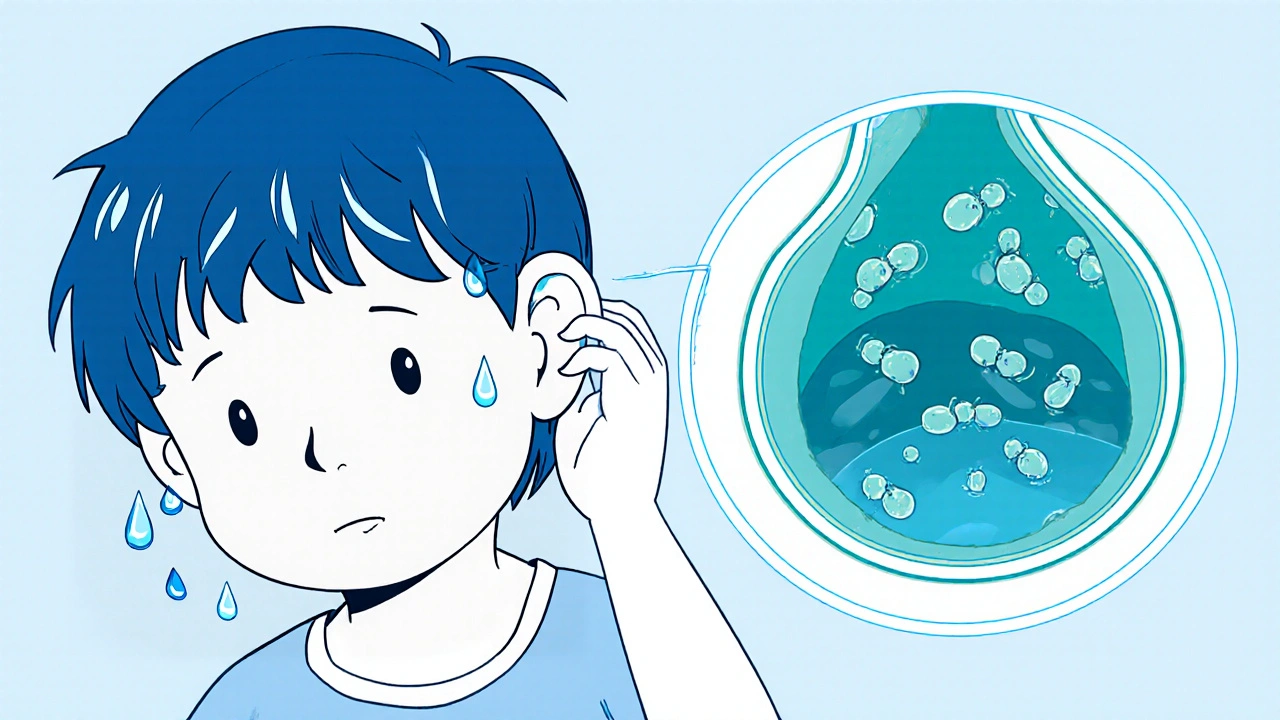
Swimmer’s ear, or otitis externa, is a painful ear infection caused by trapped water and bacterial growth. Learn how to prevent it with simple drying habits and what treatments actually work-backed by clinical data and real patient outcomes.