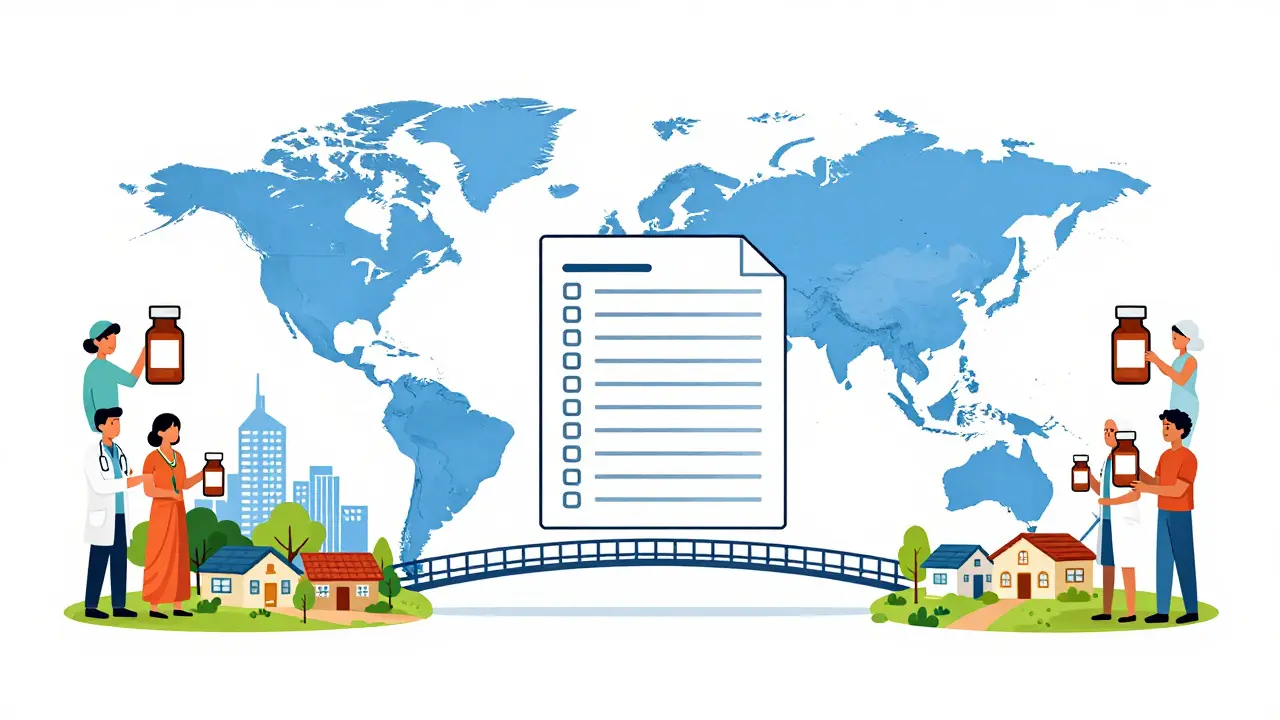
Imagine a world where the most critical life-saving drugs are priced so high that only the wealthiest can afford them, or where the only available medicine in a remote village is a fake. This is the chaos the WHO Model List of Essential Medicines is designed to stop. It isn't just a list; it is a global blueprint that defines which drugs are absolutely necessary for a functioning health system and ensures that essential generics are safe, effective, and affordable for everyone, regardless of their zip code.
What exactly is the WHO Model List?
First established in 1977, the WHO Model List of Essential Medicines (often called the EML) identifies medicines that satisfy the priority health care needs of populations globally. By the 23rd edition in 2023, it had grown into a technical reference used by over 150 countries to build their own National Essential Medicines Lists (NEMLs). Unlike a typical hospital formulary, which might focus on insurance tiers or specific local budgets, the EML focuses on therapeutic value and public health impact.
The list is split into two main sections to keep things practical:
- The Core List: This is the "must-have" kit. It contains the most efficacious and cost-effective medicines for priority conditions that any basic health system should always have in stock.
- The Complementary List: These are medicines that still provide huge value but require specialized diagnostic tools, specialist training, or closer monitoring to be used safely.
The rigorous science behind the selection
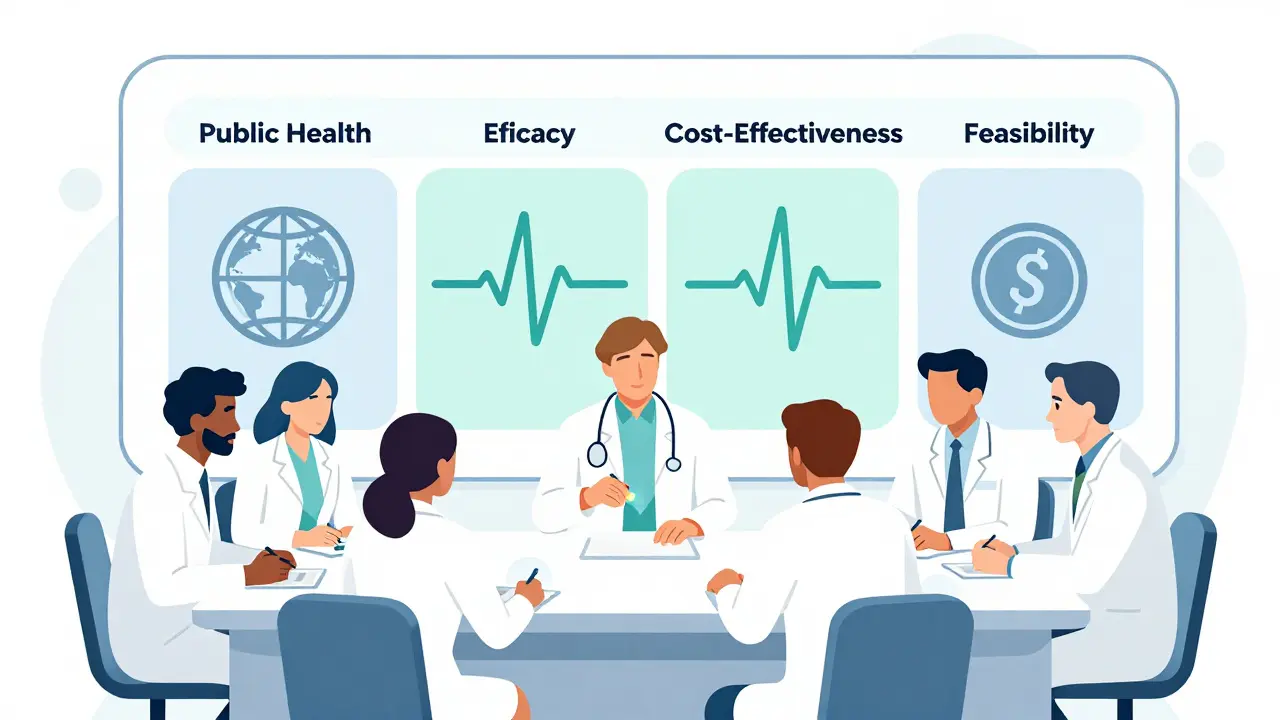
Getting a drug onto this list isn't a matter of lobbying; it's a matter of data. The WHO Expert Committee on Selection and Use of Essential Medicines uses a transparent scoring system across four specific domains. If a drug doesn't hit a minimum score of 7/10 in each category and a 7.5/10 overall, it doesn't make the cut.
Here is how they weigh the evidence:
- Public Health Relevance (30%): Does the disease affect a significant number of people? For inclusion, they typically look for a minimum prevalence of 100 cases per 100,000 people.
- Efficacy and Safety (30%): They require high-level evidence, usually from randomized controlled trials.
- Comparative Cost-Effectiveness (25%): They don't just look at the price tag. They calculate the cost per quality-adjusted life year (QALY), usually requiring it to be below three times the GDP per capita.
- Programmatic Feasibility (15%): Can this drug actually be administered in a real-world setting, including resource-poor environments?
Why generics are the heartbeat of the list
You can't have global health equity without generics. In the 2023 update, about 46% of the listed medicines are generics. The goal is simple: move away from expensive brand-name monopolies and toward high-quality, low-cost alternatives. This shift has had a massive impact on diseases like HIV. Since 2008, the median price of generic antiretrovirals has plummeted by 89%, dropping from $1,076 to just $119 per patient per year. This isn't just a statistic; it's the reason treatment scaled from 800,000 people in 2003 to nearly 30 million by 2022.
However, a generic is only as good as its quality. To prevent "substandard" drugs from entering the supply chain, the WHO uses WHO Prequalification. This is a rigorous verification process ensuring that generic manufacturers meet international standards. For most drugs on the list, the WHO requires bioequivalence studies showing an 80-125% confidence interval for absorption (AUC) and peak concentration (Cmax) compared to the original reference product.
| Feature | WHO Model List (EML) | Commercial Insurance Formularies |
|---|---|---|
| Primary Goal | Public health impact and accessibility | Cost containment and managed care |
| Selection Criteria | Efficacy, safety, and cost-per-QALY | Tiered cost-sharing and rebate contracts |
| Structure | Core and Complementary lists | 3 to 5 cost-sharing tiers |
| Target Audience | National health ministries/Global agencies | Individual patients and providers |
Real-world impact and the "implementation gap"
Does this list actually change lives on the ground? In Ghana, adopting these principles helped the National Health Insurance Authority reduce out-of-pocket medicine spending by 29% between 2018 and 2022. In India, hospitals using WHO-recommended tiered antibiotic strategies saw a 35% drop in antimicrobial costs.
But it's not all success stories. There is a glaring gap between having a list and having the medicine. In Nigeria, a 2022 survey found that while the national list was based on the WHO model, only 41% of those medicines were consistently available. The problem wasn't the list-it was the supply chain. This highlights a critical truth: a list of essential generics is useless if the roads to the clinic are blocked or the warehouses are empty.
Modern evolutions: Biosimilars and Digital Tools
The EML is evolving. The 2023 update moved beyond simple chemical generics into biosimilars-highly complex biological medicines. Seven monoclonal antibodies are now included, but they come with tighter bioequivalence ranges (85-115%) because these drugs are much harder to replicate than a simple pill.
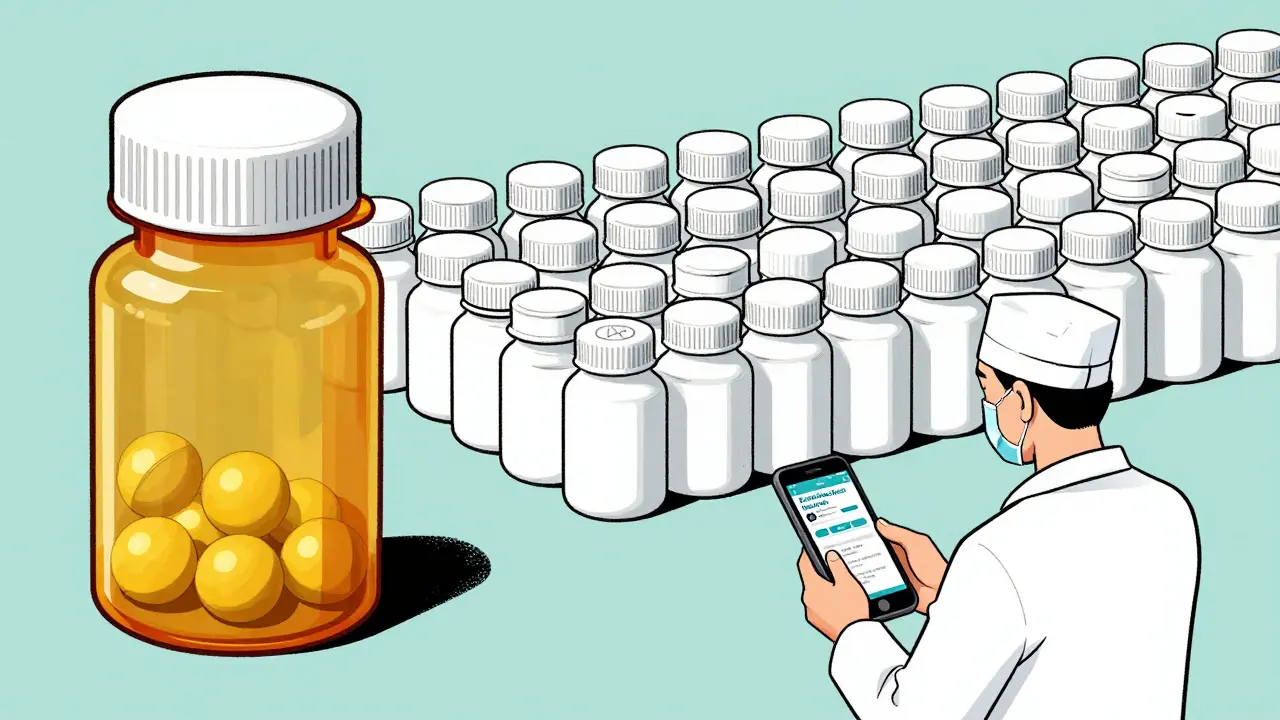
The WHO is also fighting the "pediatric gap." In 2019, only 29% of listed medicines had age-appropriate formulations for children. By 2023, that jumped to 42%. To make this information more accessible, they launched the WHO Essential Medicines App in late 2023, allowing healthcare workers in the field to check guidelines instantly on their phones.
Common pitfalls and controversies
No system is perfect. Some critics, including academic experts, point out that the WHO is increasingly relying on industry-funded trials for evidence. In 2015, only 28% of supporting data came from industry sources; by 2023, that rose to 45%. This creates a worry that the independence of the selection process could be compromised.
Additionally, the list is often slow to include the newest "breakthrough" drugs. Only 12% of novel therapeutics approved between 2018 and 2022 made it onto the 2023 list, compared to much higher rates in high-income country formularies. The WHO argues this is a feature, not a bug-they only include drugs that have proven, long-term value for the global majority, not just the latest high-priced trend.
Is the WHO Model List a legal requirement for countries?
No, it is not a legal requirement. It is a technical reference guide. Countries are encouraged to use it as a foundation to create their own National Essential Medicines Lists (NEMLs) tailored to their specific disease burdens and economic constraints.
What is the difference between a generic and a biosimilar on the list?
Generics are chemically identical copies of a drug. Biosimilars are nearly identical copies of complex biological medicines (made from living cells). Because biosimilars are more complex, the WHO applies stricter bioequivalence and safety monitoring standards for them.
How does the WHO ensure that generic drugs are safe?
Through the WHO Prequalification process. This involves auditing the manufacturing sites and reviewing the drug's stability and bioequivalence data to ensure it performs exactly like the original reference product.
Why are some medications in the "Complementary List" instead of the "Core List"?
Complementary medicines usually require specialized equipment for diagnosis or specialist medical training to administer safely. Putting them in a separate category prevents dangerous misuse in primary care settings that lack the necessary infrastructure.
How often is the Model List updated?
The list is typically updated every two years (biennially) to reflect new clinical evidence, the emergence of new diseases, and the availability of more cost-effective generic alternatives.