Most people get headaches. Some days, you wake up with a dull throb. Other times, stress or too much coffee triggers a tension headache. You take a pill, lie down, and it’s gone by afternoon. But what if your headache doesn’t act like a normal one? What if it comes out of nowhere, hits like a sledgehammer, or comes with symptoms that don’t belong? That’s when you stop thinking it’s just a headache-and start thinking it could be something life-threatening.
Headaches are incredibly common. The World Health Organization says about half of all adults have one every year. But here’s the thing: 95% of them are harmless. The other 5%? Those are the ones that can kill you if you ignore them. And most people don’t realize they’re in danger until it’s too late.
What Makes a Headache Dangerous?
Not all headaches are created equal. A migraine might make you sensitive to light. A sinus headache might feel like pressure behind your eyes. But neurological red flags? Those are signals your brain is screaming for help. They’re not subtle. They don’t wait. They demand action.
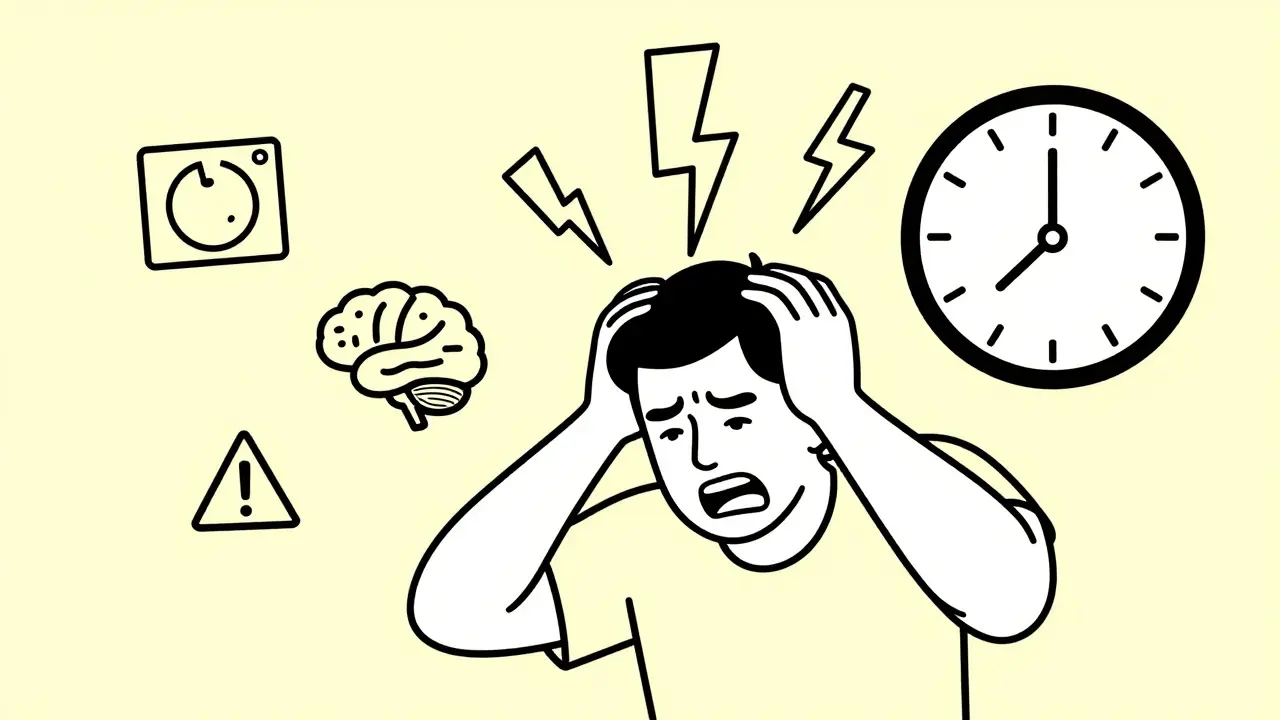
The medical community uses a tool called SNNOOP10 to spot trouble. It’s not fancy-it’s just a checklist. But it works. The most critical warning signs? Thunderclap headache. That’s not just a bad headache. It’s when pain hits its peak in under a minute. Imagine being fine one second, then feeling like your head is exploding the next. That’s thunderclap. And it’s the #1 sign of a ruptured brain aneurysm. Studies show 85% of subarachnoid hemorrhages start this way. If you have this, you have less than an hour to get to a hospital. Every minute counts.
When Your Brain Stops Working Right
Headaches that come with neurological symptoms? That’s the reddest of red flags. If your headache is paired with any of these, don’t call your doctor. Don’t wait for an appointment. Go to the ER now.
- Focal weakness-one side of your face drooping, your arm suddenly too heavy to lift. This isn’t fatigue. It’s stroke territory.
- Slurred speech or trouble finding words. You know you’re not drunk. You’re not tired. You’re having a stroke.
- Diplopia-double vision. Not blurry. Double. Like seeing two of everything.
- Papilledema-swelling of the optic nerve. You won’t feel it, but your doctor will see it during an eye exam. It means pressure is building in your skull.
- Altered mental status-confusion, drowsiness, not knowing where you are. This isn’t just a bad day. It’s brain infection or bleeding.
One patient in Melbourne, 32, thought her blurred vision and slurred speech were anxiety. She waited 3.5 hours before going to the ER. She had a stroke. Permanent vision loss followed. That’s the kind of story doctors hear too often.
Age Matters-Especially After 50
If you’re over 50 and you get a new kind of headache, that’s not just aging. It’s a red flag. The risk of giant cell arteritis jumps 23-fold after age 50. It’s an inflammation of blood vessels in your scalp and neck. It can cause blindness if untreated. And it often comes with jaw pain when chewing, scalp tenderness, or fatigue.
It’s not just giant cell arteritis. New headaches after 50 also raise the risk of brain tumors. Studies show 1 in 200 people in this age group with a new headache have a tumor. Glioblastoma makes up nearly half of those cases. That’s why doctors don’t shrug this off. They order scans-fast.
Head Injury? Don’t Wait
You hit your head. You feel fine. You think, "I’m okay." But if you lost consciousness for more than 5 minutes, threw up more than twice, or your balance is off? That’s not a bump. That’s a possible bleed inside your skull.
According to 2022 trauma guidelines, the chance of finding a serious brain injury after head trauma rises sharply with these symptoms. A CT scan within an hour can save your life. Delay it, and the bleeding can keep spreading. You might feel fine for hours-then collapse. That’s why emergency rooms have strict protocols: no waiting.
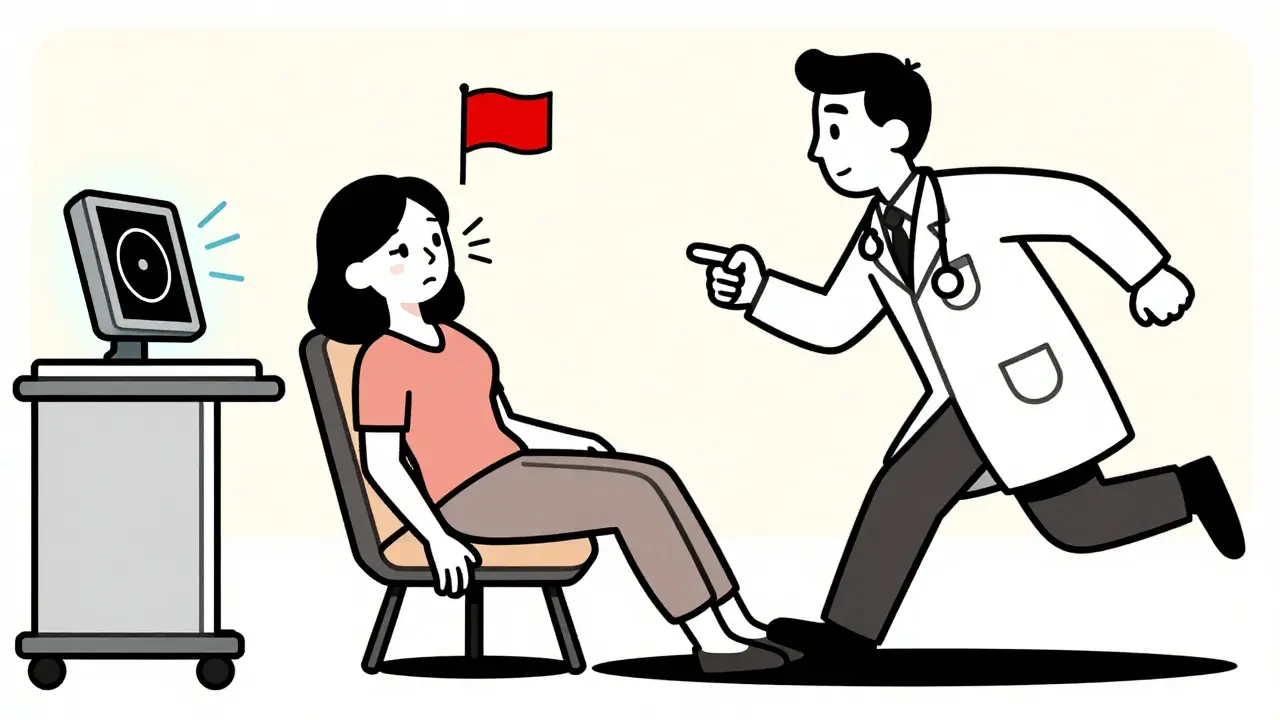
Fever + Headache + Stiff Neck? Call 911
This combo is terrifying for a reason. It’s the classic sign of meningitis. Bacterial meningitis kills in hours if untreated. The CDC says 78% of meningitis patients have altered mental status. And for every hour you delay antibiotics, your chance of dying goes up by 5.2%.
You don’t need all three symptoms. Fever and headache alone, especially if you’re immunocompromised, should send you to the ER. Fungal meningitis-rare, but deadly-has a 35% mortality rate even with treatment. And it’s more common now in people with weakened immune systems from cancer, transplants, or long-term steroids.
How Fast Do You Need to Act?
Timing isn’t just important-it’s everything.
- Thunderclap headache: Get to the ER in 1 hour. CT scan needed within 30 minutes.
- Stroke symptoms (weakness, speech loss): 3 hours is the window for clot-busting drugs. After that, brain damage sets in.
- Meningitis: Antibiotics must start within 45 minutes of triage. Delay = higher death risk.
- Post-trauma: If you have vomiting, confusion, or loss of consciousness, get a CT scan within 1 hour.
Most ERs now use a simple tool called SNOOP4 to screen for red flags in under 10 minutes: Sudden onset, Neurologic symptoms, Onset after 50, Papilledema. If any of those are there, imaging starts immediately.
What About Migraines? Don’t Panic-But Know the Difference
Migraines can be scary. They can come with aura-flashing lights, numbness, tingling. But here’s how to tell if it’s just a migraine or something worse:
- Migraine aura builds over 5 to 20 minutes and fades in under an hour.
- Stroke symptoms hit fast-within minutes-and don’t improve.
- Migraine pain is usually one-sided, throbbing, and gets worse with movement.
- Stroke pain? Often not even painful. It’s just weakness, confusion, or vision loss.
If your aura lasts longer than an hour, or you’ve never had aura before and now you do? Get checked. New-onset aura after 50 is a red flag for stroke or tumor.
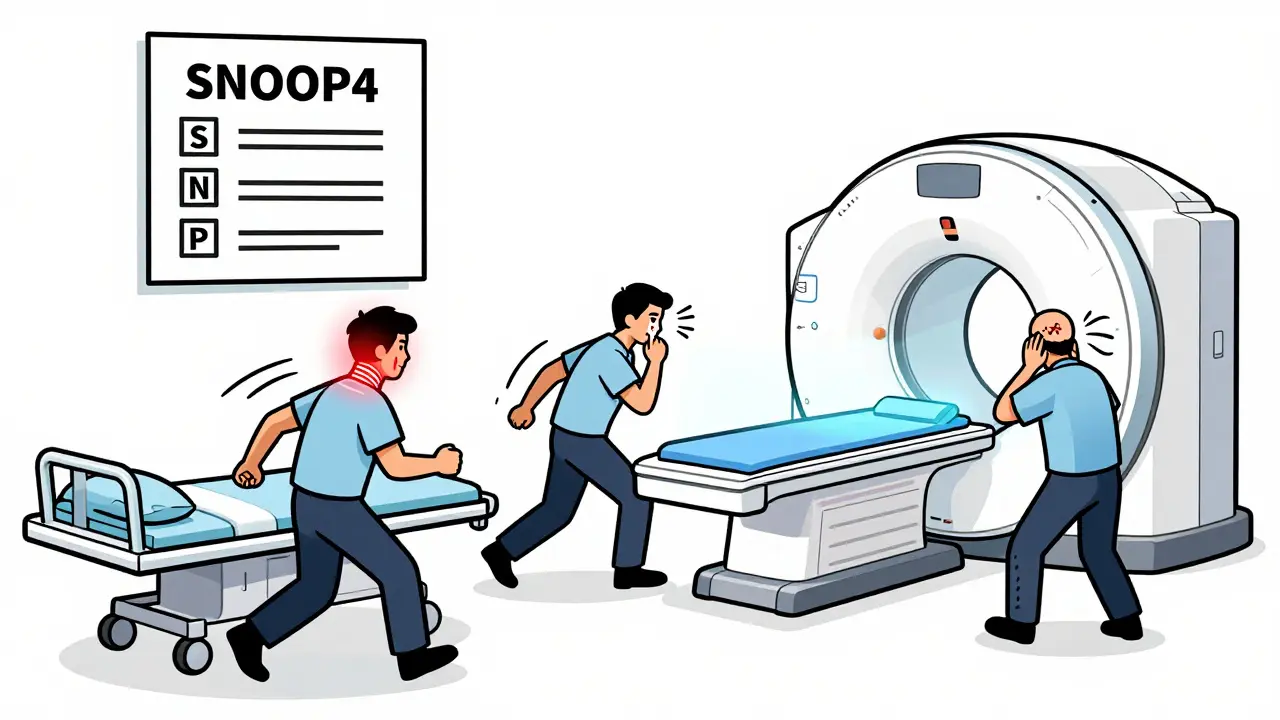
What Happens in the ER?
If you show up with red flags, here’s what you’ll likely face:
- Non-contrast CT scan-done within 30 minutes for thunderclap headache or trauma.
- LP (lumbar puncture)-if meningitis is suspected. Done within 2 hours.
- MRI-if CT is normal but suspicion remains, especially for papilledema or subtle strokes.
- IV antibiotics-started immediately if infection is possible.
Studies show hospitals that follow these protocols reduce misdiagnosis by over 60%. The problem? Many rural hospitals still don’t have 24/7 neurology coverage. That means delays. In rural areas, patients wait an average of 3.2 hours for evaluation. In cities? Just over an hour.
Real Stories. Real Consequences.
One Reddit user, "HeadacheSurvivor89," ignored a thunderclap headache for four hours. "I thought it was just the worst migraine I’d ever had," they wrote. By the time they got to the hospital, the aneurysm had re-bled. They survived-but barely. Their neurosurgeon said the delay increased their risk of death by 40%.
Another patient, "NeuroAlert," noticed neck stiffness and fever with a headache. They went straight to the ER. A lumbar puncture confirmed viral meningitis. Early treatment meant no complications. No hospital stay. No long-term damage.
That’s the difference between ignoring and acting.
What Should You Do?
You don’t need to be a doctor to know when to act. Here’s your simple rule:
- If your headache is the worst of your life-go now.
- If it comes with confusion, weakness, vision loss, or fever-go now.
- If you’re over 50 and it’s new-go now.
- If you had a head injury and now you’re vomiting or dazed-go now.
Don’t text your doctor. Don’t wait until morning. Don’t hope it goes away. Call 911 or go to the nearest emergency room. Your brain doesn’t wait. Neither should you.
Final Thought
Headaches are common. But the ones that kill? They don’t whisper. They scream. And if you’re smart, you’ll listen.
Is a thunderclap headache always a brain aneurysm?
No, but it’s the most common sign of a ruptured brain aneurysm. About 85% of subarachnoid hemorrhages start with a thunderclap headache. Other causes include reversible cerebral vasoconstriction syndrome (RCVS), stroke, or even severe high blood pressure. The point isn’t to guess the cause-it’s to get imaging immediately. A CT scan within an hour can rule out the most dangerous causes.
Can I wait to see my GP if I have a red flag headache?
No. General practitioners don’t have the tools or time to rule out stroke, aneurysm, or meningitis. These conditions require emergency imaging, blood tests, and sometimes antibiotics-all of which are only available in an ER. Waiting to see your GP could cost you your life. ERs are designed for this. Go directly.
I had a headache after a vaccine. Should I be worried?
Most post-vaccine headaches are mild and go away in a day or two. But if you have neurological symptoms-like vision changes, weakness, confusion, or seizures-within 48 hours of vaccination, get medical help. The risk is extremely low (about 0.8 cases per 100,000 mRNA doses), but when it happens, it can be serious. Don’t assume it’s just a side effect.
Do I need an MRI if my CT scan is normal?
Sometimes. A CT scan is great for bleeding, but it can miss small strokes, early tumors, or inflammation. If your symptoms persist or worsen after a normal CT-especially if you have papilledema, vision changes, or ongoing confusion-an MRI is the next step. MRI is 22% more sensitive for detecting intracranial pressure and subtle brain changes. Doctors won’t order it unless they still suspect something serious.
What if I’m not sure whether it’s a red flag? Should I still go?
Yes. Better to be wrong and safe than right and dead. Emergency departments see thousands of headache patients every year. Most are harmless. But if you’re uncertain, they’d rather see you 100 times for nothing than miss one case that could kill you. Your instinct matters. If something feels off-go.