DAS28: Understanding Disease Activity Scores in Rheumatoid Arthritis
When you have DAS28, a standardized score used to measure how active rheumatoid arthritis is based on joint swelling, pain, and blood markers. It's not a diagnosis—it's a tracking tool that helps doctors see if your treatment is working or if you need to switch gears. Also known as the Disease Activity Score, a clinical metric combining physical exams and lab tests to quantify inflammation, DAS28 is one of the most trusted ways to measure progress in rheumatoid arthritis care.
DAS28 looks at four things: the number of tender joints (up to 28), the number of swollen joints (also up to 28), a blood test called ESR or CRP that shows inflammation levels, and how you feel overall. Each part adds up to a number—usually between 0 and 10. A score under 2.6 means you're in remission. Between 2.6 and 3.2? Low disease activity. Above 5.1? That’s high activity, and your doctor will likely want to adjust your meds. This isn’t guesswork. It’s based on decades of clinical data and used worldwide to guide decisions on biologics, DMARDs, and other RA treatments. You might see this score mentioned in posts about rheumatoid arthritis, a chronic autoimmune condition that attacks joints and can affect organs, or when talking about inflammation tracking, the process of measuring how much your body’s immune system is overreacting over time. It’s the reason some patients stay on methotrexate even when they feel okay—because the numbers still show hidden inflammation.
What makes DAS28 powerful is that it turns vague symptoms into clear numbers. You might think your pain is the same as last month, but the score tells a different story. That’s why it shows up in articles about treatment changes, drug effectiveness, and how to avoid joint damage before it’s too late. It’s also why some posts focus on DAS28 as a benchmark for new therapies—pharmaceutical companies use it to prove their drugs work. But it’s not perfect. It doesn’t capture fatigue, stiffness in the morning, or how you’re doing outside the clinic. Still, it’s the best tool we have to measure what’s happening inside your joints when you can’t see it.
What you’ll find in the posts below are real-world examples of how DAS28 guides treatment—whether it’s adjusting biologics, switching from one DMARD to another, or understanding why a patient’s score didn’t drop even after feeling better. These aren’t theory pieces. They’re about what works in practice, how doctors use this score to make decisions, and how patients can use it to ask better questions. You’re not just reading about numbers—you’re learning how to read your own health.
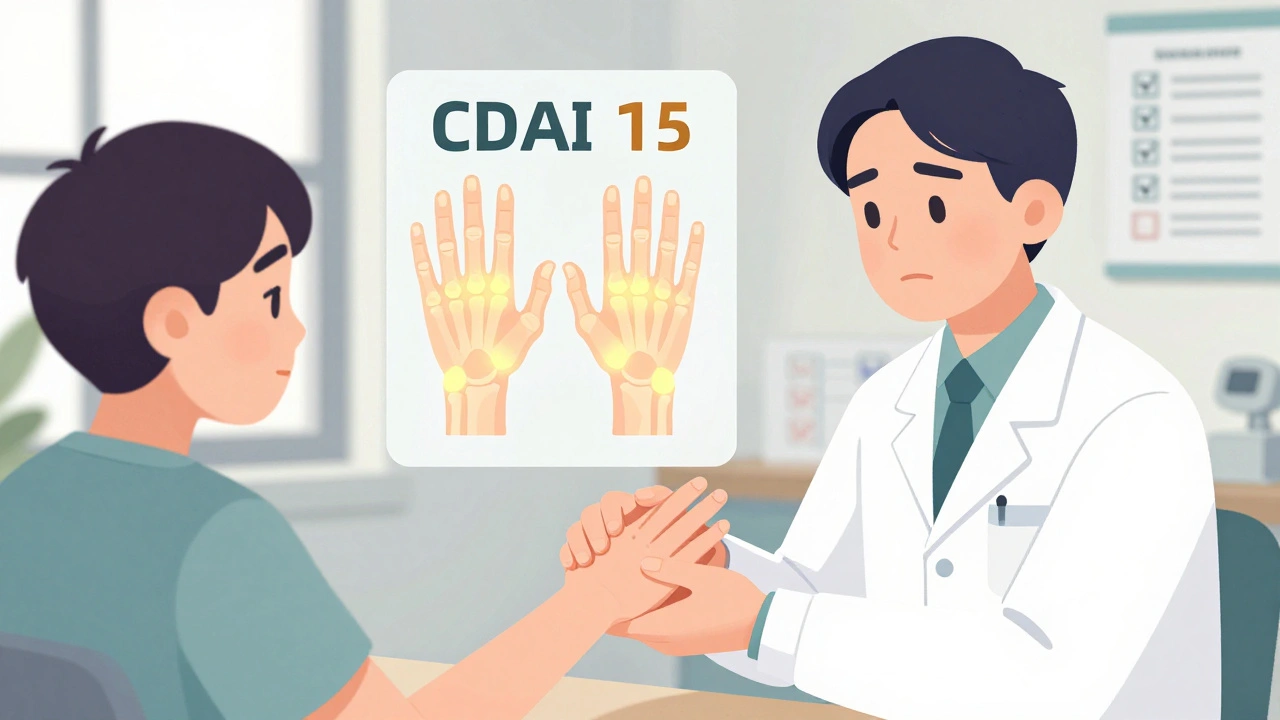
CDAI, DAS28, and imaging are key tools for tracking rheumatoid arthritis. Learn how each works, when to use them, and why combining them leads to better outcomes and less joint damage.