Grapefruit and Warfarin: What You Need to Know About This Dangerous Interaction
When you take warfarin, a blood thinner used to prevent clots in people with atrial fibrillation, deep vein thrombosis, or after heart valve surgery. Also known as Coumadin, it works by blocking vitamin K, but its effect is tightly controlled by liver enzymes that break it down—especially CYP3A4, a key enzyme in the liver responsible for metabolizing many drugs. Now, if you drink grapefruit, a citrus fruit known for its tart flavor and high vitamin C content, you’re not just getting a healthy drink—you’re risking a dangerous spike in warfarin levels.
Here’s the simple truth: grapefruit doesn’t just interact with warfarin—it shuts down the enzyme that clears it from your body. That means warfarin sticks around longer, making your blood thinner than intended. This isn’t theoretical. Studies show that even one glass of grapefruit juice can boost warfarin levels by up to 20%, increasing your risk of bleeding—sometimes with no warning. You might bruise more easily, bleed longer from cuts, or, in worst cases, suffer internal bleeding. And it’s not just grapefruit juice. The whole fruit, even the peel, contains the same compounds. Other citrus fruits like Seville oranges and pomelos do the same thing. Regular oranges? Fine. But grapefruit? Not worth the risk.
What makes this even trickier is that the effect lasts days. Even if you drink grapefruit juice in the morning and take warfarin at night, the enzyme is still blocked. You can’t time it around your dose. And there’s no magic number—some people are more sensitive than others. Your INR (the test that measures how long your blood takes to clot) might jump without any other changes in diet, meds, or health. That’s why doctors tell you to avoid grapefruit entirely if you’re on warfarin. No exceptions. No "just a little." This isn’t like coffee or alcohol, where moderation works. This is a hard stop.
But you’re not alone. Many people don’t realize grapefruit is the problem. They think it’s just another food to watch, like leafy greens (which affect vitamin K). But grapefruit doesn’t change vitamin K—it changes how your body handles the drug itself. That’s why you’ll see warnings on warfarin labels, and why pharmacists ask you about citrus when you pick up your prescription. If you’re on warfarin, your medication safety checklist should include one item: grapefruit and warfarin—never together.
Below, you’ll find real-world posts from people who’ve dealt with this interaction, learned how to adjust their diet, and avoided hospital visits. You’ll also see how other drugs—like calcium channel blockers and statins—react the same way. This isn’t just about one fruit and one drug. It’s about understanding how your body processes what you take, and what simple changes can keep you safe.
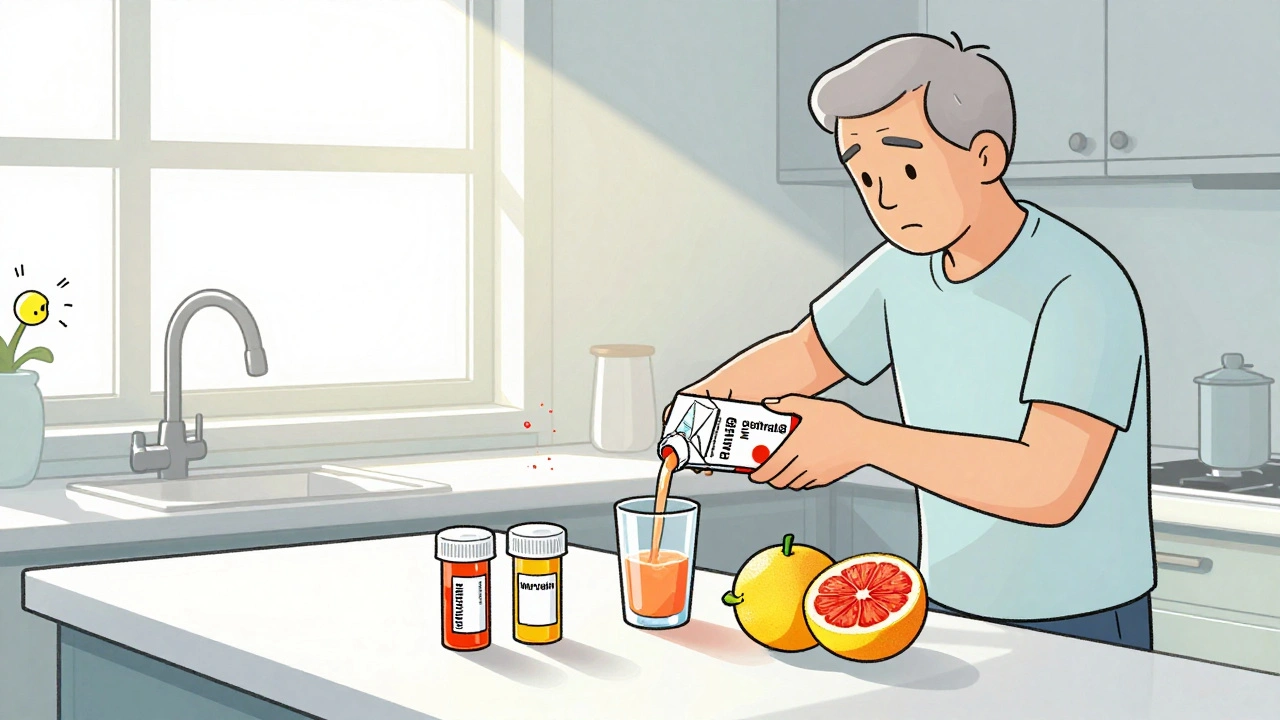
Grapefruit can dangerously increase levels of warfarin and certain SSRIs by blocking CYP450 enzymes. Learn which medications are at risk, why timing doesn't help, and what to do instead.