Gut Health: What It Really Means and How to Fix It
When we talk about gut health, the condition of your digestive tract and the balance of microbes living inside it. Also known as intestinal health, it’s not just about avoiding bloating or constipation—it’s the foundation of your immune system, your mood, and how your body responds to everything from stress to medication. Your gut isn’t just a tube for food. It’s home to trillions of bacteria, viruses, and fungi that talk to your brain, influence your inflammation levels, and even affect how well your drugs work.
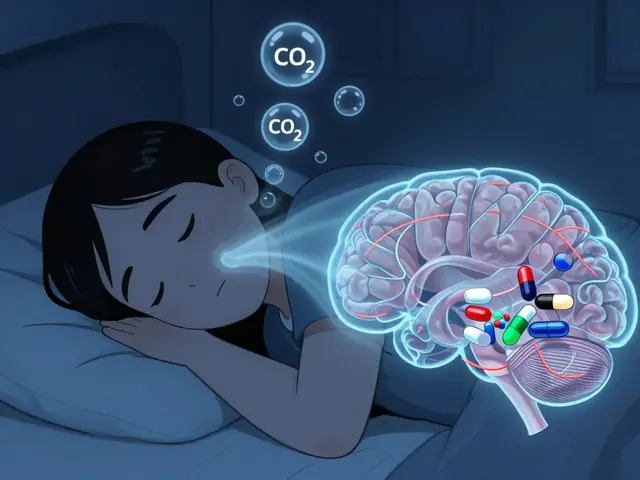
This is why gut microbiome, the community of microorganisms living in your intestines matters so much. Studies show that people with chronic pain, autoimmune conditions, or even depression often have a gut microbiome out of balance. And it’s not just diet. Opioids—used for pain after surgery—can slow your gut down so much it causes postoperative ileus, a painful delay in bowel movement. That’s not just a side effect. It’s a gut health crisis. Even statins, meant to protect your heart, can trigger muscle pain partly because they mess with your gut’s ability to process things cleanly.
Your gut-brain axis, the two-way communication line between your digestive system and your nervous system explains why anxiety can give you stomachaches and why fixing your gut can ease anxiety. It’s also why some people with rheumatoid arthritis or chronic pain find relief not just from pills, but from changes in what they eat. The gut doesn’t work in isolation. It’s tied to your liver, your kidneys, your immune cells, and even your sleep. When your gut is inflamed, your whole body feels it. That’s why managing intestinal inflammation isn’t just about probiotics or fiber—it’s about understanding how your medications, stress, and daily habits are quietly damaging your inner ecosystem.
And here’s the thing: most people think gut health means taking a probiotic or cutting out gluten. But real improvement comes from seeing the whole picture. It’s about how your gut reacts to antibiotics, how your liver processes drugs like warfarin or calcium channel blockers, and whether your body can handle supplements like creatine without stressing your kidneys. It’s about knowing when an antihistamine is safe during pregnancy or why grapefruit can wreck your meds. All of these threads connect back to your gut.
Below, you’ll find real, no-fluff guides on how to recover your gut after surgery, how to manage gut-related side effects of common drugs, how to protect your gut while traveling, and what actually works when your digestion is off. No myths. No supplements sold as magic. Just clear, science-backed ways to take back control of your digestive system—because your gut isn’t just part of your body. It’s the starting point for everything else.
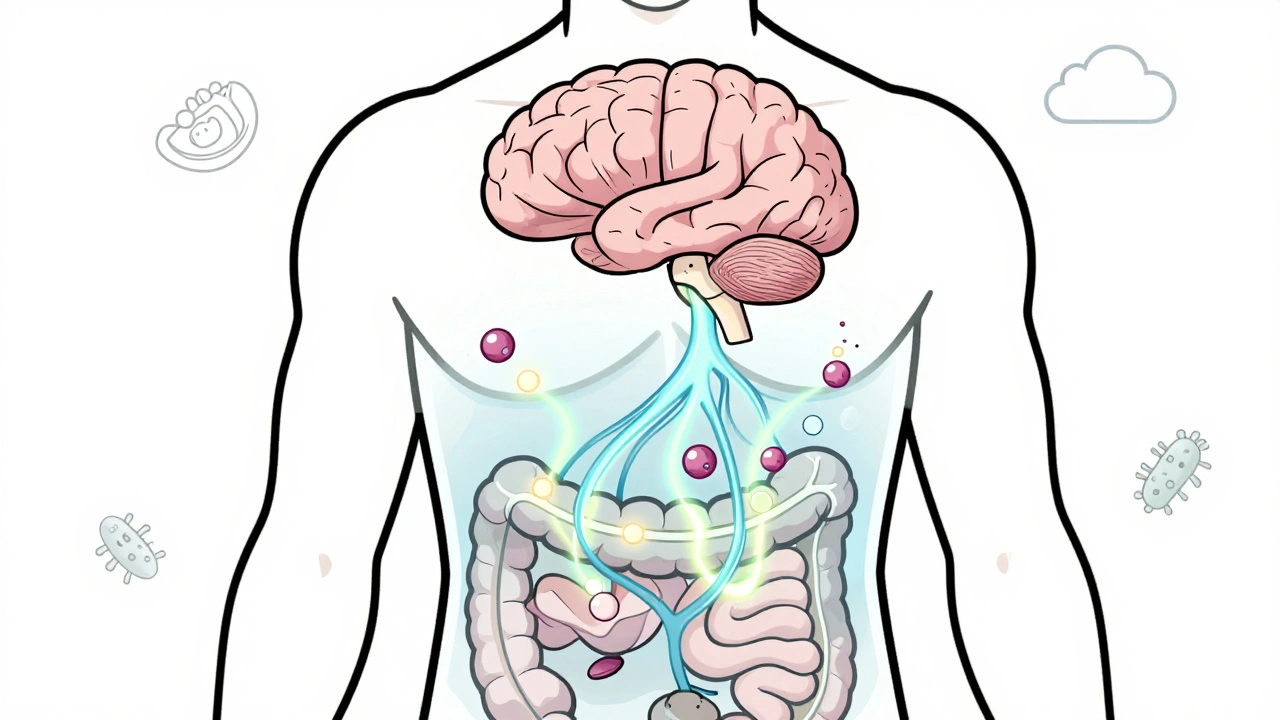
Irritable Bowel Syndrome is not just a digestive issue-it's a breakdown in gut-brain communication. Learn how serotonin, gut bacteria, and brain wiring affect symptoms-and what treatments actually work.