IV Fluid Shortage: What’s Happening and How It Affects Your Care
When hospitals run low on IV fluids, clear liquids delivered directly into the bloodstream to treat dehydration, maintain blood pressure, or deliver medications. Also known as intravenous solutions, these are among the most basic, life-saving tools in modern medicine. It’s not just a logistics problem—it’s a patient safety issue. A shortage of normal saline, lactated Ringer’s, or dextrose solutions can delay surgeries, slow recovery from infections, and even force doctors to choose who gets treated first. This isn’t hypothetical. In 2023, over 40% of U.S. hospitals reported critical shortages, and many had to stretch supplies by diluting fluids or delaying non-emergency treatments.
The root causes? A mix of manufacturing delays, raw material shortages, and a supply chain that’s too thin to handle spikes in demand. One company makes nearly half of the country’s IV bags, and when their plant had a contamination issue, the ripple effect hit every ER, ICU, and outpatient clinic. Even small changes—like more people getting IV hydration for heat exhaustion or vomiting—can push systems past their limit. And it’s not just about volume. Some IV fluids are made with specific sterile packaging or additives that can’t be swapped out easily. You can’t just use tap water instead. Hospital supply chains, the network of manufacturers, distributors, and pharmacy departments that keep medications and fluids flowing. Also known as pharmaceutical logistics, it’s designed for efficiency, not resilience. When one link breaks, the whole system feels it.
What does this mean for you? If you’re scheduled for surgery, your IV might be delayed. If you’re getting treated for severe diarrhea or vomiting, you might get oral rehydration instead—even if it’s less effective. For older adults or kids with infections, IV fluids aren’t optional. They’re the difference between going home and ending up in intensive care. Dehydration treatment, the process of restoring fluid balance in the body, often using IV solutions to replace lost electrolytes and water. Also known as fluid resuscitation, it’s the first step in treating shock, sepsis, and heat-related illness. Without it, kidneys fail, blood pressure drops, and organs start shutting down. Even in non-emergency cases, like mild dehydration from the flu, many clinics now recommend drinking more water and using oral salts instead of rushing to the ER for an IV.
There are workarounds. Some hospitals are using smaller IV bags, switching to alternative electrolyte solutions, or prioritizing patients based on urgency. Pharmacists are double-checking every bag for contamination. Nurses are training staff to spot early signs of dehydration so they can act before IVs are needed. But none of this fixes the bigger problem: we rely too much on a fragile system. The real solution? More manufacturers, better inventory tracking, and federal oversight to prevent monopolies in critical supplies. Until then, the next shortage could hit anytime—during flu season, a heatwave, or a global crisis.
Below, you’ll find real stories and practical advice from clinicians and patients who’ve lived through this. From how to recognize when you need fluids to what alternatives doctors are using now, these posts give you the facts—not the hype. Whether you’re a patient, caregiver, or just someone who wants to understand what’s really going on in hospitals, this collection cuts through the noise.
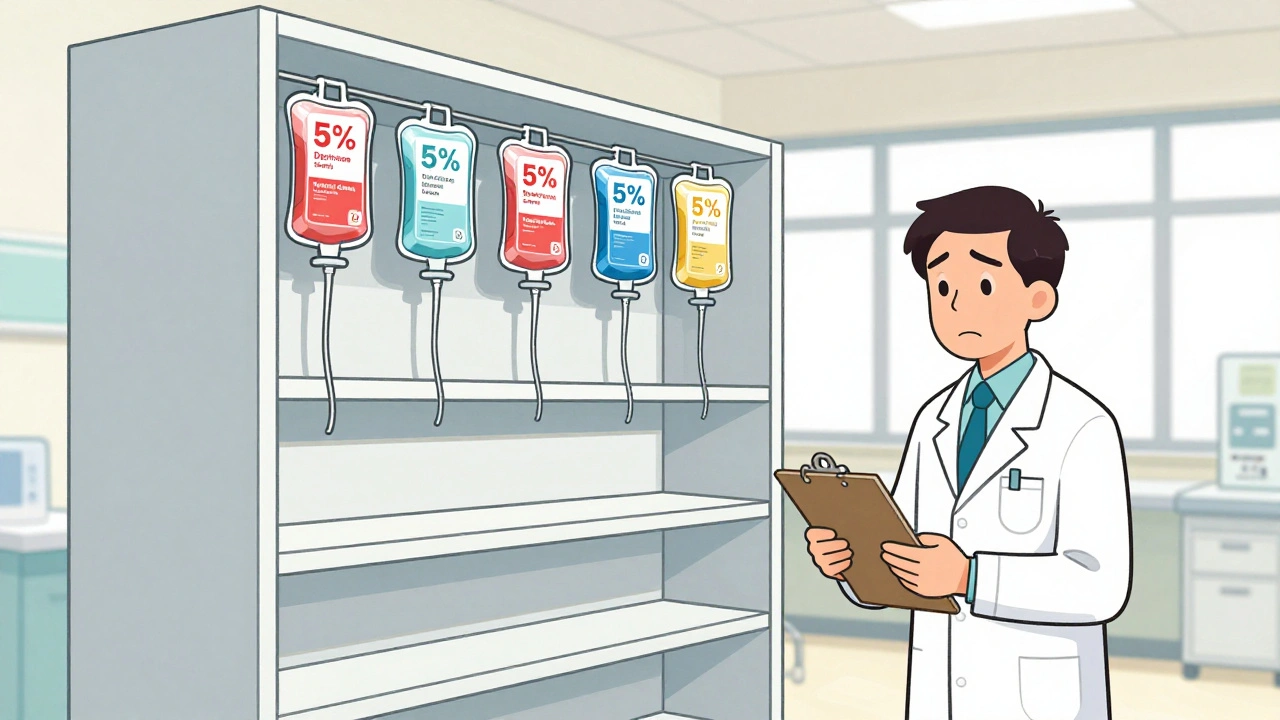
As of 2025, over 270 medications remain in short supply in the U.S., including critical chemotherapy drugs, IV fluids, and antibiotics. Learn which drugs are hardest to find, why shortages persist, and how patients and providers are coping.