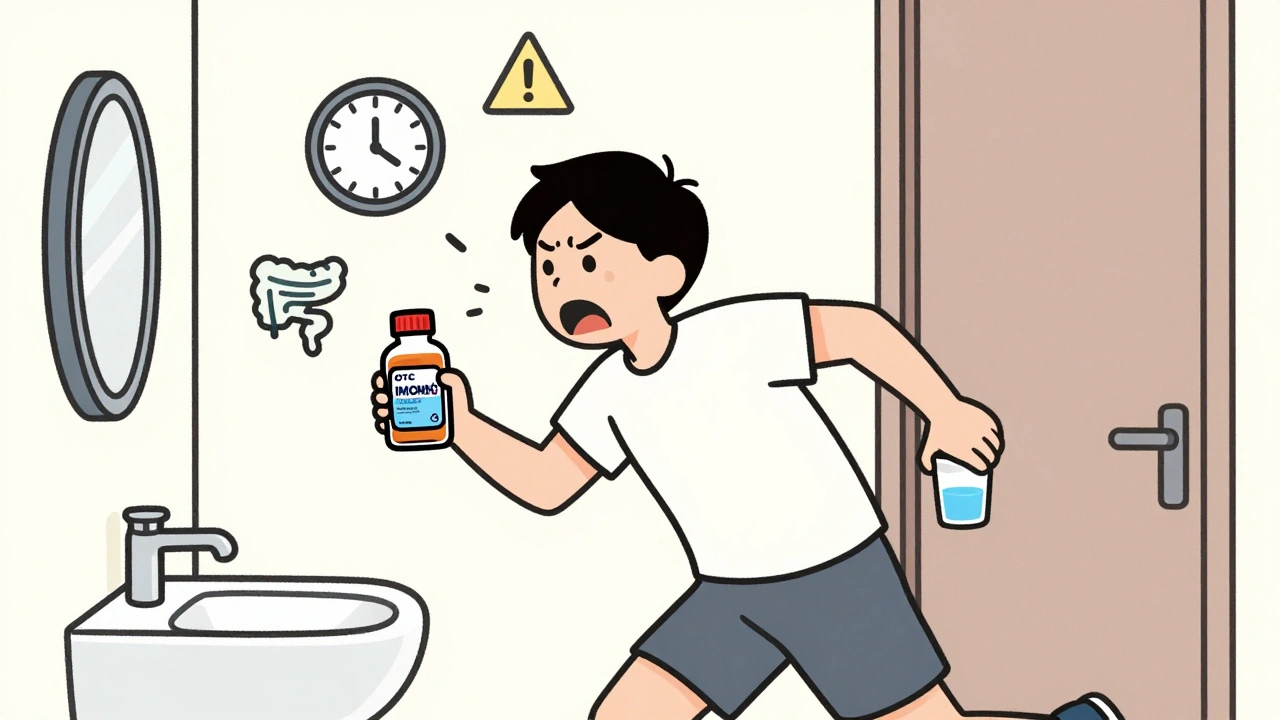
OTC Diarrhea Treatments: When to Use and When to See a Doctor
Learn when to use OTC diarrhea treatments like Imodium and Pepto-Bismol - and when to skip them and see a doctor. Get clear guidance on safe dosing, red flags, and hydration.

When you're stuck with sudden diarrhea, loperamide, an opioid receptor agonist used to slow gut movement and reduce stool frequency. Also known as Imodium, it's one of the most widely used anti-diarrheal medications in the world. Unlike painkillers or sedatives, loperamide doesn’t cross the blood-brain barrier in normal doses—so it won’t get you high. But that’s only true if you take it as directed. Misuse can lead to serious heart problems, even death.
It works by binding to opioid receptors in the gut, slowing down how fast food moves through your intestines. That gives your body more time to absorb water and electrolytes, turning loose stools into something more solid. It’s not a cure—it doesn’t kill bacteria or viruses causing the diarrhea. It just buys you time. That’s why it’s often paired with rehydration therapy. People with infections like traveler’s diarrhea or food poisoning use it to feel better fast, but they still need to replace fluids and watch for red flags like fever or blood in stool.
Many don’t realize loperamide is linked to other drugs and conditions. If you’re on medications that affect liver enzymes—like certain antidepressants or antifungals—your body may process loperamide too slowly, raising the risk of overdose. It’s also a common player in cases of postoperative ileus, where opioids slow gut motility after surgery. In fact, some of the same mechanisms that make loperamide useful for diarrhea can become dangerous when used in high doses or with other gut-slowing drugs. And while it’s available without a prescription, pharmacists are trained to ask questions before selling it, especially if someone’s buying large quantities.
It’s not just about diarrhea. Loperamide shows up in discussions about drug shortages, because even OTC meds can run out during flu season or after natural disasters. It’s also tied to broader topics like pharmacokinetic interactions—how your body absorbs, breaks down, and clears the drug—and why timing matters less than dosage. If you’re managing chronic conditions like IBS-D or Crohn’s disease, you might use it regularly, but that means watching for long-term side effects like constipation, dizziness, or worse, cardiac arrhythmias. There’s even research on how it interacts with statins and calcium channel blockers, since they all rely on the same liver enzymes to clear out of your system.
What you’ll find below isn’t just a list of articles. It’s a real-world look at how loperamide fits into bigger health stories—from the risks of self-medicating during travel, to how it plays into opioid-related bowel dysfunction, to why pharmacists are now more careful than ever about who gets it and how much. Whether you’re using it once a year or every week, understanding what it does—and doesn’t do—is the first step to using it safely.
Learn when to use OTC diarrhea treatments like Imodium and Pepto-Bismol - and when to skip them and see a doctor. Get clear guidance on safe dosing, red flags, and hydration.