Lower Dose Medications: Why Less Can Be Safer and More Effective
When it comes to lower dose medications, taking less of a drug than the standard amount to reduce risk while keeping benefits. Also known as reduced dosage regimens, it's not about cutting corners—it's about matching the medicine to your body's needs. Many people assume more is better, but that’s not true with drugs. Too much can overload your liver, wreck your kidneys, or trigger side effects you didn’t sign up for. The goal isn’t to take the highest dose on the label—it’s to find the smallest amount that still works.
Dose adjustment, the process of changing a drug’s strength based on patient factors like age, weight, or organ function. Also known as titration, it’s a core part of safe prescribing. For example, someone with kidney disease might need half the usual dose of a statin, because their body can’t clear it fast enough. Or an older adult taking an antihistamine might switch from a drowsy first-gen version to a lower dose of a second-gen one like loratadine to avoid confusion or falls. This isn’t guesswork—it’s science backed by studies showing lower doses often work just as well with fewer problems.
It’s not just about age or organ health. Some drugs have a narrow safety window—too little does nothing, too much causes danger. Think warfarin, where even small changes can lead to bleeding or clots. Or calcium channel blockers like verapamil, which can drop your blood pressure too far if you’re sensitive. That’s why medication safety, the practice of using drugs in a way that minimizes harm while maximizing benefit. Also known as risk-aware prescribing, it requires knowing your body’s limits. Many people quit their meds because of side effects—muscle pain from statins, dizziness from blood pressure drugs—but often, they just needed a lower dose. Studies show up to 70% of people who think they’re intolerant to statins can stay on them with a simple dose cut.
Lower doesn’t mean weaker. It means smarter. For conditions like high blood pressure, depression, or arthritis, starting low and going slow often leads to better long-term results. You avoid the crash of side effects, build tolerance gradually, and give your body time to adapt. This approach works especially well with side effects, unwanted reactions caused by drugs that can range from mild to life-threatening. Also known as adverse drug reactions, they’re often dose-dependent. The higher the dose, the more likely you are to feel them. Cut the dose, and many of those problems vanish—without losing the benefit.
You’ll find posts here that show exactly how this works in real life: how SGLT2 inhibitors can cause yeast infections at standard doses but are safer at lower levels, how opioids delay bowel recovery after surgery and why reducing them helps, how statin muscle pain disappears with dose tweaks, and why antihistamines in pregnancy are chosen based on the lowest effective dose. These aren’t theory pieces—they’re real-world guides from people who’ve been there.
Whether you’re just starting a new drug, dealing with side effects, or managing multiple meds, the answer isn’t always to take more. Sometimes, it’s to take less. And that’s where real safety begins.
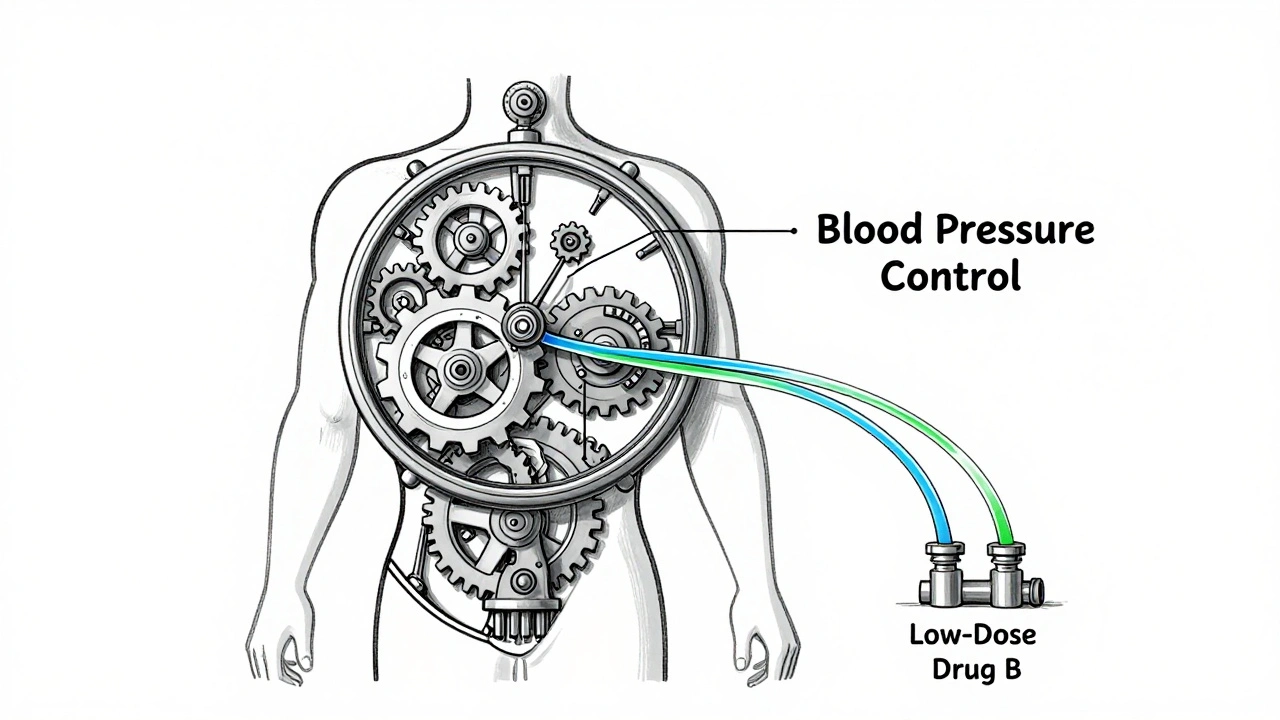
Combination therapy uses lower doses of multiple medications to improve effectiveness and reduce side effects. Proven in hypertension, diabetes, and cancer, it offers better control with fewer adverse reactions and improved patient adherence.