Lp(a) Treatment: What Works, What Doesn’t, and How to Take Control
When it comes to heart disease risk, Lp(a), a type of lipoprotein that carries cholesterol in the blood and is strongly linked to early heart attacks and strokes. Also known as lipoprotein(a), it’s not something you can fix with salads or jogging—it’s mostly genetic, and it doesn’t budge with typical lifestyle changes. Unlike LDL cholesterol, which drops with statins and diet, Lp(a) stays stubbornly high in many people, silently raising their risk even if everything else looks normal. If your doctor mentioned Lp(a) in a lab report, you’re not overreacting—this is a real, measurable threat that needs a targeted plan.
Most standard cholesterol meds like statins barely touch Lp(a). In fact, some can even nudge it higher. That’s why newer options like PCSK9 inhibitors, injectable drugs originally designed to lower LDL but now showing promise in reducing Lp(a) by up to 60% are turning heads. Drugs like evolocumab and alirocumab aren’t cheap, and they’re not for everyone, but for people with very high Lp(a) and a history of early heart issues, they’re one of the few tools we have. Then there’s niacin, a B vitamin that can lower Lp(a) modestly but often causes flushing, liver stress, and other side effects that make it hard to stick with. And while some studies hint that apo(a) antisense therapies might one day silence Lp(a) at the genetic level, those are still in trials. Right now, the game is about managing what you can: keeping LDL low, blood pressure tight, and avoiding smoking like it’s the last cigarette on earth.
There’s no magic pill yet, but there is a path forward. People with high Lp(a) often need more than just a prescription—they need a clear strategy. That means regular monitoring, knowing your numbers, and working with a cardiologist who understands this specific risk. Lifestyle won’t fix Lp(a), but it can stop other damage from piling up on top of it. If you’ve been told your cholesterol is fine but you still had a heart scare, Lp(a) might be the hidden piece. The posts below dive into what’s actually working in clinics today, what’s still experimental, and how real patients are managing this silent threat—one step at a time.
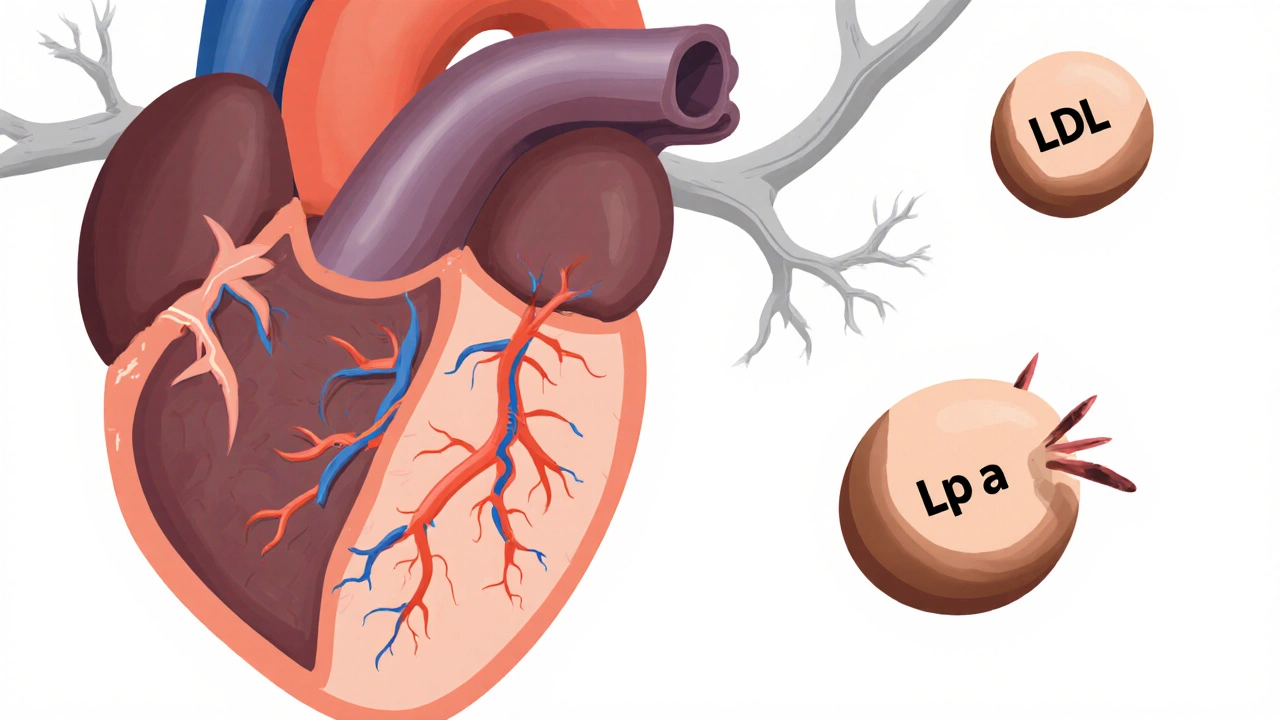
Lipoprotein(a) is a genetic cholesterol risk that doubles your chance of heart attack or stroke - even if your other numbers are normal. Learn who should be tested and what you can do now.