Opioid-Induced Bowel Dysfunction: Causes, Symptoms, and Real Solutions
When you take opioids for chronic pain, your body doesn’t just stop hurting—it also slows down your gut. This is opioid-induced bowel dysfunction, a group of digestive problems caused by opioid medications that reduce gut movement and increase fluid absorption. Also known as OIBD, it’s not just constipation—it’s bloating, nausea, incomplete bowel movements, and sometimes severe pain that doesn’t go away even if you use laxatives. Unlike temporary constipation from a change in diet, OIBD sticks around as long as you’re on opioids, and it’s often worse than the pain you’re treating.
Why does this happen? Opioids bind to receptors in your intestines, not just your brain. That slows the muscle contractions that push food through your digestive tract. Water gets sucked out of your stool, making it hard, dry, and painful to pass. You might feel full all the time, even when you haven’t eaten. Some people stop eating because it hurts to digest. Others feel like they’re constantly straining but never fully emptying. This isn’t "just a side effect"—it’s a real medical issue that affects up to 90% of long-term opioid users. And it’s rarely discussed by doctors unless you bring it up.
What can you do? The good news is, you don’t have to suffer in silence. There are medications like methylnaltrexone, a peripherally acting opioid antagonist that blocks gut effects without reducing pain relief, and naloxegol, an oral drug designed specifically to reverse opioid-related constipation. But even before drugs, simple changes help: more water, more fiber, daily movement—even a 10-minute walk after meals can make a difference. And if you’re on high-dose opioids for years, your gut might need more than laxatives—it might need a whole new plan.
What you’ll find in the posts below aren’t generic tips for constipation. These are real, practical insights from people managing long-term pain and the hidden toll opioids take on their digestion. You’ll see how others fought back with diet tweaks, over-the-counter options that actually work, and when to push back on your doctor for better help. This isn’t about stopping opioids—it’s about taking control of your body while you’re still on them.
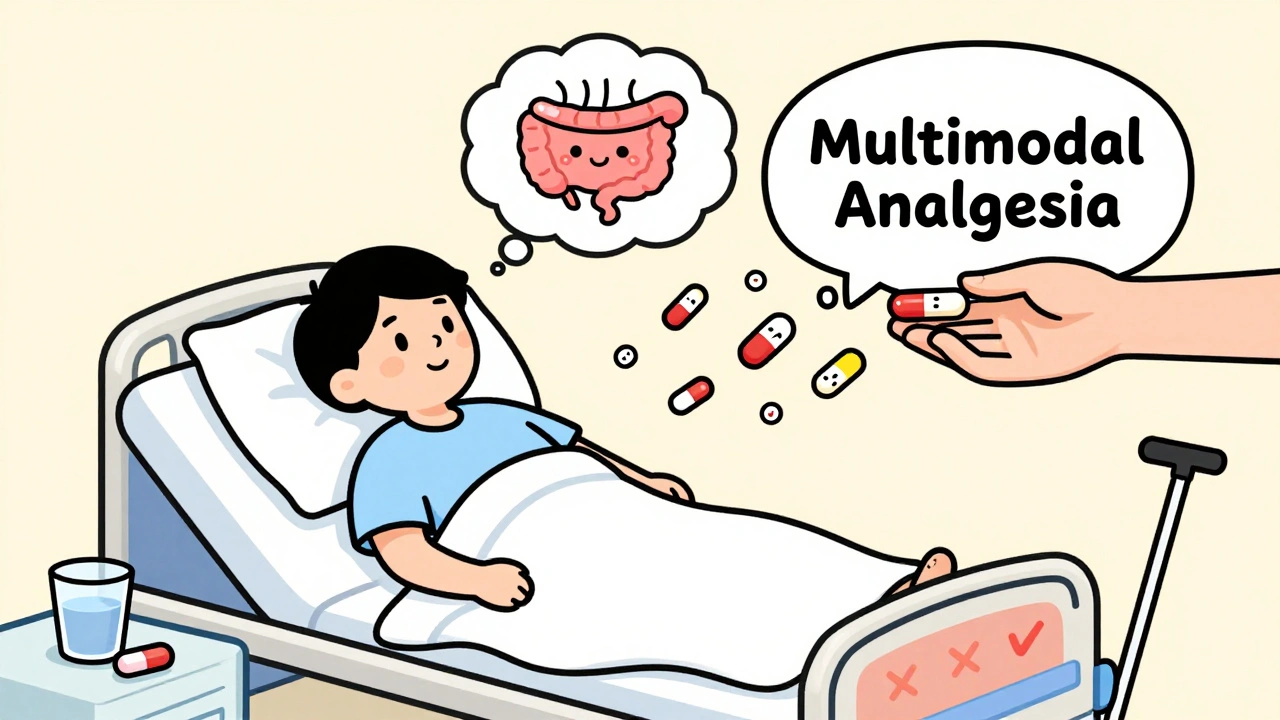
Postoperative ileus is a common, painful delay in bowel function after surgery-often caused by opioids. Learn how multimodal pain control, early movement, and targeted drugs can prevent it and speed recovery.