Second-Generation Antihistamines: What They Are, How They Work, and Why They’re Better Than the Old Ones
When you think of allergy medicine, you might picture that old-school pill that made you sleepy—like diphenhydramine. But second-generation antihistamines, a newer class of allergy drugs designed to block histamine without crossing into the brain. Also known as non-drowsy antihistamines, they’re the reason you can now manage sneezing, runny nose, and itchy eyes without nodding off at your desk. These drugs work the same way as the first-generation ones: they stop histamine from triggering allergy symptoms. But they were engineered differently—so they don’t easily pass the blood-brain barrier. That’s why you don’t feel foggy, tired, or clumsy after taking them.
That’s a big deal if you’re driving, working, or just trying to get through your day. First-gen antihistamines like Benadryl can wreck your focus, slow your reaction time, and even mess with your memory over time. Second-gen versions like loratadine, cetirizine, and fexofenadine don’t do that. They’re selective. They target histamine receptors in your nose, throat, and skin—where the trouble is—without affecting your brain. This makes them safer for daily use, especially for kids, older adults, and people who need to stay sharp.
And they’re not just about avoiding side effects. These drugs last longer, too. While old-school antihistamines often need to be taken every 4 to 6 hours, second-gen ones usually work for 24 hours with just one pill. That means fewer doses, simpler routines, and better compliance. If you’ve ever forgotten your afternoon dose and ended up sneezing all afternoon, you know how helpful that is.
Not all second-gen antihistamines are the same, though. Cetirizine can still cause mild drowsiness in some people—especially at higher doses. Fexofenadine is the least likely to cause any sleepiness. Loratadine is gentle and widely available over the counter. And if you’re dealing with chronic hives or seasonal allergies, your doctor might suggest one over the others based on your body’s response. Some even work better for specific symptoms: one might calm a runny nose better, another might stop itching faster.
These medicines also play well with others. Unlike older antihistamines, they rarely interfere with other common drugs like blood pressure meds or antidepressants. That’s why you’ll see them in so many treatment plans—not just for allergies, but also for eczema, chronic urticaria, and even some types of itching from liver or kidney issues.
They’re not magic, though. They won’t fix a sinus infection or clear out nasal polyps. And if your allergies are severe, you might still need nasal sprays, immunotherapy, or other tools. But for most people dealing with everyday allergens—pollen, dust, pet dander—second-generation antihistamines are the first, best step. They’re the reason you can actually live normally during allergy season.
Below, you’ll find real patient guides and comparisons that break down exactly how these drugs stack up against each other, what side effects to watch for, and how to pick the right one for your life. No fluff. Just clear, practical info based on what works in real life—not just in ads.
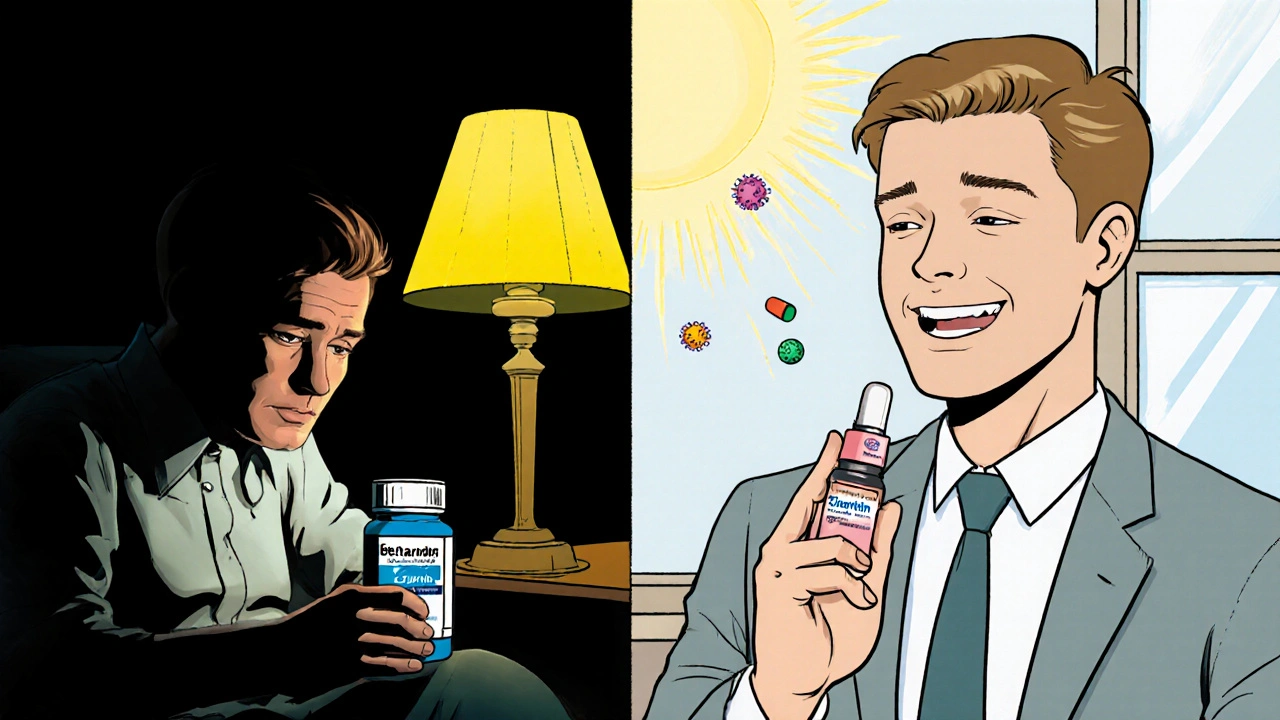
Second-generation antihistamines like loratadine, cetirizine, and fexofenadine offer effective allergy relief with far less drowsiness than older options. Learn how they work, which one suits you best, and what they can't do.