Swimmer's Ear: Causes, Treatment, and How to Prevent It
When your ear starts hurting after a swim, it’s often not just water stuck inside—it’s swimmer's ear, a painful infection of the outer ear canal often triggered by moisture. Also known as otitis externa, it’s not the same as a middle ear infection. This one starts in the canal leading to your eardrum, where bacteria or fungi thrive when the skin stays wet too long.
Swimmer’s ear isn’t just for competitive swimmers. Anyone who spends time in water—whether it’s a pool, lake, or even a long shower—can get it. The problem isn’t dirty water. It’s moisture. When water sits in your ear canal, it softens the skin, breaks down its natural defenses, and lets germs in. Sweat, humidity, and even scratching your ear with a cotton swab can make it worse. That’s why it’s so common in summer, but it happens year-round.
Most cases start with itching, then turn into pain that gets worse when you tug on your earlobe or chew. You might notice some drainage, muffled hearing, or swelling. It’s not usually serious, but if left alone, it can get much worse. The good news? Most cases clear up fast with the right ear drops, prescription or over-the-counter solutions that fight infection and reduce inflammation. Antibiotics aren’t always needed—some infections respond to acidic drops that restore the ear’s natural balance. For others, a doctor might prescribe antibiotic or steroid drops. Never put anything sharp in your ear, even if it feels like it needs cleaning. That’s how you make it worse.
Prevention is way easier than treatment. After swimming, tilt your head to let water drain. Use a hair dryer on low, cool setting from a distance to dry the canal. Some people find that a few drops of rubbing alcohol and vinegar mix helps keep the ear dry and acidic—just don’t use it if you have a hole in your eardrum. Earplugs or a swim cap can help, especially if you’re prone to it. And skip the cotton swabs. Your ear cleans itself. You’re not helping by poking around.
People with eczema, diabetes, or narrow ear canals are at higher risk. If you’ve had swimmer’s ear before, you’re more likely to get it again. That’s why knowing the early signs matters. A little itch? A slight ache? Don’t wait for it to turn into a throbbing pain. Treat it early. The outer ear infection, a condition that affects millions every year is manageable, but only if you act before it spreads.
Below, you’ll find real patient guides and expert breakdowns on how to treat swimmer’s ear without overdoing it, what to avoid, and how to protect your ears for good. No fluff. Just clear, practical info that helps you feel better—and stay that way.
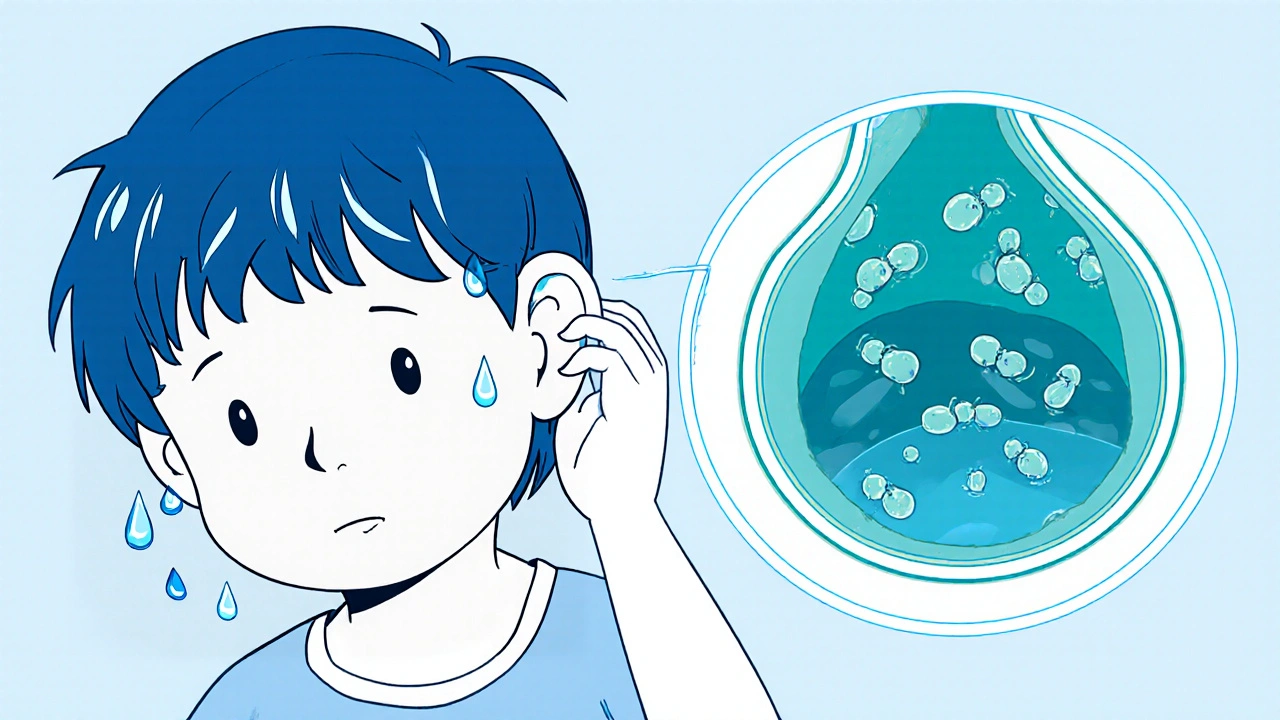
Swimmer’s ear, or otitis externa, is a painful ear infection caused by trapped water and bacterial growth. Learn how to prevent it with simple drying habits and what treatments actually work-backed by clinical data and real patient outcomes.