
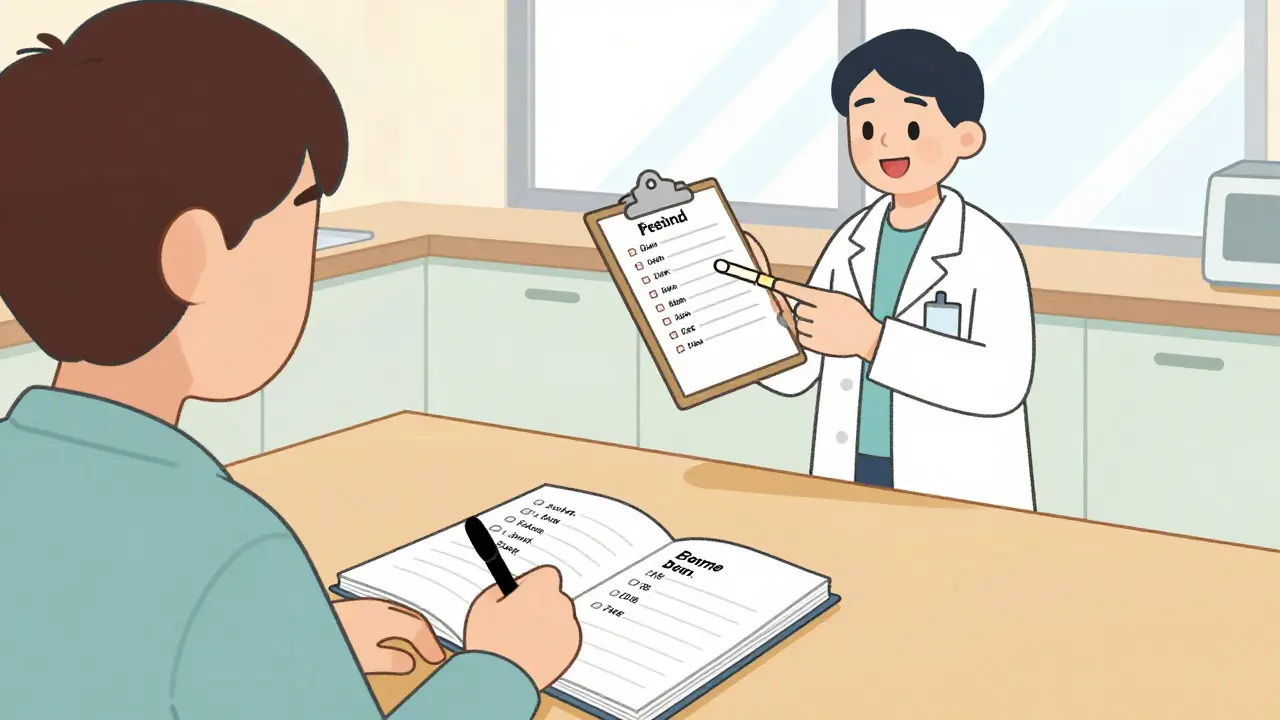
When your doctor or pharmacist gives you advice about your medications, it’s easy to think, "I’ll remember this." But by the time you get home, or the next time you need to refill a prescription, details fade. That’s why writing it down isn’t just helpful-it’s essential. Proper documentation of provider advice about medications protects your health, keeps your care consistent, and even protects providers legally. And with more than 7,000 U.S. deaths each year linked to medication errors, getting this right matters more than most people realize.
What Exactly Should You Document?
You don’t need to write a novel. But you do need to capture the key facts that will help you-or another provider-understand what was said. Start with these six essentials:
- Medication name (brand and generic, if different)
- Dosage (e.g., 10 mg, 500 mg)
- Frequency (e.g., "once daily at bedtime," "every 6 hours as needed")
- Duration (how long to take it, or if it’s long-term)
- Purpose (why you’re taking it-e.g., "for blood pressure," "for pain after surgery")
- Side effects to watch for (especially serious ones like dizziness, rash, or trouble breathing)
Also note any special instructions: "Take with food," "Avoid alcohol," "Don’t crush the pill," or "Store in the fridge." If your provider says, "If you feel X, call us," write that down too. These aren’t just reminders-they’re critical safety cues.
How to Record It: Paper, Phone, or App?
There’s no single right way to document, but some methods are more reliable than others.
Paper notebook works fine if you’re consistent. Keep it in the same place-like your wallet or medicine cabinet. Use a pen, not a pencil. Date each entry. Sign or initial it if you’re sharing it with someone else. This is still the most common method among older adults and those without reliable tech access.
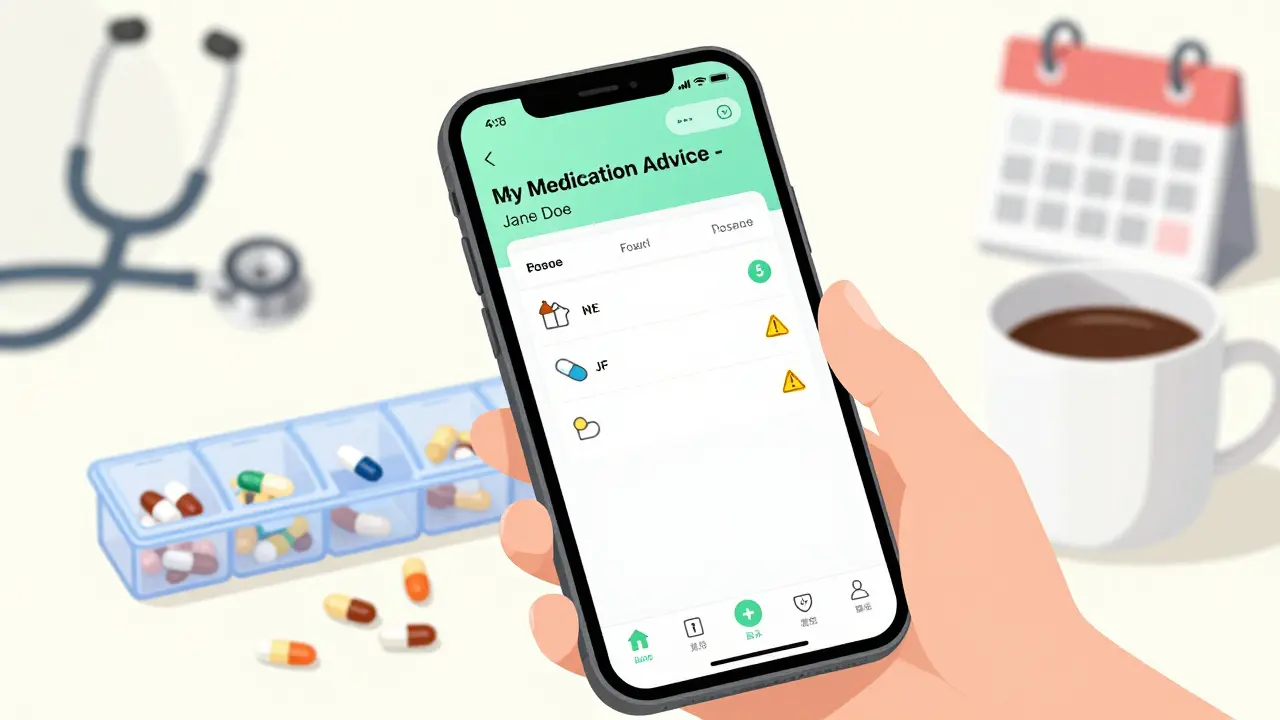
Smartphone notes are popular, especially since most people carry their phones everywhere. Use the Notes app, or a dedicated health app like Apple Health or Google Health Connect. Type it out. Don’t just voice-record it-voice memos are hard to search later. Add a label like "Med Advice - Feb 2026" so you can find it fast.
EHR patient portals are becoming the gold standard. If your provider uses an electronic health record (EHR), chances are they’ve sent you a secure message after your visit. Check that message. Many now include a summary of medications discussed, with dosing instructions and refill info. Save that message. Some portals even let you download a printable version. By 2025, 95% of medication advice will be documented through these systems, according to the Agency for Healthcare Research and Quality.
Whatever method you choose, make sure it’s accessible when you need it. If you’re seeing a new doctor, bringing a printed copy or showing them your phone note can prevent mistakes.
What Providers Are Required to Document
It’s not just you who needs to write things down. Providers have legal and professional obligations too. Under guidelines from the American Medical Association (2022) and the Joint Commission, they must record:
- The exact medication name, dose, route, and schedule
- Any patient education given (e.g., "Explained that this medication may cause drowsiness")
- Drug allergies and reactions (even if minor, like a mild rash)
- Refusals or noncompliance (e.g., "Patient declined refill due to cost concerns")
- Follow-up plans (e.g., "Recheck blood pressure in 2 weeks")
These records aren’t just for convenience. They’re legally binding. The American Dental Association warns providers: "What you write in the record could be read aloud in a court of law." And with 38% of malpractice claims involving medication errors, documentation isn’t optional-it’s defense.
Even phone calls and telehealth visits must be documented. Since 2021, the ADA requires that conversations about prescriptions made over the phone, or outside office hours, be dated and initialed. This applies to doctors, pharmacists, and nurse practitioners alike.
Why Your Notes Matter in Emergency Situations
Imagine you’re in the ER after a fall. You’re confused. You can’t remember what pills you took this morning. The paramedics don’t have your records. That’s when your written notes become life-saving.
Emergency staff rely on accurate medication lists to avoid dangerous interactions. For example, mixing blood thinners with certain painkillers can cause internal bleeding. If you’ve documented that your doctor told you to avoid ibuprofen while on warfarin, that note could prevent a hospital stay-or worse.
According to the National Committee for Quality Assurance (NCQA), inadequate medication documentation contributes to 22% of preventable adverse drug events in outpatient settings. That’s one in five cases where someone got hurt because the right information wasn’t there when it was needed.
What to Do If You Don’t Understand the Advice
It’s okay to say, "I didn’t get that." But don’t just nod and walk away. Ask for clarification. Then document what you were told.
Use these phrases:
- "Can you write that down for me?"
- "Can you repeat the dosage? I want to make sure I got it right."
- "Is there a handout or website I can look at later?"
- "Can you explain why this is different from what I was taking before?"
Providers are trained to explain things clearly. If they seem rushed, ask if you can schedule a follow-up call with the pharmacist. Pharmacists are medication experts-and they’re required to document patient counseling under ASHP guidelines. That means they’ll likely write down exactly what you were told.
Keeping It Organized: A Simple System
Here’s a system that works for most people:
- Use a dedicated notebook or digital folder called "Medication Log - [Your Name]."
- At each visit, write down:
- Date of visit
- Provider name
- Medication changes (new, stopped, adjusted)
- Instructions given
- Questions you asked
- Next steps
- Update your log every time you refill a prescription or get new advice.
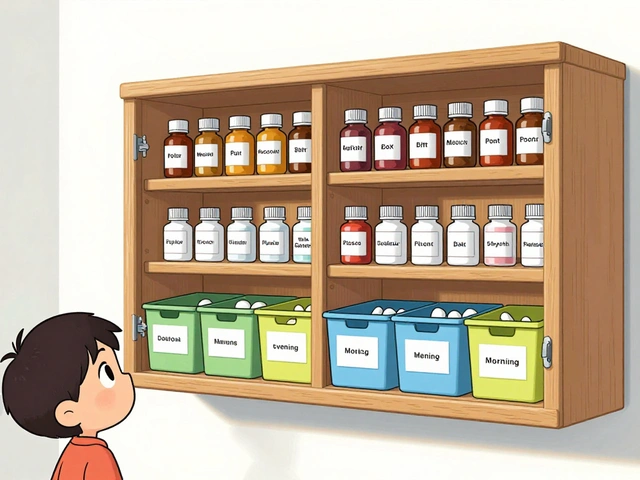
- Keep it with your pill bottles or in your phone’s health app.
- Bring it to every appointment-even if you think you don’t need to.
Some people use color-coded tabs: green for ongoing meds, red for allergies, blue for supplements. Others use free apps like Medisafe or MyTherapy that send reminders and let you log advice. Pick what fits your life.

The Future: What’s Changing in 2026
By 2026, medication documentation is becoming more standardized. The FDA’s Patient Medication Information (PMI) initiative is rolling out. It means every new prescription will come with a one-page, FDA-approved handout that follows a strict format: clear language, bold warnings, simple instructions. This will be mandatory for all new drugs.
Also, Medicare and Medicaid now require providers to document current medications in every visit (CMS68v13, implemented in 2024). If they don’t, they lose payment. That means more providers are now asking patients: "What are you taking right now?" and writing it down-before even prescribing anything new.
Soon, your EHR portal will auto-generate a medication summary after each visit. You’ll get a notification: "Your provider updated your meds. View now." That’s your cue to open it, check it, and save it.
Final Tip: Review It Monthly
Medication lists change. New prescriptions. Stopped drugs. Over-the-counter additions. Supplements. All of it matters.
Set a monthly reminder on your phone: "Review meds." Open your log. Compare it to what’s in your pill organizer. Cross off anything you stopped. Add anything new. If something doesn’t match up, call your provider. This simple habit prevents 70% of the mistakes people make with their meds, according to studies from the Institute of Medicine.
Do I need to document advice even if my provider says it’s in the chart?
Yes. Provider charts aren’t always accessible when you need them-especially outside office hours or during emergencies. Your personal record is the only one you can always rely on. Even if the chart is updated, having your own copy ensures you’re never caught off guard.
What if my provider won’t write down the instructions?
Politely ask again. Say, "I’d like to make sure I get this right-could you write it down or send me a note?" If they still refuse, ask to speak with the office manager or pharmacist. Most clinics now have standardized forms for this. If you’re still blocked, document it yourself: "Provider advised [X] on [date], but no written instructions were provided." This protects you.
Should I document advice about over-the-counter meds and supplements?
Absolutely. Many dangerous interactions happen with non-prescription items. For example, St. John’s Wort can reduce the effectiveness of birth control and antidepressants. If your provider says, "It’s fine to take ibuprofen with this," write it down. If they say, "Avoid calcium supplements with this antibiotic," write that too. Treat OTCs like prescriptions.
How long should I keep these records?
Keep them for at least 7 years after your last visit-longer if you’re on long-term medication. Some states require providers to keep records for 10 years. Your personal log should last just as long. If you switch providers, bring your entire history. It saves time, money, and risk.
Can I share my medication log with family members?
Yes. In fact, it’s a good idea. If you’re unable to speak during an emergency, a trusted person should be able to show your medication log to responders. Make sure they know where to find it. Consider keeping a printed copy in your wallet or purse.
Next Steps: Start Today
You don’t need to overhaul your whole system. Just pick one thing to do right now:
- If you have a phone, open your Notes app and create a new note titled "My Medication Advice - [Your Name]."
- Write down your three most important meds: name, dose, why you take them.
- Next time you see your provider, bring it up. Say, "I’m starting to keep a log. Can you help me make sure I got this right?"
That’s it. One note. One conversation. One step toward safer care.





March 10, 2026 AT 02:02
I literally cried reading this. 🥹 My grandma almost died because no one wrote down her meds and the ER doc gave her something that clashed with her blood pressure pills. I started a Google Doc called "Mama's Meds" and now my whole family has access. It saved her. Thank you for this. 💖