CYP3A4 Inhibition: How Drug Metabolism Affects Your Medications
When your body breaks down drugs, it often relies on an enzyme called CYP3A4, a major liver enzyme responsible for metabolizing over half of all prescription drugs. Also known as cytochrome P450 3A4, it’s the workhorse that clears medications from your system. But when something blocks or inhibits CYP3A4, those drugs can build up to dangerous levels—leading to side effects, toxicity, or even hospitalization.
This isn’t just theoretical. If you’re taking a calcium channel blocker, like verapamil or diltiazem, used to treat high blood pressure or heart rhythm issues, and you also eat grapefruit or take certain antibiotics, CYP3A4 gets shut down. That means your blood pressure meds stick around longer than they should, potentially dropping your pressure too low. The same thing happens with statins—some can cause muscle damage if CYP3A4 is inhibited. Even common over-the-counter supplements like St. John’s wort can interfere, though in the opposite way: they speed up metabolism and make drugs less effective. CYP3A4 inhibition isn’t a niche topic—it’s something that affects people on multiple medications every single day.
It’s not just about drugs either. Certain foods, herbal products, and even some diseases can alter how CYP3A4 works. For example, people with liver disease often have reduced enzyme activity, which means even normal doses of meds can become too strong. And while some drugs are strong inhibitors—like ketoconazole or clarithromycin—others are mild but still risky when combined with multiple other meds. This is why pharmacists now check for interactions before filling prescriptions. It’s not about fear—it’s about smart management.
Understanding CYP3A4 inhibition helps you ask better questions. If your doctor adds a new pill, ask: "Could this affect how my other meds are broken down?" If you’re on a statin and start eating grapefruit regularly, you might need a switch. If you’re taking a calcium channel blocker and feel dizzy or swollen, it might not be your condition worsening—it could be a hidden interaction. The posts below cover real cases where this enzyme caused problems, how to spot the signs, and what to do about it. You’ll find guides on statins, blood pressure drugs, and how to avoid dangerous combos—without needing a pharmacology degree.
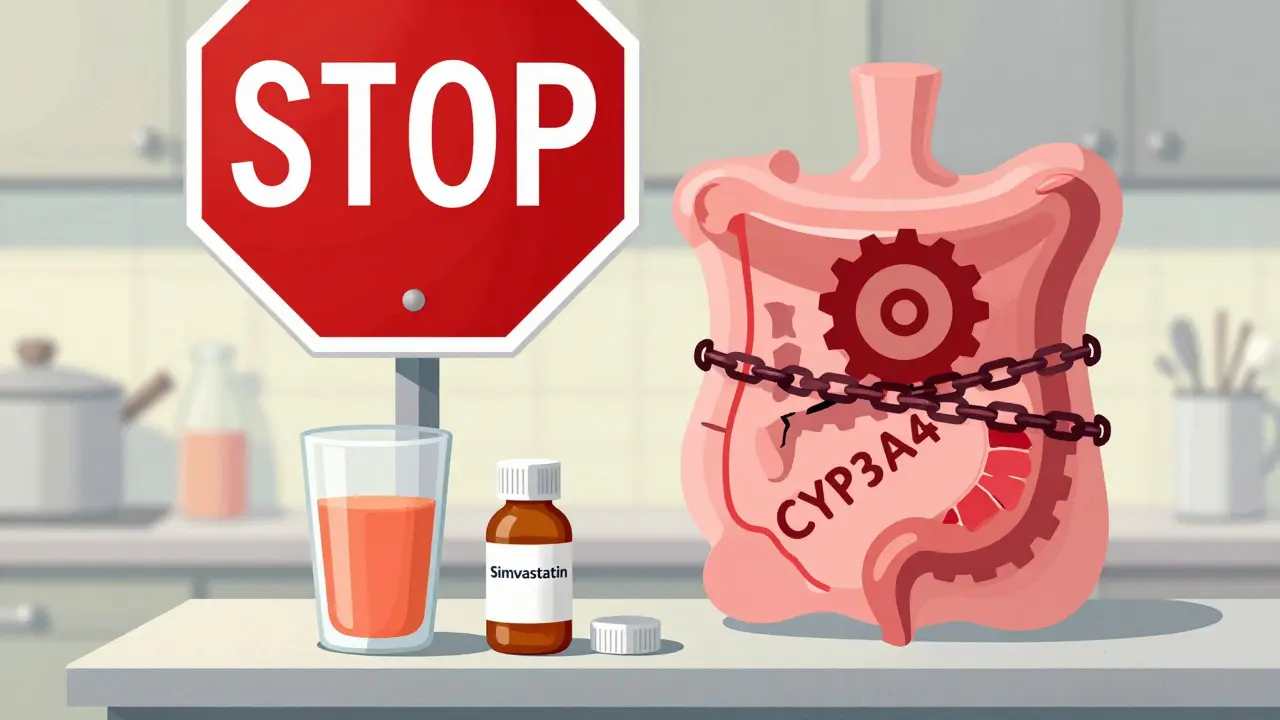
Grapefruit juice can dangerously increase drug levels in your blood by blocking a key enzyme. Over 85 medications, including statins and blood pressure drugs, interact with it. Even small amounts can cause serious harm. Avoid it completely if you're on affected meds.
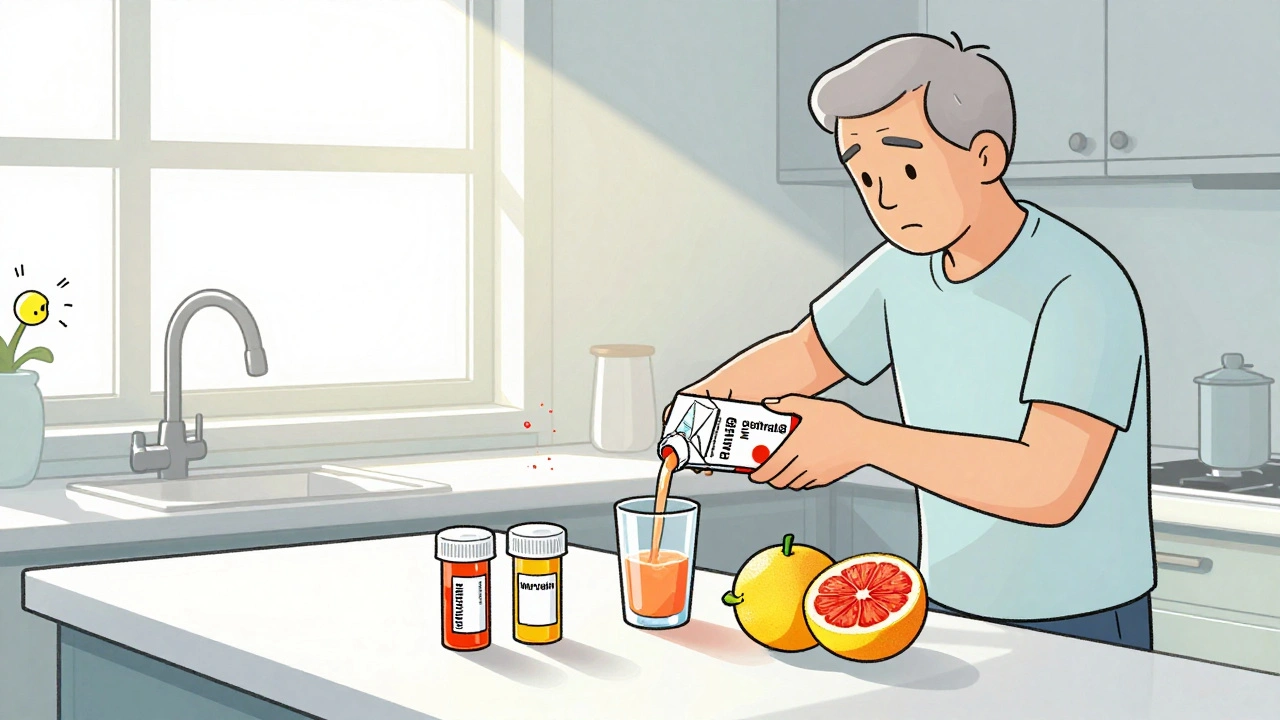
Grapefruit can dangerously increase levels of warfarin and certain SSRIs by blocking CYP450 enzymes. Learn which medications are at risk, why timing doesn't help, and what to do instead.