HSV-1: What It Is, How It Spreads, and What You Can Do
When you hear "herpes," most people think of genital outbreaks—but HSV-1, a common virus that causes oral herpes and cold sores. Also known as herpes simplex virus type 1, it’s not rare, not shameful, and not always dangerous—it’s just persistent. About 67% of people under 50 carry it, according to the World Health Organization, and most don’t even know they have it until they get a blister on their lip after a cold or too much sun.
HSV-1 doesn’t need sex to spread. It moves through saliva, shared utensils, kissing, or even touching a cold sore and then your eye. That’s why it’s so widespread. Once it’s in your body, it hides in nerve cells and wakes up when your immune system is low—stress, illness, sunburn, or even a menstrual cycle can trigger it. The good news? Most outbreaks are mild, last less than two weeks, and don’t need prescription drugs. Over-the-counter creams with docosanol or penciclovir can speed healing. Antivirals like acyclovir help if you get frequent outbreaks, but they’re not always necessary.
It’s not just about the sore. HSV-1 can cause eye infections (herpes keratitis), which can threaten vision if untreated. It’s also linked to rare but serious brain inflammation (herpes encephalitis), though that’s extremely uncommon. What matters most is knowing the signs and avoiding spread—not panicking. If you have a cold sore, don’t kiss babies, don’t share lip balm, and wash your hands often. If you’re pregnant, talk to your doctor: HSV-1 can be passed to newborns during delivery, but that risk is low if you’ve had it before.
There’s no cure, but there’s control. Lifestyle changes—sleep, stress management, sunscreen on your lips—cut outbreaks way down. Some people find lysine supplements help, though evidence is mixed. What’s clear? You’re not alone. Millions live with HSV-1 and lead normal lives. The real problem isn’t the virus—it’s the stigma around it.
Below, you’ll find real, no-fluff guides on how HSV-1 interacts with other conditions, what medications actually work, how to avoid spreading it, and what to do if you’re worried about complications. No myths. No scare tactics. Just clear, practical info from people who’ve been there.
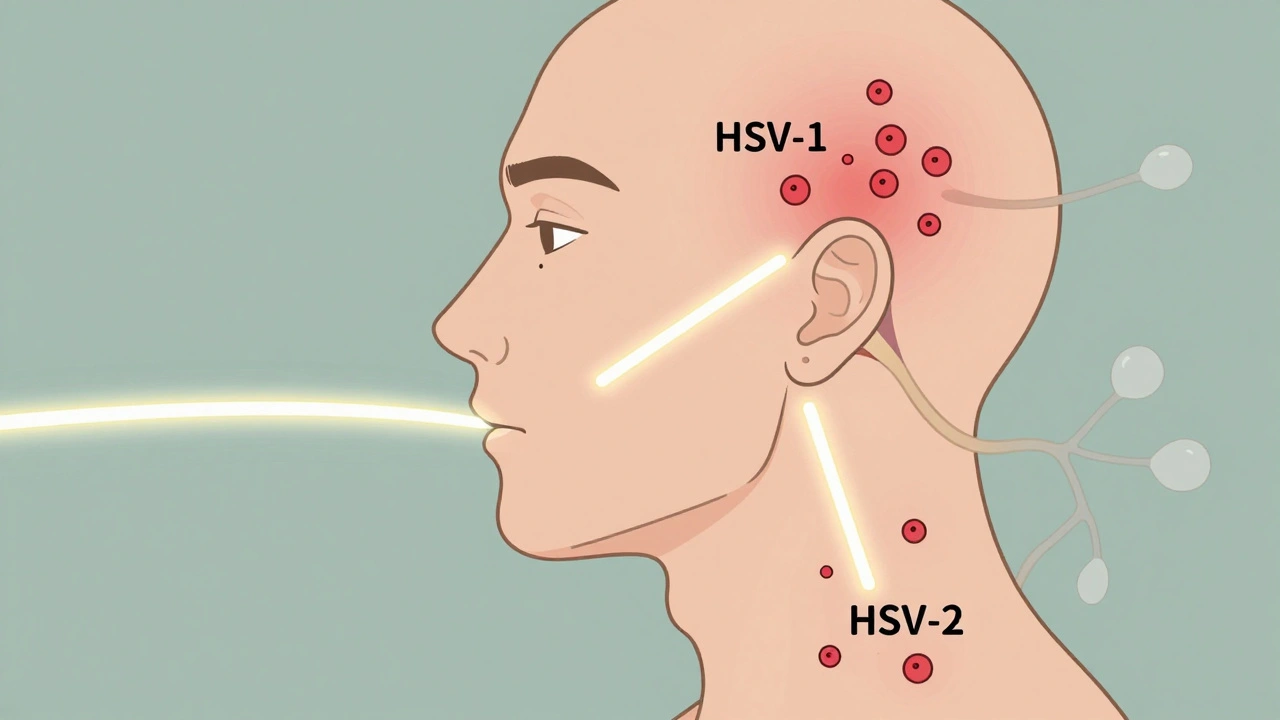
Herpes simplex virus affects billions worldwide. Learn the differences between HSV-1 and HSV-2, what outbreaks look like, how antiviral therapy works, and how to reduce transmission and manage symptoms effectively.